Quick Answer
Estimates of how many older adults fall each year range from about one in four to at least one in three, depending on the study. Most of those falls have a cause you can see. Someone trips, slips, or misses a step.
But a meaningful share happen with no hazard at all. The person goes down, cannot say what tripped them, and usually was not seen falling. Suddenly falling down while walking, with no stumble and nothing underfoot, is the pattern that international falls guidelines flag for cardiovascular investigation when it happens more than once.
Researchers call these non-accidental or unexplained falls, and they are a different problem than a trip. Professor Rose Anne Kenny of Trinity College Dublin, who directs a hospital Falls and Blackout Unit, estimates that 30 to 50 percent of them come from an underlying cardiovascular disorder. They need a different investigation than a slip does, and prevention advice built around removing rugs will not touch them.
For this article we contacted five researchers who study falls: Stephen Lord and Kim Delbaere at NeuRA in Sydney, Cathie Sherrington at the University of Sydney, Marcia Ory at Texas A&M, and Rose Anne Kenny at Trinity College Dublin.
Jump to:
- Why are falls not accidents?
- What are the two kinds of falls?
- What is a drop attack?
- What are the warning signs before a fall?
- When is a fall a medical emergency?
- What should a falls workup include?
- What actually reduces the risk?
- How do you rebuild confidence after a fall?
- Where does fall detection technology fit?
- Frequently asked questions
Why Are Falls Not Accidents?
Calling a fall an accident suggests bad luck, something that came from nowhere. Researchers who study falls do not use the word that way. Scientia Professor Stephen Lord, who directs the Falls, Balance and Injury Research Centre at NeuRA in Sydney, put it plainly: “it is unfortunate that falls are often referred to as accidents.” He has spoken to us before about how vision and walking speed feed into fall risk.
Most falls have a cause you can identify. “Most falls among people living in the community are caused by trips and slips,” Lord said. “In these situations, individuals either fail to detect and avoid a hazard, or they make contact with it, lose their balance, and are unable to recover effectively.”
Everyone catches a toe occasionally. What separates a stumble from a fall is whether the body corrects fast enough, and that ability declines well before anyone notices.
For the full range of contributing factors, from vision and medication to footwear and home hazards, see our companion article on why seniors fall. This article covers the falls that do not fit that pattern.
What Are the Two Kinds of Falls?
Rose Anne Kenny draws a line most fall prevention advice skips. She is Regius Professor of Physic and Chair of Medical Gerontology at Trinity College Dublin, founding Principal Investigator of The Irish Longitudinal Study on Ageing, and director of the Falls and Blackout Unit at St James’s Hospital in Dublin. Her clinical sub-specialty is cardiovascular medicine.
Her framing is simple. “Falls are two types. They can be accidental or non-accidental,” she said. “Accidental is what everybody recognizes, the slip, the trip. Non-accidental is when somebody experiences an episode where they just go down, they just fall, and they don’t remember anything tripping them up. They don’t remember any environmental hazard. Generally speaking, the falls are not witnessed and the person denies loss of consciousness when asked.”
The distinction is not only Kenny’s. The World Guidelines for Falls Prevention and Management, a global consensus published in Age and Ageing in 2022, define an unexplained fall formally: one where no apparent cause is found on a full falls risk assessment, and which cannot be put down to an environmental hazard or to a gait or balance problem.
These falls get dismissed easily. Someone gets up, seems fine, has no explanation, and the family assumes they tripped and forgot. Kenny puts a number on why that assumption is a problem. “We know from research that 30 to 50 percent of those latter falls, the non-accidental or unexplained falls, are in fact due to underlying cardiovascular disorder, a drop in blood pressure for some reason,” she said, “and require a different investigation to just pure slips or trips.”
Two other sources back that estimate. The World Falls Guidelines state that recurrent unexplained falls are most likely associated with a cardiovascular cause, ranking the commonest cardiovascular causes of falls as orthostatic hypotension first, then vasovagal syndrome, carotid sinus hypersensitivity, and slow heart rhythms. Kenny herself argued the point decades ago, in a 1997 paper she co-authored in Pacing and Clinical Electrophysiology titled “Cardiovascular syncope is the most common cause of drop attacks in the elderly.”
For a large share of people who fall with no apparent cause, that points the investigation toward blood pressure and heart rhythm rather than toward grab bars and floor hazards.
How Do the Two Types Compare?
Accidental and non-accidental falls at a glance
| Accidental fall | Non-accidental (unexplained) fall | |
|---|---|---|
| What the person remembers | A slip or trip they recognize | Nothing tripped them. They simply went down |
| Circumstances | A hazard can usually be identified afterward | Generally unwitnessed, and loss of consciousness is denied when asked |
| Causes to investigate | Environmental hazards, and the gait, balance, vision and footwear factors covered in our companion article | Blood pressure drop on standing, arrhythmia, blood pressure variation across 24 hours, and medications |
| First-line response | Muscle strengthening and balance exercise | A medication review by a physician, plus cardiovascular investigation |
What If There Is No Hazard and No Cardiac Cause?
Not every unexplained fall is a heart or blood pressure problem. Lord describes a third pattern that sits between the two. “For frail older people, some falls occur in the absence of any obvious hazards,” he said. “They may make a misstep, overcorrect, and subsequently lose balance.”
In these cases there is no hazard on the floor and nothing wrong with the heart. The margin for error has narrowed to the point where a small mistake cannot be recovered from, which is why a physician looking into an unexplained fall usually works through several possibilities instead of hunting for one.
What Is a Drop Attack?
A drop attack is a sudden fall caused by an abrupt loss of postural muscle tone, usually with no warning. Most people stay conscious and can get up shortly afterward. A 2024 review in Practical Neurology states plainly that the term is not clearly defined, and that it covers both falls and episodes of transient loss of consciousness. It is the clinical name for much of what Kenny describes as a non-accidental fall, and it covers several distinct causes that often get lumped together.
Cardiovascular. Carotid sinus hypersensitivity, where pressure on the neck triggers a sharp drop in heart rate or blood pressure, has been found at higher rates in older patients presenting to emergency departments with unexplained falls than in controls. Orthostatic hypotension and irregular heart rhythms sit in this group too. This is the category Kenny works in.
Neurological. Drop attacks are generally understood to involve transient impairment of the central nervous system structures that maintain postural tone and balance, with the lower brainstem or spinal cord most often implicated. Research has also linked gait disorders specifically to non-cardiovascular falls in older people.
Functional. A subset of drop attacks, historically labeled cryptogenic, overlap with functional neurological disorder, in which the fall is real and disabling but no structural disease accounts for it. That link was made explicit in research published in 2021, building on earlier work from the Edinburgh neurology group, and it remains an active area of study.
Vestibular. Inner ear disorders can produce sudden falls. The best known is Tumarkin’s otolithic crisis, now often called a vestibular drop attack, which occurs in people with severe vestibular disease and usually Meniere’s disease. These falls arrive without warning and without loss of consciousness, and the person typically remembers the event.
Published estimates of how often no cause is ever identified vary, but they cluster around two-thirds of cases. The categories overlap, and how often each accounts for unexplained falls varies considerably across studies depending on how patients are selected and which tests are used. A physician therefore has more than one system to check, and a clean result on one test does not close the question.
What Are the Warning Signs Before a Fall?
Kenny points to three signs, and none of them require equipment.
The first happens at the moment of standing. “If somebody stands up and they seem to stagger a little bit when they’ve been sitting down or lying down and they stand,” Kenny said, “that usually indicates that they’ve had an excessive drop in blood pressure with standing, and that increases your risk.”
The second is how a person walks. If someone notices “problems with gait walking, if walking seems unsteady,” Kenny counts that as a risk factor in its own right.
The third gets discounted most often, because the person seems to have recovered. “If you have a fall,” Kenny said, “it increases your risk of having another fall.” One unexplained fall that caused no injury is still worth a conversation with a physician.
When Is a Fall a Medical Emergency?
These are the signs our own post-fall guide flags for emergency care. Call 911 if the person who fell:
- Lost consciousness, even briefly, or cannot remember the fall itself
- Cannot get up, cannot bear weight, or has an obviously deformed limb
- Hit their head, especially if they take a blood thinner
- Has a severe or worsening headache, repeated vomiting, slurred speech, confusion, or new weakness on one side
- Has chest pain, an irregular or racing heartbeat, or shortness of breath
- Is bleeding heavily or has a wound that will not close
Do not move someone who may have broken a hip or injured their neck or back. That guide also covers the slower problems that surface in the hours and days afterward.
What Should a Falls Workup Include?
Asked what clinicians tend to miss, Kenny points to the heart and the circulation. “There may be an underlying cardiovascular disorder like an arrhythmia, an irregularity of the heart, or blood pressure drops, abnormalities in blood pressure over a 24-hour period. Excessive variation in blood pressure.”
Her own research sharpened one of these. A TILDA study published in the Journal of the American Geriatrics Society found that impaired blood pressure recovery after standing was associated with unexplained and injurious falls.
“If your blood pressure drops excessively when you first stand up from lying or sitting, that’s a major risk factor for future, not just falls, but falls associated with injuries,” she told us. “So if you feel dizziness when you stand up, that needs to be investigated further with blood pressure sitting and blood pressure standing measures.” She went on to add that the problem is usually fixable, and “can be managed by modifying the drugs you’re already on and/or by new treatments.”
The clinical name for that drop is orthostatic hypotension, and it is among the more treatable causes of an unexplained fall. So if standing up makes you dizzy, ask for blood pressure to be taken sitting and then standing rather than once in a chair.
Depending on what that initial check shows, a physician may order further testing. The World Falls Guidelines carry a strong recommendation, at their highest evidence grade, that cardiovascular assessment for an unexplained fall should be the same as the assessment for fainting, on top of the standard falls risk assessment. They point to the 2018 European Society of Cardiology syncope guidelines for how to carry that out. They put cardiac history, listening to the heart, lying and standing blood pressure, and a 12-lead ECG at the start. If that initial round is normal and there is no suspicion of fainting or a pattern of repeat falls, the guidelines say no further cardiovascular testing is needed. Where it is indicated, the next steps are head-up tilt testing including carotid sinus massage, ambulatory blood pressure monitoring, and prolonged heart rhythm monitoring.
Which of these applies is a clinical judgment, and not every unexplained fall calls for any of them.
On medications, Kenny names two categories: “psychotropic and cardiovascular drugs. That means drugs used for sleeping or mood disorders and drugs used for blood pressure management.” A medication review is one of the few things here you can arrange quickly, and it costs nothing.
What If the Workup Finds Nothing?
This is the likeliest outcome. When no cause turns up, the fall does not stop mattering and the response does not stop being useful. The World Falls Guidelines are explicit that the cardiovascular assessment sits on top of a standard multifactorial falls risk assessment, not instead of it. That means the ordinary work still applies: balance and strength training, a medication review, a look at the home, a check of vision and footwear.
A fall with no identified cause also justifies keeping the question open rather than closing it. Symptoms change, medications change, and a rhythm problem that is intermittent by nature can be missed on a short recording and caught on a longer one. If falls continue, say so, because recurrence is itself a reason to look again.
What Should You Ask a Doctor?
- Can you take my blood pressure sitting and then standing, rather than just seated?
- Is 24-hour blood pressure monitoring worth doing in my case?
- Should I have an ECG, and would longer heart rhythm monitoring add anything?
- Can we review everything I take, especially anything for sleep, mood, or blood pressure?
- Given the fall had no obvious cause, what else would you want to rule out?
What Actually Reduces the Risk?
Kenny splits the answer along the same line she drew earlier. For accidental falls, muscle strengthening and balance exercises. For non-accidental falls, and some accidental ones, a medication review by a physician, since medications can contribute to the fall itself.
How Much Exercise, and What Kind?
Two of the researchers we contacted put the dose in different places.
Kim Delbaere of the University of New South Wales sets a weekly target: “Two hours of balance exercise per week. This is the most evidence-based strategy an older person can have. It reduces fall risk and, crucially, it rebuilds physical ability to do those daily tasks with more confidence.” She pairs that with a home safety assessment, on the grounds that removing hazards helps a person feel safer in their own home.
Cathie Sherrington of the University of Sydney led the 2019 Cochrane review that most current fall prevention guidance rests on, and her data points higher. Across 59 trials, exercise reduced the rate of falls in community-dwelling older adults by 23 percent, and balance and functional exercise specifically by 24 percent. A later analysis she led for the World Health Organization found that programs combining balance work with a total weekly dose of three hours or more cut the rate of falls by 42 percent.
The two figures measure slightly different things. Delbaere is describing balance exercise specifically. The Cochrane number covers total exercise dose in programs built around balance. They agree on the active ingredient, and Sherrington was direct about where to start: “The key thing would be to get advice about daily exercises to maximize balance.”
Two more findings from that review should shape how you build a routine. The effects of programs built mainly around resistance training, dancing or walking remain uncertain, so strength work supports balance training rather than replacing it. And the benefits fade when programs stop, so the gain lasts about as long as the habit does.
What Counts as Balance Exercise?
We put tai chi and yoga to Kenny and asked whether they counted. She endorsed both, added Pilates, and noted that most gyms have equipment built around balance work.
Tai chi has the most trial evidence behind it. A 2023 systematic review and meta-analysis pooling 24 randomized controlled trials reported a roughly 24 percent reduction in fall risk, with larger effects at higher training frequency.
We recently spoke with exercise medicine physician Dr. Claudio Gil Araújo about what a 10-second balance test can and cannot tell you, which is a useful place to start if you want a baseline.
Kenny also puts the starting age far earlier than most guidance does. Balance “starts to deteriorate after about 45,” she told us, and the decline shows up in population testing well before people feel it. “So the earlier you do balance exercises, the better.” She came back to the point a moment later, after the conversation had moved on, to add that it is never too late to start.
How Do You Rebuild Confidence After a Fall?
People who have fallen often respond by doing less. That instinct backfires, because activity restriction erodes the strength and balance that prevent the next fall.
Delbaere frames recovery differently than most advice does. “Confidence after a fall is not about becoming less cautious,” she said. “It is about being cautious in the right ways.”
She also names a trigger for getting help, and a route to it. “For those who find themselves pulling back from activities they previously enjoyed, that is a signal to seek additional support,” she said. “A GP can refer to a physiotherapist, exercise physiologist, occupational therapist, or psychologist depending on what is driving the avoidance. Fear of falling responds well to targeted intervention, such as cognitive behavioral therapy.”
Fear of falling is treatable. Families often read it as a permanent change in temperament, and that assumption is what keeps people from asking for help.
Where Does Fall Detection Technology Fit?
Some falls can be prevented. Removing hazards, reviewing medications, and building balance all work. But unexplained falls, the ones with no hazard and no warning, are the ones prevention cannot fully solve.
That gap is what detection is for, and it is also where our sources were most cautious.
Marcia Ory, Regents and Distinguished Professor at the Texas A&M University School of Public Health, was blunt about it. “The biggest misconception is that technology is a panacea for all fall-related problems,” she said. “While there is excellent fall-prevention technology emerging, it still requires human engagement at all levels.”
She is equally specific about the tradeoff. “Older people and their families need to understand the differences across different technologies and choose the one that is right for them,” she said. “Sensors attached to older adults with mobility concerns are only as good as an individual’s ability and willingness to use them, while unobtrusive monitors can raise privacy concerns.” We went into how the underlying detection actually works in a conversation with Theora Care founder Steve Popovich.
A worn sensor only helps if the person actually wears it. A passive monitor removes that problem and creates a privacy question instead. Families end up picking which of the two they can live with.
Her closing point gives families a test they can apply to any device, ours included. “Fall technology works best when seen as an adjunct to, versus a total replacement for, human or family involvement,” she said. “The best technologies involve situational awareness of what happens before, during, and after a fall.”
Before is the workup: sitting and standing blood pressure, the medication review, the balance training. During is detection. After is how fast someone reaches you.
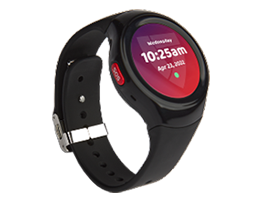
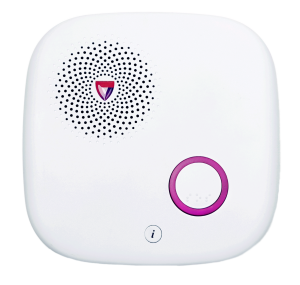
Medical Guardian’s devices address the second and third parts only. They do not prevent falls and should not be bought on the expectation that they will. What automatic fall detection changes is the interval between going down and getting help, which matters most for someone living alone who would otherwise spend hours on the floor.
Frequently Asked Questions
What causes a sudden fall with no warning?
A fall with no trip and no remembered hazard is a non-accidental or unexplained fall. Professor Rose Anne Kenny of Trinity College Dublin estimates 30 to 50 percent of these come from an underlying cardiovascular disorder, most often a blood pressure drop. Other contributors include irregular heart rhythm, blood pressure variation across the day, and medications for sleep, mood, and blood pressure. Frailty can also produce falls with no hazard, where a small misstep cannot be corrected in time.
What causes a sudden fall while walking?
Suddenly falling down while walking, with no stumble and no obstacle, is the classic presentation of an unexplained fall. Beyond blood pressure and heart rhythm, neurological and inner ear disorders can produce the same pattern.
Why would someone suddenly start falling?
Falls that begin suddenly can reflect a medication change, a new or worsening cardiovascular problem, or a neurological condition. None of those resolve on their own, so a new pattern of falling is a reason to book an appointment rather than wait and watch.
What does it mean when an elderly person keeps falling?
The World Falls Guidelines define recurrent falls as two or more in the previous 12 months. That is the threshold at which a physician should be reassessing rather than reassuring.
Repeat falls usually mean one of two things. Either an underlying cause has not been identified and corrected, or the first fall started a cycle in which reduced activity weakens the strength and balance that prevent the next one. A pattern tells a physician more than a single event does, because it gives them something to look for: a time of day, a link to meals, a recent medication change, a body position. If someone has fallen more than once and no cause has been established, ask specifically whether the falls were accidental or unexplained, because the two require different investigations.
What should I do if my parent keeps falling?
Write down what you know about each fall before the next appointment: where it happened, what time of day, whether anyone saw it, whether they remember tripping, and what they had eaten or taken beforehand. Falls that cluster after meals, after standing, or after a medication change point somewhere specific. Ask the physician for sitting and standing blood pressure readings and a full medication review. If your parent has started avoiding activities they used to enjoy, raise that too, because that withdrawal erodes the strength and balance that prevent the next fall.
Can you fall without losing consciousness?
Yes, and it is common in unexplained falls. Kenny notes that people who experience them typically deny any loss of consciousness when asked directly, and the falls usually go unwitnessed. That denial does not rule out a cardiovascular cause, which is part of why these falls go underinvestigated. In one study of 100 older patients admitted to hospital after a fall, the cause of the fall had not been established during acute care in a single case.
Should you lie down after a fall?
Not deliberately, and not for long. If there is any suspicion of a head, neck, back, or hip injury, stay where you are and call for help rather than trying to move or make yourself comfortable. If the person is uninjured and can get up safely, staying on a cold floor carries its own risks. Once up and settled, they should be watched for several hours, and any fall involving a head strike or a blood thinner should be assessed by a clinician the same day.
Does one fall mean another is coming?
Not necessarily, but the risk rises. As Kenny puts it, having a fall increases your risk of having another one. That makes a first fall an early warning rather than an isolated event, even when no injury resulted.
What exercises help prevent falls?
Balance-challenging exercise is the core. Asked about tai chi and yoga, Kenny endorsed both and added Pilates and gym-based balance equipment. Kim Delbaere recommends two hours of balance exercise per week. The 2019 Cochrane review led by Cathie Sherrington found the largest effects in programs that challenge balance and total three or more hours a week, sustained on an ongoing basis. Strength training supports this, but the evidence for programs built mainly around it remains uncertain. Balance starts declining around age 45, so earlier is better, though Kenny is emphatic that it is never too late.