Quick Answer
A smart watch with fall detection senses a hard fall and calls for help without you pressing anything. What separates the options is not whether they detect falls. It is who answers.
Consumer smartwatches dial emergency services or text your contacts. A medical alert watch reaches a professionally staffed monitoring center. A trained operator talks to you through the watch and takes action based on what the situation needs, whether that is an ambulance or a phone call to your daughter. They also pass responders your door code, so nobody breaks in.
That distinction is why independent reviewers rank purpose-built medical alert watches ahead of mainstream ones for this job. SafeHome tested twelve medical alert watches and ranked the Medical Guardian MGMove first, ahead of Bay Alarm Medical, the Apple Watch and the Samsung Galaxy Watch 7. NCOA named the MGMove its Best Overall medical alert watch, scoring it 9.9 out of 10. PCMag named it Best Watch Overall.
This article is general information, not medical advice. It is not a substitute for guidance from a doctor, nurse, or physical therapist who knows your health history. If you or someone you care for has fallen and may be injured, call a medical professional or 911.
Jump to:
- What Is a Medical Alert Watch?
- How Does Fall Detection Work?
- What Happens After a Fall Is Detected?
- Medical Alert Watch or Consumer Smartwatch?
- When a Consumer Smartwatch Is the Better Choice
- The MGMove, and What Independent Testing Found
- How Accurate Is Fall Detection?
- Wrist or Pendant: Which One Stays On?
- Can You Wear It in the Shower?
- Which Is Easiest for an Older Adult to Use?
- How Much Does Battery Life Matter?
- Does Insurance Cover a Medical Alert Watch?
- How to Choose
- Frequently Asked Questions
What Is a Medical Alert Watch?
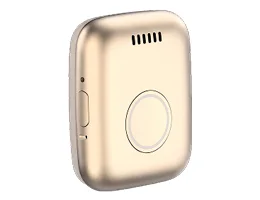
A medical alert watch connects you to a 24/7 emergency monitoring center at the press of a button, in the shape of an ordinary wristwatch. Most add GPS, two-way voice through the watch itself, step tracking and optional fall detection.
The category exists because of a problem the industry spent years getting wrong. Traditional pendants worked, and plenty of people would not wear them.
Sumit Sethi, who leads member engagement at Medical Guardian, describes what the industry was up against.
“Battling stigma with our adult population. The stigma for asking for help and for needing help.”
For some people the watch is the answer. It looks like something they would wear anyway, and that is often what makes the difference between protection that gets worn and protection that sits in a drawer. For others a pendant remains the better fit. Sethi argues the win is in how a product feels to use rather than in the feature list.
“What will differentiate us is not going to be necessarily features and functions, but it’s how we design our features and functions. This is something that empowers me, that I’m happy to engage with daily, that I’m happy to talk about.”
Medical Guardian has been in this business since 2005 and now serves more than 625,000 active members and patients. Two US-based monitoring centers handle their calls, staffed by over 550 trained, certified operators. Those operators hold TMA Five Diamond certification, the service carries ESA Security certification, and the equipment is UL Listed.
How Does Fall Detection Work?
Fall detection uses an accelerometer, and usually a gyroscope, to track how your wrist moves through space. Software watches for a specific signature: a rapid downward movement, a sharp impact, then a period of stillness. When all three appear together the device assumes a fall has happened, and if you do not respond to the prompt that follows, it escalates on its own.
That last part is the whole point. Fall detection exists for the situation where you cannot press a button, because you are unconscious, disoriented, or unable to reach the device.
James Qian, who leads hardware product at Medical Guardian, starts from what a much older user needs rather than from a feature list.
“The Apple Watch has over 200 features built in, but in the case of an emergency, the only one that really matters is trying to call your loved one or call your monitoring center. How do we accentuate that feature in our product design?”
His team treats three things as non-negotiable design targets: a reliable way to trigger an SOS, dependable cellular connectivity, and battery life measured in days rather than hours.
Cellular matters because it removes any dependency on a phone, and consumer smartwatches vary here. Bluetooth reaches roughly 30 feet, so a phone charging in the bedroom is usually still in range from the kitchen, but not from the garden. Apple’s guide says a watch can reach emergency services over Wi-Fi calling where there is coverage. Pixel needs the paired phone nearby without LTE, and Samsung requires pairing outright. A medical alert watch carries its own cellular connection and never asks the question.
What Happens After a Fall Is Detected?
It depends entirely on which type you bought, and most buying guides skip the difference.
A consumer smartwatch escalates in one direction. Apple Watch taps your wrist, sounds an alarm, and after about a minute of stillness begins a 30-second countdown and calls emergency services. That works, but it offers one response to every situation, whether you have broken a hip or slipped off a footstool and feel foolish.
A medical alert watch routes to a monitoring center instead. An operator comes on the line through a speaker and microphone in the watch itself, so you can talk without reaching a phone. They hear the situation and take action based on what it needs. Sometimes that is an ambulance. Often it is calling a neighbor, calling your daughter, or staying on the line while you work out whether you are hurt.
What the Monitoring Center Does Automatically
Lisa Sipes, who oversees member experience operations at Medical Guardian, describes what happens once an alarm comes through.
“Every action that an operator takes now is automated. It’s served up to them. They don’t have to think. They don’t have to do anything. And so we eliminate error in protocol, where it’s not possible to not call the emergency contacts, or to not call them in the right order, because it does it for you.”
One detail is worth pulling out.
If you live alone, whether responders can get through a locked door matters as much as how quickly they arrive. Your lockbox code is held by the monitoring center and passed to emergency services, so a locked door does not have to become a forced entry.
Sipes recently moved the entire member base onto a new monitoring platform to reach that level of capability.
“I just finished migrating 350,000 subscribers to a new monitoring center. The reason we did that is because this new monitoring center offers the level of transparency and data insights that we really need as an organization to better support our members and drive better outcomes.”
Can They Talk to the Person Who Fell?
A monitoring center also raises a question no product page answers. If the person wearing the device does not speak English comfortably, can anyone on the other end talk to them? Sipes found a gap and closed it.
“Something as simple as being able to speak to a member in their preferred and sometimes only language was something that our system didn’t allow for from the account creation perspective, and that’s an easy change to make, and we did it in about a week.”
If that applies in your family, ask which languages a provider supports and whether the preference is recorded when the account is set up, rather than discovered during an emergency.
Why the Time Afterward Matters More Than the Fall
A BMJ study that followed 110 adults over the age of 90 for a year found that 82 percent of falls happened when the person was alone. Among those who fell, 80 percent were unable to get up after at least one fall, and 30 percent had spent an hour or more on the floor. Lying on the floor for a long time was strongly associated with serious injury, admission to hospital, and subsequent moves into long-term care.
The same study found something that matters for anyone weighing fall detection against a button. Call alarms were widely available among these participants, and in most falls they were not used.
That is the argument for automatic detection in one line. A button only works if the person can reach it and is willing to press it, and this study suggests that often neither holds.
Medical Alert Watch or Consumer Smartwatch?
Both categories are legitimate, and they are built for different people.
| Consumer smartwatch | Medical alert watch | |
|---|---|---|
| Fall detection | Apple, Samsung and Pixel offer it. Garmin only during tracked activities | Standard or available as a paid add-on, depending on the plan |
| After a fall | Varies by brand, and most wait through a long confirmation period first. Apple looks for about a minute of stillness, then counts down 30 seconds. Apple and Pixel then call emergency services; Samsung and Garmin alert the contacts you nominate | A trained operator at a 24/7 monitoring center |
| Talk through the device | Usually to a phone contact, on cellular models | Speaker and microphone connect you to an operator |
| Works without a phone | Depends on brand, and usually needs a cellular model and a plan | Cellular is built in |
| Door access for responders | Not handled | Lockbox code passed to responders |
| Health and fitness features | Extensive | Focused on what matters day to day |
| Ongoing cost | Cellular plan if fitted | Monthly monitoring subscription |
| Setup | Requires a compatible smartphone | Ships configured, no phone needed |
What the Brands Actually Do
Apple Watch (SE and Series 4 onward) detects a hard fall, taps your wrist and sounds an alarm. After about a minute of stillness it counts down 30 seconds, then calls emergency services and messages your contacts. It switches on automatically for users 55 and over. Apple states the watch cannot detect all falls.
Samsung Galaxy Watch (Active2, Watch3 and later) sends an SOS message to the emergency contacts you nominate. Samsung notes that sending SOS calls and messages requires a network connection and smartphone pairing, that the watch cannot detect all falls, and that it is not a medical device.
Google Pixel Watch (Watch 2 onward) contacts emergency services if you do not respond.
Garmin is the one people get wrong. Its incident detection works only during tracked GPS activities such as running or cycling. Garmin’s own manuals state that the Garmin Connect app does not contact emergency services on your behalf. It is not designed to catch a fall in your kitchen.
Bill Layne, who leads digital experience product at Medical Guardian, spent time at CES looking at what the industry builds for older users.
“ Every smartwatch I saw at CES looks to be inspired by Samsung or Apple Watch, so you know what to expect. I was able to dive in and say, let me put on my senior user hat. How am I going to use this thing?”
One category adapts a mainstream product and adds a safety feature. The other is built around the emergency and adds whatever else fits.
When a Consumer Smartwatch Is the Better Choice
There are real cases where it is.
If the person wearing it is already comfortable with an iPhone or an Android phone, wants serious fitness and health tracking, and has family close by who would be the right first call, a mainstream smartwatch with fall detection may cover what they need.
The case for a medical alert watch gets stronger the more of these are true: living alone, no smartphone or no interest in managing one, family at a distance, a history of falls, or a preference for a person rather than a dispatcher on the other end.
The MGMove, and What Independent Testing Found
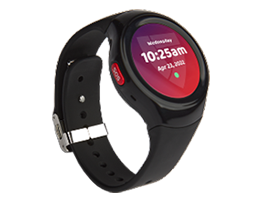
The MGMove is Medical Guardian’s medical alert smartwatch. It has a color touchscreen and built-in cellular on AT&T or Verizon, so it works with no phone at all. Automatic fall detection is available as a $10 monthly add-on, and when it triggers it contacts the monitoring center whether or not you have pressed the button. You also get GPS, two-way talk with the monitoring center, a step counter, weather, reminders and a companion app for family. It weighs two ounces and is water-resistant to IP67.
The companion app matters more than it sounds. Layne describes the job it does for a family member.
“ I want to squash a worry. I got that feeling in my head: did Dad get up okay? I can go and check. I can see it now and I can feel confident in what I’m seeing. … We want to make sure we’re providing value to all: the member, the caregiver, or even just someone who just cares.”
Sipes describes the same goal from the operations side.
“We want to provide members with the insights and technology and tools to be able to take ownership of their care and make their own informed decisions on what their care looks like, and bring their caregivers into the conversation.”
Independent reviewers have been consistent about the MGMove.
- NCOA named the MGMove Best Overall medical alert watch, scoring it 9.9 out of 10, citing its battery life against other medical alert watches, its discreet design and its fast response.
- PCMag named it Best Watch Overall.
- SafeHome ranked the MGMove first of twelve watches tested, ahead of Bay Alarm Medical, the Apple Watch and the Samsung Galaxy Watch 7, praising its caregiver features, readable touchscreen and two-way talk with the monitoring center.
- The Senior List called it one of the most reliable devices its reviewer has tested.
Response times vary by who is measuring, which is worth knowing when you compare providers. NCOA measured 29 seconds for the MGMove. The Senior List measured 10 seconds. The Senior List separately rates Medical Guardian’s response as fast as 8 seconds, the fastest in its comparison. Our own average time to connect a member to help is 15 seconds.
On fall detection specifically, every staged fall in NCOA’s testing was detected by Medical Guardian.
Two Things to Plan For
Every smartwatch in this category shares the same two realities, and it is worth knowing them going in.
- It charges daily, like any smartwatch. The easiest approach is to charge it at the same time each day, such as while getting ready for bed.
- Soft falls are harder to detect than hard ones, across every device on the market. That is why the help button matters as much as the sensor, and why the MGMove pairs automatic detection with a button that works the moment you press it.
What the Company Brings Behind the Device
- Certified to the highest standards. TMA Five Diamond certification for operator training, ESA Security certification, and UL Listed equipment.
- Two US-based monitoring centers, over 550 trained, certified operators, around the clock.
- First eSIM-powered alert device. In 2024 Medical Guardian launched the industry’s first eSIM-enabled medical alert device, which can connect through different carrier networks without changing a physical SIM card.
- Used by healthcare providers, with over 900 hospitals, insurers and care organizations as partners.
- No long-term contracts. Month-to-month plans.
How Accurate Is Fall Detection?
Very good at hard falls, less reliable with slow, soft ones. That is true of every device from every manufacturer, and it is the single most useful thing to understand before you rely on it.
Purpose-built devices are tuned harder for it than general-purpose ones, and testing shows the difference. When NCOA ran its own staged fall tests, every one was detected by Medical Guardian. That is a controlled test rather than a guarantee, and no system detects every fall in the real world, which is why Apple and Samsung print the same caveat in their documentation.
NCOA is equally clear about where the whole category still has work to do: smartwatch fall detection may miss softer fall patterns, which may not work well for those at higher risk of falls.
The reason is in the word “hard.” Algorithms are tuned to a sharp impact, and plenty of falls among older adults are not sharp. People slide down a wall, buckle at the knee, or lower themselves awkwardly onto the floor. Those cause real injuries and produce a weak signal.
What the Research Shows
Published research bears this out. A 2022 study in JMIR Formative Research put a fall detection app on ordinary smartwatches and staged 226 falls; it caught 77 percent of them. Real-world testing has been harder still. A pilot published in the Journal of the American Geriatrics Society found a device whose maker reported 94 percent in the laboratory caught one fall in four in real homes. Neither study named the device it tested.
This is not a wrist problem, either. A review in BMC Public Health that gathered several earlier reviews found chest, foot and leg sensors most accurate in controlled testing. But in the real world the picture is no better for pendants. Researchers at Harvard Medical School tested an investigational neck-worn detector with 62 nursing home residents over six months and recorded 19 percent. Soft falls are hard for every sensor, wherever it sits.
One finding is worth knowing if you wear a watch. Detection was much better when the person fell toward the same side as the wrist wearing the device: 92.5 percent, against 76.3 percent for falls toward the other side. If you have a weaker side, consider which wrist you use.
How Manufacturers Work on It
This is exactly why purpose-built devices are engineered differently from general-purpose ones. Qian’s team treats detection as something to be tuned continuously against real-world data rather than shipped and forgotten.
“When our device missed a fall, which is still happening in the field, what action were they doing that the device was actually not capturing? What false alert happens most?”
His team uses survey and user research to find the movement patterns that produce missed detections and false alarms, then targets those patterns in the algorithm. That is the work behind the NCOA result above.
“Any 1 percent occurrence is going to be 100 percent negative feedback for the user.”
The practical conclusion is to treat fall detection as a powerful backup to the button rather than a replacement for it. Layne puts the stakes plainly.
“ I’ve jokingly said I’m going to tattoo the word Trust across my forehead, since it is always top of mind. It only takes one instance of something not working as expected to break that trust. So when something like fall detection can’t be 100 percent, we make it the best it can possibly be.”
Wrist or Pendant: Which One Stays On?
Medical Guardian surveyed roughly 5,000 users about two of its devices and ran face-to-face interviews at a senior living community. Qian says one finding ran against expectation.
“Ironically, people have a more negative attitude towards [the wrist-worn device] compared to [the neck-worn device], even though it is about 40 to 50 percent smaller. That made us start wondering: people are much more strict about how a product feels on their wrist, if it bulges out, compared to if it’s something on [the neck], because they don’t get interfered with as much.”
A watch has to clear a higher bar than a pendant, because you feel it constantly and you look at it a dozen times a day. Bulk that nobody notices on a necklace becomes a daily irritation on a wrist. That is why the MGMove is built to two ounces with a 1.25-inch face.
It also explains a trade-off buyers rarely see. Battery capacity and cellular antennas both take physical space, so a watch thin enough that someone keeps wearing it has less room for either.
Clearing that bar is the whole point, and Sethi frames it as the goal rather than emergency coverage alone.
“Making sure members not only adopt our product, but feel comfortable relying on it in their daily lives. So that true companion by your side that has your back constantly.”
The Details That Decide Whether It Stays On
Small details decide this more often than specifications do. Matt Guerrieri, Medical Guardian’s chief marketing officer, describes his grandmother’s experience with an earlier device that used a front-facing status light.
“She wears it underneath her blouse and you can see the light coming through her shirt. She’s like, it’s a great device, I just, it’s kind of annoying that I have to constantly see this blue light flashing. Anything that’s going to make it feel like I don’t want to wear this, or give a reason for not wanting to wear it, is going to be the reason that they stop wearing it.”
None of that shows up in a specification, and all of it decides whether the watch is on the wrist when it matters.
Can You Wear It in the Shower?
Worth asking, because bathrooms are where a lot of falls happen.
Apple’s own water resistance guidance shows the fine print involved. Apple Watch Series 2 and later are water resistant, not waterproof. Showering is permitted. But Apple recommends keeping soap, shampoo, conditioner, lotion and perfume off the watch, because they can degrade the water seals and the acoustic membranes. Those membranes are the speaker and microphone you would need to talk to anyone. Apple also says water resistance is not permanent and cannot be tested or resealed once the watch leaves the factory.
Medical alert devices are generally built with this in mind. The MGMove is rated IP67, which covers splashes and brief immersion. Whatever you are considering, check the rating and ask the provider directly whether daily shower use is supported, because that is where you most want coverage.
Which Is Easiest for an Older Adult to Use?
Ease of use is the question people ask second and should probably ask first, because a device nobody can operate is a device nobody uses.
There is a barrier before that one, and it is not technical. Sipes describes what surprised her most.
“ Our members are afraid to push the button for the first time. I can put myself in their shoes. We all have something we avoid doing for the first time because nobody has shown us how, and we don’t want to be embarrassed getting it wrong.”
Her team built a guided walkthrough of the activation process in response. The point holds whatever you buy. The person wearing it should press the button once, on purpose, while someone is there.
Four Things to Check
Setup. Every consumer smartwatch needs a compatible phone to configure. Apple Watch needs an iPhone, Galaxy Watch needs Android. Medical alert watches ship configured.
Whether they can read it. Vision changes with age, and a watch face that is legible in a shop under bright lights may not be legible at night, without glasses, from a floor. Check the largest available text size, whether the screen wakes reliably when the wrist is raised, and whether there is a high-contrast setting.
The button. In an emergency the interface is one press. Check that the button is physically distinct and can be found by touch. The MGMove offers both, with a physical SOS button on the side of the case that can be found without looking, and an on-screen option as well. Either has to be held rather than tapped, which prevents accidental triggers.
How much is happening on the screen. A watch with 200 features has 200 things to get lost in. Qian describes the principle his team applies, using the status lights as the example.
“SOS is very focused on one thing. Status and battery signals are isolated to another. So the user doesn’t run the risk of, why is this blinking right now, what does that even mean? It’s more intuitive from the beginning, so it reduces the learning curve.”
How Much Does Battery Life Matter?
More than most specifications, though not for the reason people assume. It is not about running out mid-emergency. It is about whether charging becomes a habit or a chore.
Sumit Sethi has watched adoption patterns across wearables for years, and the failure point is always the same.
“One of the biggest hurdles to adoption was that new learned behavior of now I have to charge it every day, or charge it every night, and how do I fit that into my daily routine? The biggest drop-off we saw was when it’s a new learned behavior. That’s where people drop off, because I forgot, and I forgot one day, and then one day became two, and then by the third, I’m just not even thinking about it. This is too hard. I’m not going to do it anymore.”
Why Charging Breaks the Habit
Sethi is describing himself as much as anyone else.
“One of the downfalls of the watch is I do have to charge it a lot more often. I had to fit it into my daily routine.”
Guerrieri makes the same point from the other end.
“I wear a watch that has 30-day battery. I just don’t want to take it off my wrist.”
This is one of the reasons NCOA named the MGMove its Best Overall medical alert watch, citing long battery life alongside discreet design and fast response. In NCOA’s own comparison the MGMove runs to 24 hours against 6 to 18 hours for the competing Bay Alarm Medical SOS Smartwatch, which NCOA describes as considerably less. The Senior List measured 20 hours in its own testing, so treat a day as the working figure.
What matters more than the headline number is whether the device warns you clearly before it dies, and whether the charger is easy to use one-handed. Ask about both when you compare.
The practical advice is the same whatever you buy. Attach the charge to something you already do, rather than treating it as a new task. Sethi’s conclusion is that engineering helps but does not remove the problem.
“Adding the longevity to the battery life will definitely help, but I think that issue never goes away. How do we make these things seamless and fit into daily life?”
Does Insurance Cover a Medical Alert Watch?
Original Medicare, meaning Parts A and B, does not cover medical alert systems. It classifies them outside durable medical equipment. Medigap does not cover them either.
Some Medicare Advantage plans do cover them as a supplemental benefit, though coverage varies by plan and state. If you have one, the benefits summary or a call to member services will tell you.
Medicaid coverage is broader in many states, often through home and community-based services waivers, where a personal emergency response system is frequently a covered service.
Medical Guardian works with over 900 hospitals, insurers and care providers. It is worth asking directly whether your plan is one of them.
How to Choose
- Decide who answers. If you want a trained person who can hear what has happened and decide whether it needs an ambulance or a phone call to your daughter, you want a monitoring center. If a direct call to emergency services is fine, a consumer smartwatch may be enough.
- Check whether it works alone. A watch that needs a nearby phone is not protection in the garden. Confirm cellular is built in rather than an add-on.
- Ask how often it charges, and build the charge into an existing routine.
- Check the band and fit. Wrist comfort is judged harshly and daily, so check the band sizing and weight before you order.
- Treat fall detection as a backup, never the only way to call for help. Confirm the button is easy to press with arthritic hands.
- Ask about door access. Find out what happens when responders reach a locked door.
- Ask what the monthly plan includes, so you are comparing like for like across providers.
- Check the certifications. TMA Five Diamond, ESA and UL Listed are the marks worth looking for.
Key Takeaways
- The real difference is who answers. Consumer smartwatches reach emergency services or your contacts. A medical alert watch reaches a trained operator who can assess the situation and pass responders your door code.
- Independent reviewers rank purpose-built devices first for this job. NCOA named the MGMove Best Overall at 9.9 out of 10 with a measured 29-second response, PCMag named it Best Watch Overall, and SafeHome ranked it first of twelve watches, ahead of Bay Alarm, the Apple Watch and the Galaxy Watch 7.
- Soft falls are the hard case for every device on the market, which is why the button matters as much as the sensor. Every staged fall in NCOA’s testing was detected by Medical Guardian.
- Wear it on the side you are more likely to fall toward. One study caught 92.5 percent of same-side falls against 76.3 percent the other way.
- Battery drives adherence more than convenience. NCOA cites long battery life as one reason it named the MGMove Best Overall, and rates it above the competing Bay Alarm watch.
- A consumer smartwatch can be the right answer if the person is comfortable with a phone, wants fitness tracking and has family nearby. The case for a medical alert watch strengthens with living alone, distance from family, or a history of falls.
- Original Medicare does not cover these devices. Some Medicare Advantage plans and many state Medicaid waivers do.
Frequently Asked Questions
What is the best smart watch for seniors with fall detection?
Independent reviewers point the same way. NCOA named the Medical Guardian MGMove Best Overall, PCMag named it Best Watch Overall, and SafeHome ranked it first of twelve watches tested. The right choice still depends on who you want answering. If you live alone and want a trained operator, a medical alert watch fits. If family are nearby and a call to emergency services is fine, a mainstream smartwatch may be enough.
Does the Apple Watch detect falls accurately?
It handles hard falls reasonably well and avoids most false alarms during normal activity. Like all wrist-worn detection it is less reliable with slow, gradual falls, and Apple says so in its own documentation. It calls emergency services rather than a monitoring center, and switches on automatically for users aged 55 and over who entered their age.
Will a fall detection watch work if I do not have a smartphone?
A medical alert watch will. The MGMove has built-in cellular on AT&T or Verizon and needs no phone at all, for setup or in an emergency. Consumer smartwatches need a compatible phone to configure, and without a cellular model they generally need that phone nearby to raise an alert. Samsung states this directly in its own support documentation.
Can fall detection trigger by accident?
Yes, and it happens across every brand. Dropping the device, sitting down heavily, or certain arm movements can register as falls. Most systems give you a window to cancel before help is called, and Medical Guardian does not penalize false alarms. We would always rather check.
Is fall detection included in the monthly price?
Automatic fall detection is offered as an add-on across the medical alert industry, and on the MGMove it is $10 a month on top of the plan. On consumer smartwatches the feature comes with the device, but you may need the cellular model and a data plan for it to work when your phone is not nearby. Ask any provider what the monthly figure covers.
Should I get a watch or a pendant?
Watches are more socially comfortable and easier to keep on during the day, which is why the category exists and why adherence tends to be better. Pendants tolerate bulk more easily and some people find them simpler to press. The device that gets worn consistently is the one that works, so choose on that rather than on the spec sheet.
References
- NCOA. The Best Medical Alert Watches of 2026: Expert Reviewed. https://www.ncoa.org/product-resources/medical-alert-systems/best-medical-alert-watches/
- NCOA. Best Medical Alert Systems With Fall Detection. https://www.ncoa.org/product-resources/medical-alert-systems/best-medical-alert-systems-with-fall-detection/
- SafeHome. Best Medical Alert Watches of 2026: Expert Tested. https://www.safehome.org/medical-alert-systems/best/watches/
- PCMag. The Best Medical Alert Systems. https://www.pcmag.com/picks/the-best-medical-alert-systems
- The Senior List. Best Medical Alert Systems. https://www.theseniorlist.com/medical-alert-systems/best/
- The Senior List. Medical Guardian MGMove Watch Review. https://www.theseniorlist.com/medical-alert-systems/medical-guardian/mgmove/
- Effectiveness of a Smartwatch App in Detecting Induced Falls: Observational Study. JMIR Formative Research. 2022. https://doi.org/10.2196/30121
- Chaudhuri S, Oudejans D, Thompson HJ, Demiris G. Real-World Accuracy and Use of a Wearable Fall Detection Device by Older Adults. Journal of the American Geriatrics Society. 2015;63(11):2415-2416. https://doi.org/10.1111/jgs.13804
- Are wearable devices effective for preventing and detecting falls: an umbrella review. BMC Public Health. 2021. https://doi.org/10.1186/s12889-021-12169-7
- Lipsitz LA, et al. Evaluation of an Automated Falls Detection Device in Nursing Home Residents. Journal of the American Geriatrics Society. 2016;64(2):365-8. https://doi.org/10.1111/jgs.13708
- Fleming J, Brayne C. Inability to get up after falling, subsequent time on floor, and summoning help: prospective cohort study in people over 90. BMJ. 2008;337:a2227. https://doi.org/10.1136/bmj.a2227
- Apple. Manage fall detection on Apple Watch. Apple Watch User Guide. https://support.apple.com/guide/watch/apd34c409704/watchos
- Samsung. Use the Detect fall feature on your Samsung smart watch. https://www.samsung.com/us/support/answer/ANS00087244/
- Garmin. Turning Incident Detection On and Off. Owner’s manuals.
- Google. Get help in an emergency with Google Pixel Watch safety features. https://support.google.com/googlepixelwatch/answer/12663810
- Medicare.gov. Durable medical equipment (DME) coverage. https://www.medicare.gov/coverage/durable-medical-equipment-dme-coverage