
Quick Summary
Falls are among the leading causes of injury among adults 65 and older, but many falls can be prevented. Risk factors include age-related muscle loss (sarcopenia), postural hypotension, changes in vision and hearing, foot problems, unsafe footwear, certain medications, polypharmacy, chronic conditions, and environmental hazards. Cognitive impairment and fear of falling are also significant contributors that are often overlooked. The good news: targeted exercise, medication reviews, home modifications, and assistive technology can meaningfully reduce fall risk at any age.
How Common Are Falls Among Seniors, and Why Does It Matter?
Falls are not a rare or unlucky event for older adults. More than one in four people aged 65 and older fall each year, and the risk increases steadily with age. What makes this statistic especially sobering is what often follows: broken bones, emergency room visits, loss of independence, and in some cases, a cascade of health complications that prove difficult to reverse.
The consequences of falling extend beyond the physical. Fear of falling, even among seniors who have never fallen, can lead to reduced activity, social withdrawal, and accelerating physical decline. It is, in effect, a risk factor that feeds itself.1 Understanding why falls happen is therefore the first step toward preventing them. The causes are rarely singular. More often, falls result from an accumulation of factors (physiological, medical, pharmaceutical, and environmental) that compound one another in ways that are not always obvious until something goes wrong. The sections below examine those factors one by one, explain the mechanisms behind them, and point toward interventions that evidence suggests actually work.
Physiological Changes That Increase Fall Risk
How Does Aging Affect Balance and Coordination?
Aging brings gradual but meaningful changes to the body systems that govern balance, coordination, and reaction time. Among these, the vestibular system deserves particular attention. Located in the inner ear, the vestibular system detects changes in head position and movement, sending continuous signals to the brain that help maintain upright posture and stable gaze during motion. With age, the hair cells within the vestibular apparatus (the sensory receptors responsible for detecting these changes) decline in number and function, making the system less reliable as a balance reference.2 This decline can produce subtle but persistent unsteadiness, particularly during transitions such as turning the head or rising from a seated position. Though not directly related to vestibular function, hearing loss, even when mild, disrupts the spatial awareness that helps orient the body in space. Reflexes slow throughout the body. None of these changes happen overnight, and none are inevitable in their occurrence or severity, but together they quietly erode the physical margin for error that keeps a stumble from becoming a fall.1
The visual system compounds this vulnerability. Glaucoma is a group of eye diseases that damage the optic nerve, which is crucial for vision; this damage is often caused by abnormally high pressure in the eye. The progressive narrowing of peripheral visual fields it produces reduces awareness of hazards outside the direct line of sight, and research has found significantly higher rates of falls and fear of falling in older adults with glaucoma compared to those without it.3 Cataract, a condition in which the normally clear lens of the eye becomes clouded (typically due to aging), causes progressively blurred vision, reduced contrast sensitivity, and increased glare sensitivity. Cataract surgery, which replaces the clouded lens with a clear artificial one, restores much of this lost visual function. A randomized controlled trial found that expedited first-eye cataract surgery significantly reduced fall rates compared to routine waiting, making timely vision correction not merely a quality-of-life issue but a meaningful safety intervention.4 Even modest reductions in visual acuity, contrast sensitivity, or depth perception can impair a person’s ability to detect steps, uneven surfaces, and obstacles in time to respond safely – true even for those without any diagnosed eye condition, which is why routine eye examinations and keeping eyeglass or contact lens prescriptions current matter for fall prevention regardless of whether a specific problem has been identified.
These sensory and reflex changes do not act in isolation. They interact with the muscular changes described next to produce a cumulative vulnerability that is greater than any single factor would suggest.
What Is Sarcopenia and How Does It Contribute to Falls?
Building on those sensory vulnerabilities, the body’s physical capacity to respond to balance challenges is further compromised by sarcopenia: the progressive loss of muscle mass, strength, and function that begins as early as the fourth decade of life and accelerates after 60.5 Derived from the Greek words sarx (flesh) and penia (loss), sarcopenia is recognized as a distinct clinical condition by major geriatric medicine bodies worldwide. Its prevalence rises sharply with age: a review of published prevalence data estimated that sarcopenia affects 14 to 33% of community-dwelling adults over 60, rising to between 11 and 50% in those aged 80 and above, depending on the diagnostic criteria used.6
The European Working Group on Sarcopenia in Older People (EWGSOP2) defines sarcopenia by three criteria: low muscle strength, low muscle quantity or quality, and poor physical performance.5 When all three are present, the condition is considered severe, and fall risk is correspondingly high.5
Sarcopenia affects balance and gait in ways that go beyond simple weakness. Reduced muscle mass in the lower limbs impairs the body’s ability to make rapid postural corrections, particularly the kind needed when stepping off a curb or navigating an uneven surface without losing balance.5 Fatigue sets in faster,7 reaction times slow,8 and the physical reserve that healthy muscle provides (the capacity to catch yourself mid-stumble) diminishes gradually over time.9
Importantly, sarcopenia is not an inevitable outcome of aging. Resistance training and adequate protein intake have both been shown to slow its progression and, in some cases, partially reverse it.10 That said, it is one piece of a larger picture: even a senior who manages sarcopenia well through exercise remains vulnerable if postural hypotension, medications, or environmental hazards are left unaddressed. The risk factors discussed in this article are cumulative and interactive.
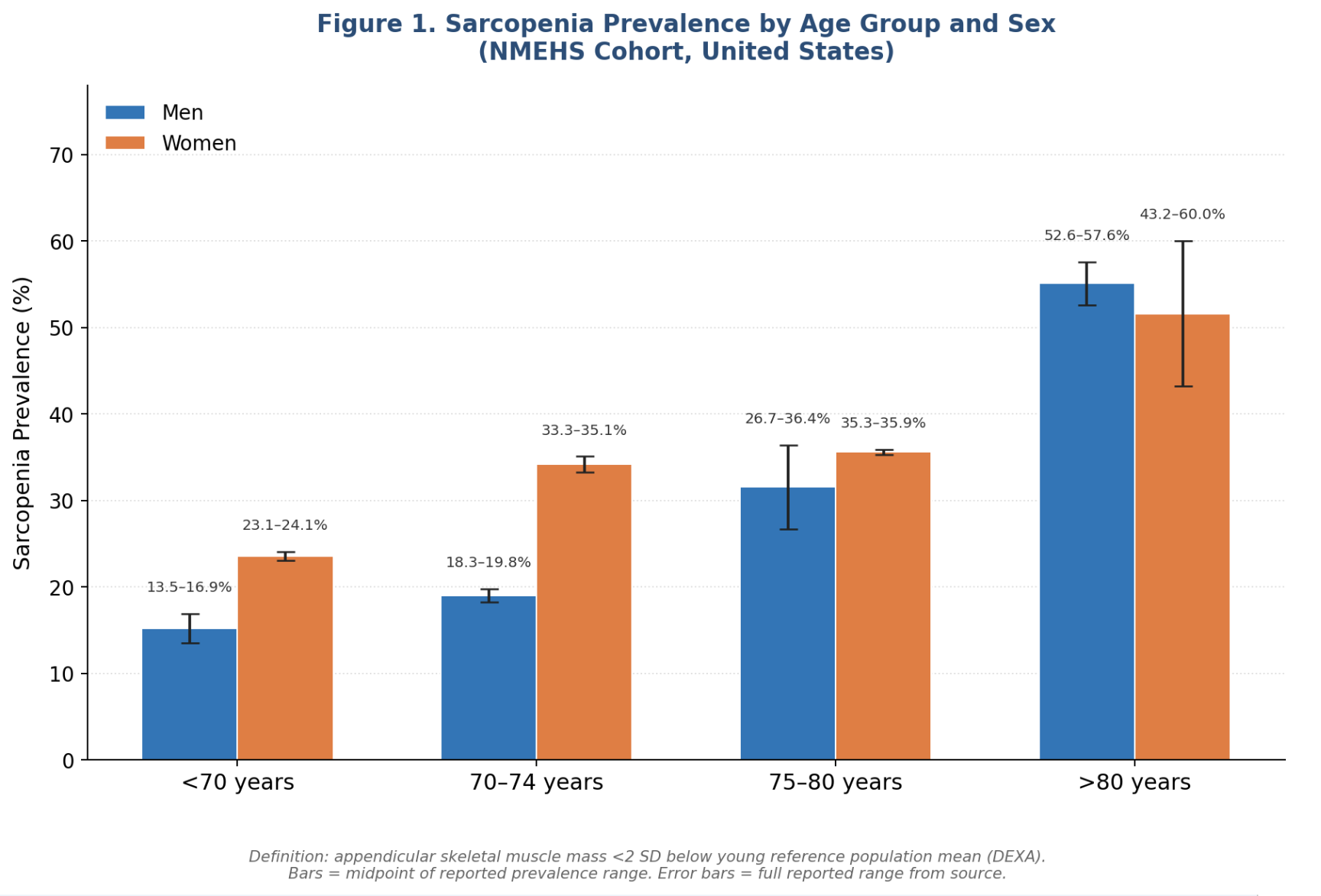
Figure 1. Sarcopenia prevalence by age group and sex (NMEHS cohort, USA; n=808). Sarcopenia defined as appendicular skeletal muscle mass <2 SD below young reference population mean, assessed by DEXA. Bars represent midpoints of the prevalence ranges reported in the source; error bars span the full reported range. Prevalence estimates vary across studies depending on diagnostic criteria and measurement method. Source: Von Haehling et al. (2010), J Cachexia Sarcopenia Muscle, 1(2):129–133, Table 1.
What Is Postural Hypotension and Why Is It Dangerous for Seniors?
Alongside sarcopenia, one of the most underrecognized physiological contributors to falls is postural hypotension (also called orthostatic hypotension): a significant drop in blood pressure that occurs upon standing from a seated or lying position. The result is a brief but sometimes severe reduction in blood flow to the brain, causing dizziness, lightheadedness, and in some cases, sudden loss of balance or consciousness.11
In older adults, postural hypotension is surprisingly common with prevalence estimates ranging from roughly 5% in middle age to 20% or higher after age 70, though reported rates vary across studies depending on the population and measurement method used.12 Several conditions increase susceptibility through distinct mechanisms. Elevated resting blood pressure is associated with reduced baroreflex sensitivity – the body’s ability to regulate blood pressure, impairing the body’s ability to mount an adequate compensatory response when standing.13 Parkinson’s disease is among the most strongly associated conditions: neurogenic OH, caused by cardiac sympathetic denervation and postganglionic autonomic failure, affects approximately 30% of people with Parkinson’s disease, with estimates varying widely across studies.14 Diabetes mellitus increases risk through autonomic neuropathy, which disrupts the neural signaling required to maintain blood pressure on standing; a systematic review and meta-analysis of 21 studies found a pooled OH prevalence of 24% (95% CI 19%–28%) in patients with diabetes.15 Heart failure creates vulnerability through reduced cardiac output and the volume-modulating effects of medications commonly used to treat it.16 A number of commonly prescribed medications also worsen OH independently, which we discuss in detail in the medications section below.
The fall risk is highest in the moments immediately after standing: getting out of bed in the morning, rising from a chair after a meal, or standing up quickly during a nighttime bathroom visit. These are precisely the kinds of ordinary, unremarkable transitions that most people never think twice about, which is part of what makes this condition so treacherous. Taken together, the physiological changes described in this section set the stage for the medical and pharmacological factors that follow.
Medical Conditions That Raise Fall Risk
Which Chronic Conditions Are Most Strongly Linked to Falls?
Physiological aging creates a baseline of vulnerability, but specific chronic conditions can amplify fall risk substantially, often by disrupting the same sensory, muscular, and circulatory systems already under strain. A wide range of conditions interfere, directly or indirectly, with the balance, coordination, and judgment needed to move safely through the world.
Diabetes can cause peripheral neuropathy, a form of nerve damage that reduces sensation in the feet and lower legs. When a person cannot feel the ground properly beneath their feet, the feedback loop that maintains balance is compromised, increasing the risk of a fall. Diabetes also increases the risk of vision loss, and in more advanced cases, partial or full amputation of the lower extremities, adding compounding layers of fall vulnerability.1
Heart disease and arrhythmias can produce episodes of dizziness or fainting, particularly during physical exertion or positional changes. Reduced cardiac output (the volume of blood the heart pumps per minute) limits blood flow to the brain and affects alertness and coordination. Conditions such as congestive heart failure (CHF), in which the heart cannot pump efficiently enough to meet the body’s demands, are especially relevant: CHF can produce fatigue, fluid retention, and reduced exercise tolerance, all of which contribute to deconditioning and fall risk. Arrhythmias such as atrial fibrillation (an irregular and often rapid heart rhythm in which the upper chambers of the heart beat chaotically, disrupting the organized flow of blood through the heart) may cause transient drops in cerebral perfusion (the delivery of oxygenated blood to the brain) that result in dizziness or syncope.17
Thyroid disorders, particularly hypothyroidism (a condition in which the thyroid gland produces insufficient thyroid hormone), can cause muscle weakness, fatigue, slowed reflexes, and in some cases cerebellar dysfunction affecting coordination. Thyroid hormone plays a critical role in regulating neuromuscular function: when levels are low, nerve conduction slows, muscle contraction weakens, and the cerebellum (the region of the brain responsible for coordinating movement and balance) may be affected, producing an unsteady gait. This cluster of symptoms maps directly onto fall risk.1
Neurological conditions represent some of the most direct pathways to falling. Parkinson’s disease produces a characteristic shuffling gait, reduced arm swing, postural instability, and a tendency to freeze mid-stride, all of which substantially elevate fall risk.18 Essential tremor can impair fine motor control and balance during movement. Stroke frequently leaves lasting deficits in motor function, sensation, and spatial perception on the affected side. Multiple sclerosis causes demyelination of the nerve fibers governing movement, balance, and coordination (the myelin sheath insulates nerve fibers and enables rapid signal transmission; without it, motor and sensory signals become slower and less reliable), and fatigue is a near-universal symptom that amplifies fall risk further.19 Other movement disorders, including progressive supranuclear palsy (PSP, a neurodegenerative condition affecting the brainstem that impairs vertical gaze, balance, and postural reflexes) and normal pressure hydrocephalus (NPH, a condition involving excess cerebrospinal fluid in the brain’s ventricles that causes a classic triad of gait disturbance, cognitive impairment, and urinary incontinence), carry among the highest fall rates of any neurological condition. PSP in particular is associated with early postural instability and characteristic backward falls that are often the presenting symptom.20
Incontinence deserves special mention because its connection to falls is indirect but well-documented. Seniors who experience urinary urgency often rush to reach the bathroom in time, moving faster than their balance and coordination can safely support. This is especially risky at night, when lighting is poor and the body is not fully alert.1 Conditions that commonly cause or contribute to urinary incontinence in older adults include benign prostatic hyperplasia (BPH) in men, pelvic floor dysfunction in women, overactive bladder, urinary tract infections, and neurogenic bladder secondary to diabetes or spinal conditions. Diuretic medications, discussed further below, can also drive urgency and frequency that increase fall risk.
How Do Cognitive Impairment and Dementia Affect Fall Risk?
Alongside these physical conditions, cognitive changes represent a parallel and compounding source of fall risk. Older adults living with mild cognitive impairment (MCI) or dementia face fall risks substantially elevated above the already-high baseline for their age group.21 A prospective study found that older adults with dementia experienced nearly eight times more incident falls than cognitively intact controls (incidence density ratio 7.58, 95% CI 3.11 – 18.5).22
Impaired judgment leads to risk-taking behavior that a fully cognitively intact person would avoid, such as reaching for something on a high shelf without support, or moving quickly across an unfamiliar surface. Reduced attention means hazards go unnoticed. Some forms of dementia, particularly Lewy body dementia (LBD), directly disrupt the motor systems that govern gait and balance through a distinct mechanistic pathway: alpha-synuclein protein aggregates (Lewy bodies) accumulate in the brainstem (the region connecting the brain to the spinal cord, which regulates automatic functions including posture, gait, and muscle tone) and basal ganglia (deep brain structures that coordinate the initiation and smoothness of voluntary movement), disrupting dopaminergic signaling in circuits that control movement initiation, postural tone, and balance. This produces Parkinsonism features including rigidity, bradykinesia (slowness of movement), and gait instability that are often present early in the disease course, all of which can result in falls.23 Many medications used to manage behavioral symptoms of dementia, including antipsychotics, carry their own substantial fall-risk profiles.18
Foot Problems and Footwear
Can Foot Pain Really Cause a Fall?
Moving from systemic and neurological conditions to something closer to the ground, foot health is a clinically recognized and often underappreciated fall risk factor. Bunions, hammertoes, plantar fasciitis, and other painful foot conditions alter gait mechanics in subtle but consequential ways. When walking is painful, people unconsciously modify how they step, shortening stride length, shifting weight distribution, or avoiding full foot contact with the ground. These compensatory patterns reduce stability and increase the likelihood of tripping or losing balance.
A prospective study found that decreased toe plantarflexor strength and disabling foot pain were each independently associated with increased fall risk in older adults, after accounting for physiological fall risk factors and age. Hallux valgus (bunions), toe deformities, and plantar heel pain were each significantly more prevalent in those who had fallen compared to non-fallers.24
Expert Perspective: Foot Health & Falls
“The foot problem that is commonly overlooked by both patients and their physicians is hallux valgus (bunions), which doubles the risk of falling. Hallux valgus interferes with the normal weightbearing function of the foot and impairs balance and gait, so is detrimental to overall stability. There is evidence that surgical correction of this deformity may decrease falls risk.”
— Professor Hylton B. Menz, BPod(Hons) PhD DSc FFPM RCPS(Glasg) FAHMS, Discipline of Podiatry, La Trobe University
Does Footwear Matter for Fall Prevention?
Foot problems are frequently compounded by footwear choices. Backless shoes, high heels, slippers with smooth soles, and worn-out athletic shoes all compromise the foot-ground interface that stable walking depends on. Shoes that fit poorly, whether too loose, too tight, or lacking adequate arch support, shift weight in ways that reduce balance.1
The ideal footwear for fall prevention has a low heel, a non-slip textured sole, a firm heel counter, and laces or straps that hold the foot securely. Walking indoors in only socks or bare feet, and wearing shoes with heels over one inch, smooth soles, or no back support, are each associated with increased fall risk.25 Poor footwear choices can negate the benefits of otherwise good balance and muscle strength.
Medications and Polypharmacy
Which Medications Increase the Risk of Falling?
Across many of the conditions described above, medications are part of the management plan. This creates a compounding problem: many of the drugs most commonly used to treat chronic disease in older adults also carry fall risk as a side effect. Medications are among the most modifiable fall risk factors, and also among the most underappreciated ones.
The American Geriatrics Society’s Beers Criteria, a widely used clinical reference for potentially inappropriate medication use in older adults, identifies several drug classes as particularly high-risk:18
| Drug Class | Examples | Fall-Related Side Effects |
| Benzodiazepines | Diazepam, lorazepam, alprazolam | Sedation, impaired coordination, confusion |
| Antihypertensives | Amlodipine, lisinopril, metoprolol | Orthostatic hypotension, dizziness |
| Antidepressants (SSRIs/TCAs) | Sertraline, amitriptyline | Dizziness, orthostatic hypotension |
| Antipsychotics | Haloperidol, quetiapine | Sedation, extrapyramidal effects |
| Opioids | Oxycodone, tramadol | Sedation, impaired balance |
| Anticonvulsants | Gabapentin, pregabalin | Dizziness, sedation |
| Diuretics | Furosemide, hydrochlorothiazide | Dehydration, orthostatic hypotension |
| Sleep aids | Zolpidem, diphenhydramine | Sedation, next-day impairment |
Table 1. High-risk medication classes for falls in older adults, based on AGS Beers Criteria (2023 update).¹8
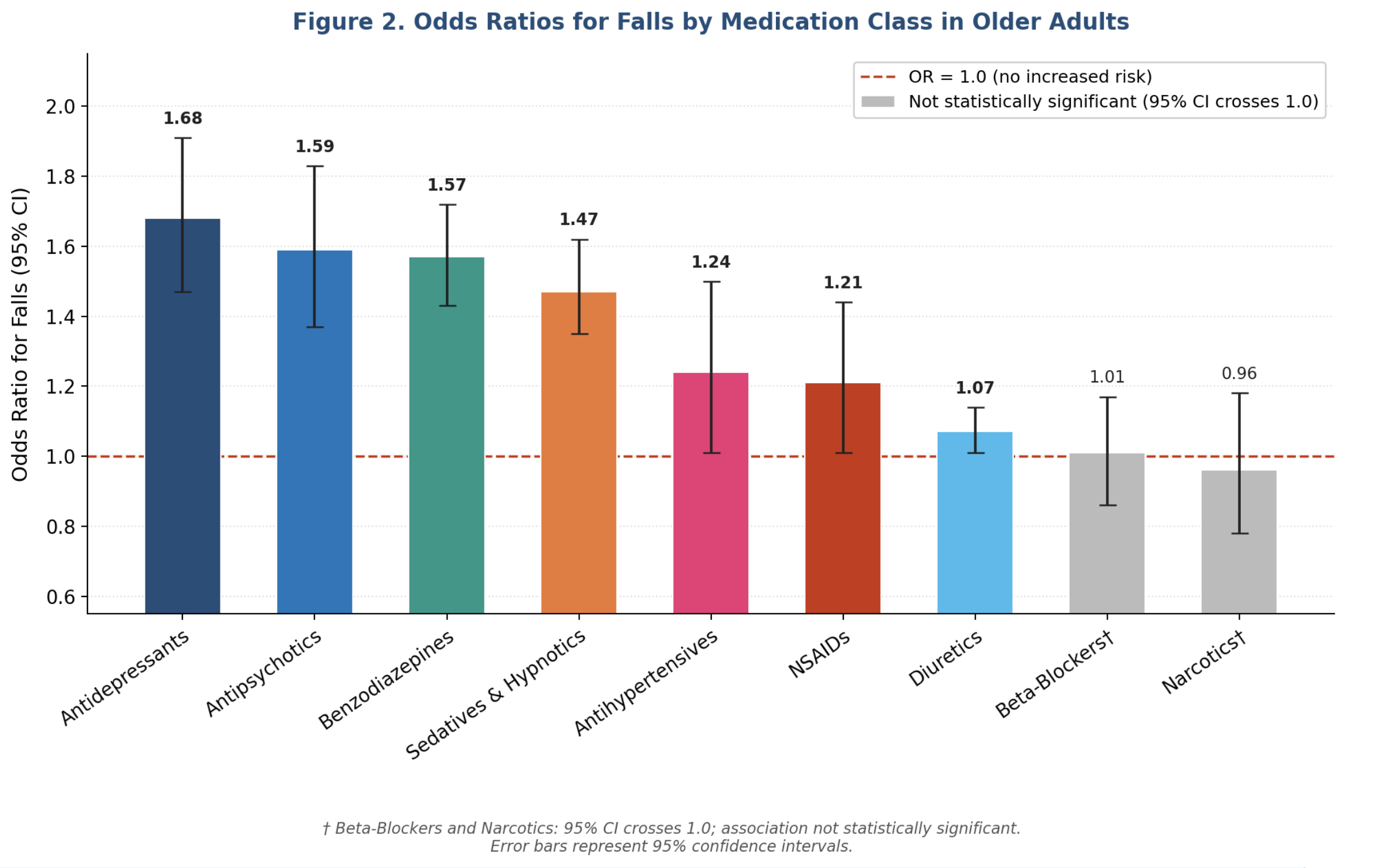
Figure 2. Odds ratios for falls by medication class in older adults, with 95% confidence intervals. Error bars represent 95% CIs. Gray bars (beta-blockers, narcotics) indicate associations that did not reach statistical significance (95% CI crosses 1.0). Data from de Jong et al. (2013), Ther Adv Drug Saf, 4(4):147–154, Table 2, citing Woolcott et al. (2009).
What Is Polypharmacy and Why Is It a Special Concern?
The risk of falling due to medications is further compounded when multiple medications are taken simultaneously. Polypharmacy, conventionally defined as the concurrent use of five or more medications, is extraordinarily common among older adults. A nationally representative study found that nearly 40% of adults aged 62–85 in the United States used five or more prescription medications concurrently, with the rate rising further when over-the-counter medications and supplements were included.26
The fall risk associated with polypharmacy is not simply additive. When multiple medications with overlapping side effect profiles are taken together, their effects can compound in ways that no single medication’s label would predict. A senior taking an antihypertensive, a benzodiazepine, and a diuretic simultaneously, for example, faces a layered risk of orthostatic hypotension, sedation, and dehydration that each individual medication’s prescribing information may not fully capture.
Medication review, ideally conducted by a pharmacist or physician with geriatric expertise, is one of the highest-yield fall prevention interventions available. A Cochrane review of 19 trials found that multifactorial fall prevention interventions — which typically include medication review alongside exercise, home safety assessment, and other components — significantly reduced the rate of falls in community-dwelling older adults.27
Environmental Hazards
What Home and Community Hazards Contribute to Falls?
Environmental factors are estimated to contribute to approximately 30-50% of all falls in older adults.²8 They are also among the most straightforwardly modifiable risk factors, since they require no medical intervention, only assessment and action. Nationally representative data show that 79% of fall-related emergency department visits among older adults occurred at home, with the bedroom, stairs, and bathroom accounting for the most common specific locations.29
Common household hazards include:
- Loose rugs or carpeting that can catch a foot mid-stride
- Poor lighting, especially on staircases and in hallways
- Bathtubs and showers without grab bars or non-slip surfaces
- Clutter on floors and walkways
- Furniture positioned in ways that obstruct safe movement
- Stairs without secure handrails on both sides
- Beds or chairs at heights that make standing up difficult
In the community, hazards include uneven pavement, steep hills, poorly maintained curb cuts, icy or wet surfaces, and poorly lit parking areas. These risks are amplified for seniors who use assistive devices such as canes or walkers, for whom surface irregularities that an able-bodied person barely notices can present a genuine obstacle.
A formal home safety assessment, conducted by an occupational therapist or using a validated checklist, can identify and prioritize the modifications most likely to reduce fall risk. The CDC’s STEADI program provides freely available assessment tools for both clinicians and patients.25
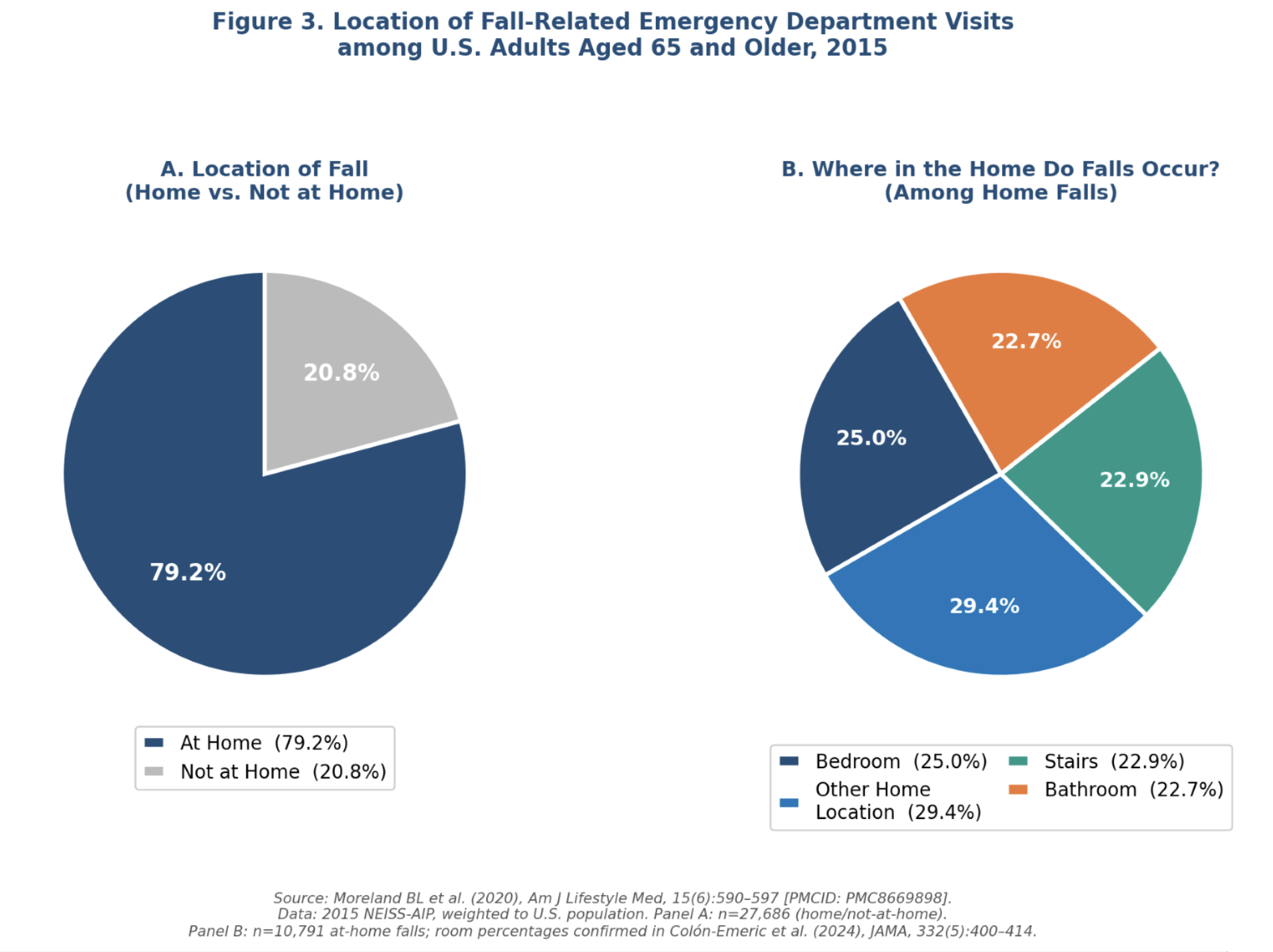
Figure 3. Location of fall-related emergency department visits among U.S. adults aged 65 and older, 2015. Panel A: 79.2% of falls occurred at home compared to 20.8% not at home (n=27,686). Panel B: among home falls, the bedroom (25%), other home locations (29.4%), stairs (22.9%), and bathroom (22.7%) were the most common specific sites (n=10,791). Source: Moreland et al. (2020), Am J Lifestyle Med, 15(6):590–597; 2015 NEISS-AIP data, weighted to U.S. population. Room-level percentages confirmed in Colón-Emeric et al. (2024), JAMA, 332(5):400–414.
The Fear of Falling: A Risk Factor That Creates Itself
Does Fear of Falling Actually Make Falls More Likely?
Environmental hazards are visible and concrete. Fear of falling is neither, but it operates with comparable force. It occupies an unusual place among fall risk factors: it is both a consequence of falling and, paradoxically, a cause. Among seniors who have fallen, fear of falling is nearly universal. But studies consistently show that a significant proportion of older adults who have never fallen also report this fear, and that it independently increases their risk.30
The mechanism is straightforward but insidious. Fear leads to activity restriction. Activity restriction leads to reduced muscle strength, diminished balance, and decreased confidence in physical ability. Each of these outcomes increases fall risk, which in turn deepens the fear. Left unaddressed, this cycle can transform a cautious senior into a sedentary one, with measurable consequences for both fall risk and overall health. A prospective study found that activity restriction driven by fear of falling was independently associated with declines in both objective and self-reported physical function over time.31
Cognitive behavioral approaches, balance training, and gradual re-engagement with physical activity have all shown promise in addressing this cycle directly. A randomized controlled trial found that a group-based multicomponent cognitive behavioral intervention significantly reduced fear of falling and associated activity avoidance in community-dwelling older adults, with effects that persisted at follow-up.32 The key insight is that fear of falling is not a rational response to be indulged, but a modifiable condition to be treated.
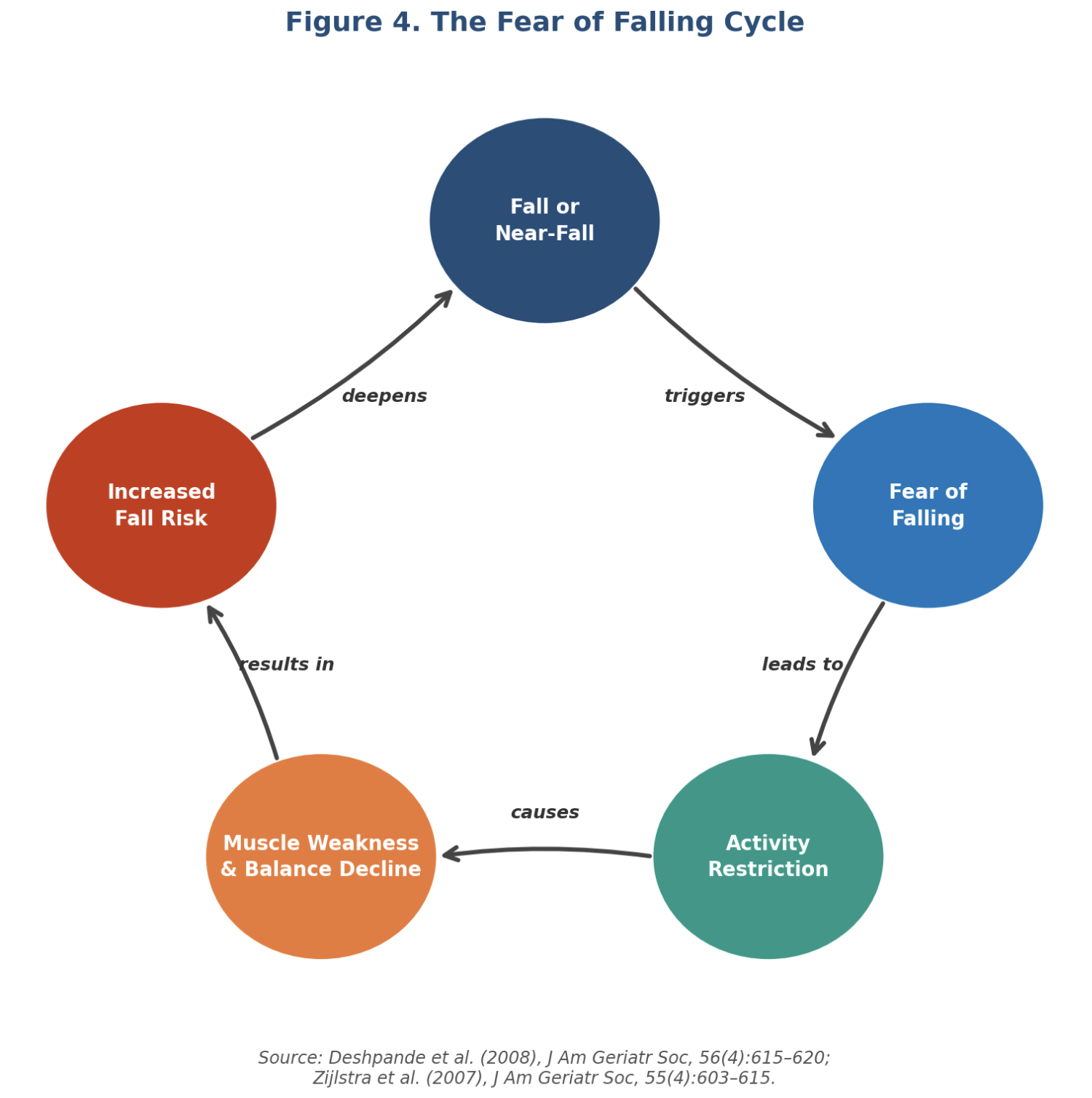
Figure 4. The fear of falling cycle. Fear of falling drives activity restriction, which accelerates physical decline and raises fall risk, deepening the fear further. Python-generated conceptual diagram based on Deshpande et al. (2008) and Zijlstra et al. (2007); not reproduced from either paper.
What Can Be Done? Key Prevention Strategies
How Can Exercise Reduce Fall Risk?
Understanding the full landscape of fall risk factors makes clear why exercise is so consistently effective as a preventive intervention: it addresses multiple risk factors simultaneously. Regular physical activity builds and preserves muscle mass (directly counteracting sarcopenia), improves balance and coordination, maintains joint flexibility, reduces fear of falling through increased confidence in the body, and has been shown to slow bone loss from osteoporosis.1
The most effective exercise programs for fall prevention combine several modalities:
- Resistance training to build lower limb strength and slow sarcopenic muscle loss.
- Balance training, particularly tai chi. A randomized controlled trial found that a 6-month tai chi program reduced fall incidence by 55% compared to stretching controls.
Expert Perspective: Why Tai Chi Works
“What makes tai chi effective for fall prevention? Tai chi is unique because it integrates slow, flowing, and multidirectional movements that continuously challenge balance and proprioception. Unlike other balance training methods that often emphasize linear or static activities, tai chi combines dynamic weight shifting, trunk rotation, and controlled stepping patterns, simultaneously improving coordination, lower-extremity strength, and postural stability. These elements foster enhanced neurological control and empower participants to respond to balance disturbances in real-world settings. Our 2005 randomized trial demonstrated a 55% reduction in fall incidence after six months of tai chi compared to stretching controls, underscoring its robust effect on fall risk mitigation.”
— Fuzhong Li, PhD, Senior Scientist, Oregon Research Institute
The evidence for tai chi is compelling, but getting started is a common barrier. For older adults who are hesitant, Dr. Li offers this perspective:
Expert Perspective: Getting Started
“What to say to an older adult who is hesitant: I would emphasize that tai chi is a gentle, low-impact activity suitable for beginners, requires no special equipment, and can be adapted to almost any fitness level. Beyond reducing fall risk, participants often report improvements in confidence, relaxation, and overall well-being—changes that contribute to a safer and more active lifestyle in later years.”
— Fuzhong Li, PhD, Senior Scientist, Oregon Research Institute
- Flexibility work including yoga and stretching to maintain joint range of motion.
- Mild weight-bearing activity such as walking or stair climbing to support bone density.
The World Health Organization recommends that adults aged 65 and older engage in at least 150-300 minutes of moderate-intensity aerobic activity per week, combined with muscle-strengthening activities on two or more days per week.33 Consistency matters more than intensity: even gentle, regular movement (a daily walk, a twice-weekly chair yoga class) can produce meaningful improvements in the balance and strength that prevent falls.
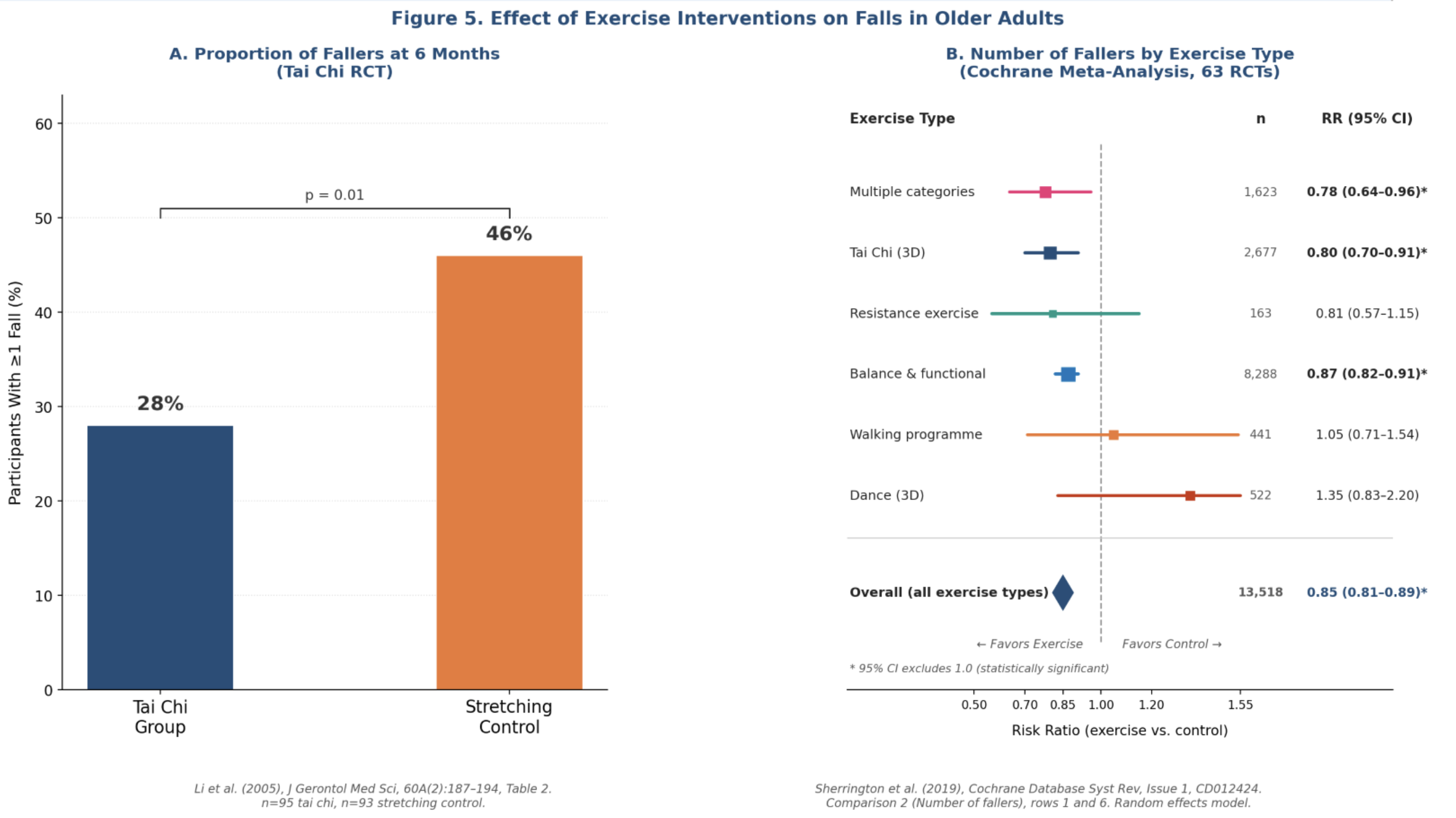
Figure 5. Effect of exercise interventions on falls in older adults. Panel A: proportion of participants with at least one fall at 6 months in a randomized controlled trial of tai chi vs. stretching control (28% vs. 46%; p=0.01). Source: Li et al. (2005), J Gerontol Med Sci, 60A(2):187–194, Table 2. Panel B: forest plot of risk ratio for number of fallers across 63 randomized trials of exercise vs. control (RR 0.85, 95% CI 0.81–0.89; n=13,518). Source: Sherrington et al. (2019), Cochrane Database Syst Rev, Issue 1, CD012424, Comparison 2, row 1.
What Other Interventions Help Prevent Falls?
Exercise is foundational, but a comprehensive fall prevention approach addresses the full range of modifiable risk factors. Key interventions beyond exercise include:
Medication review: Working with a physician or pharmacist to identify and, where possible, reduce or replace high-risk medications. This is one of the most actionable interventions for seniors with polypharmacy.27
Vision correction: Regular eye examinations and keeping eyeglass or contact lens prescriptions current are important for all older adults, regardless of whether a specific condition has been diagnosed. Prompt treatment of cataracts and ongoing management of glaucoma are both supported by evidence linking these conditions to increased fall rates.3
Home modification: Installing grab bars, securing loose rugs, improving lighting, and removing clutter. Occupational therapy assessments can prioritize the highest-risk areas.25 Learn more about aging safely at home.
Footwear assessment: Replacing unsafe footwear with properly fitting, non-slip, low-heeled shoes and treating painful foot conditions that alter gait.25
Assistive devices: Using canes, walkers, or other mobility aids correctly and consistently, particularly in unfamiliar or uneven environments.
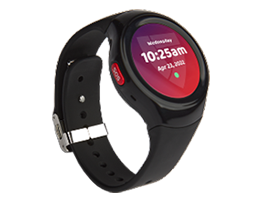
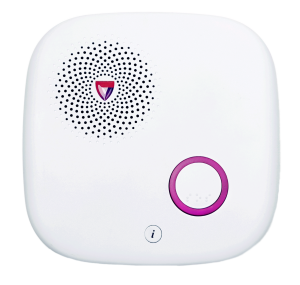
Personal emergency response systems: Even when every other precaution is taken, falls can still happen — which is why having fall detection and an immediate response pathway in place matters. Medical Guardian offers wearable devices for on-the-go protection, including the GPS fall detection device and Mini Lite, as well as home-based options including a cellular home alert and landline alert button. These devices do not prevent falls, but they can reduce delays in getting help after a fall, especially for people who live alone — a gap that can be decisive for outcomes, especially for those who live alone. Compare devices and pricing.
Vitamin D and bone health: Vitamin D deficiency has been associated with muscle weakness and increased fall risk in older adults. A meta-analysis of randomized controlled trials found that supplemental vitamin D at doses of 700-1000 IU per day reduced fall risk by 19%.34 Supplementation decisions should be made in consultation with a physician, who can assess individual deficiency levels and appropriate dosing. For many people, adequate sun exposure is a practical and effective route to maintaining vitamin D levels.
Frequently Asked Questions
What is the most common cause of falls in older adults?
Falls rarely have a single cause. Most result from multiple overlapping risk factors, including muscle weakness, balance problems, medication side effects, environmental hazards, and chronic conditions. Among physiological factors, sarcopenia (age-related muscle loss) and vestibular decline are especially significant because they reduce the body’s ability to recover from a stumble.
At what age do fall risks increase most significantly?
Fall risk increases gradually starting in the mid-60s and rises more sharply after age 75. The risk reflects the cumulative effects of muscle loss, sensory changes, and the increased prevalence of chronic conditions and polypharmacy over time. That said, meaningful fall prevention is possible at any age.
Can medications really cause falls?
Yes. Many commonly prescribed medications increase fall risk through side effects such as dizziness, sedation, orthostatic hypotension, and impaired coordination. Drug classes of particular concern include benzodiazepines, antidepressants, antihypertensives, opioids, and sleep aids. When multiple medications are taken together (polypharmacy), their effects can compound. A medication review with a physician or pharmacist is one of the most effective fall prevention interventions available.
Does fear of falling actually increase the risk of falling?
Yes, and this is often underappreciated. Fear of falling leads many seniors to restrict their activity, which accelerates muscle weakness and balance decline, which in turn raises fall risk. Studies show that even seniors who have never fallen can develop this fear, and that it independently predicts future falls. Cognitive behavioral therapy, balance training, and gradual return to activity can help break this cycle.
What exercises are best for preventing falls in seniors?
The most effective programs combine resistance training (to build lower limb strength), balance training (tai chi has the strongest evidence, with one trial showing a 55% reduction in falls), and flexibility work. Mild weight-bearing activity such as walking also helps maintain bone density. Consistency matters more than intensity; even a daily walk and twice-weekly balance exercises can make a meaningful difference.
What home modifications reduce fall risk?
Key modifications include installing grab bars in bathrooms, securing or removing loose rugs, improving lighting especially on stairs and in hallways, removing floor clutter, ensuring handrails are secure on both sides of stairs, and adjusting bed and chair heights for easier standing. A formal home safety assessment by an occupational therapist, or using the CDC’s free STEADI checklist, is the most systematic approach.
Is sarcopenia reversible?
Partially. While age-related muscle loss cannot be fully reversed, resistance training and adequate protein intake have both been shown to slow its progression and can increase muscle mass and strength in older adults. Starting earlier produces better results, but meaningful improvement is possible even in those aged 80 and above.
What should I do if a senior I care for has fallen?
First, ensure they are safe and not injured before attempting to move them. If injured or unable to get up, call for emergency help. Once the immediate situation is resolved, report the fall to their physician, review their home environment for hazards, and ask about a medication review. A personal emergency response system can help ensure that future falls are responded to quickly, particularly if the person lives alone. Medical Guardian offers on-the-go options including the GPS fall detection device and Mini Lite, and home-based options including the cellular home alert and landline alert button. Compare devices and pricing.
How does diabetes increase fall risk?
Diabetes contributes to fall risk through several pathways: peripheral neuropathy reduces sensation in the feet, impairing balance; retinopathy and other diabetic eye complications reduce vision; and hypoglycemic episodes can cause sudden dizziness or loss of consciousness. In advanced cases, lower limb amputation further complicates mobility and balance.
Can a personal emergency response system prevent falls?
A personal emergency response system does not prevent falls from occurring, but it is one of the most important safety interventions for reducing the consequences of a fall. For seniors who live alone, being able to call for help immediately after a fall dramatically reduces the risk of prolonged time on the floor, which is associated with serious secondary complications including dehydration, pressure injuries, and hypothermia. Medical Guardian offers on-the-go devices including the GPS fall detection device and Mini Lite, and home-based options including the cellular home alert and landline alert button. Learn more about how medical alert systems work, or compare devices and pricing.
References
1. Falls and Fractures in Older Adults: Causes and Prevention | National Institute on Aging. https://www.nia.nih.gov/health/falls-and-falls-prevention/falls-and-fractures-older-adults-causes-and-prevention.
2. Agrawal, Y., Carey, J. P., Della Santina, C. C., Schubert, M. C. & Minor, L. B. Disorders of Balance and Vestibular Function in US Adults. Arch. Intern. Med. 169, 938 (2009).
3. Bhorade, A. M. et al. Rate of Falls, Fear of Falling, and Avoidance of Activities At-Risk for Falls in Older Adults With Glaucoma. Am. J. Ophthalmol. 227, 275–283 (2021).
4. Harwood, R. H. et al. Falls and health status in elderly women following first eye cataract surgery: a randomised controlled trial. Br. J. Ophthalmol. 89, 53–59 (2005).
5. Cruz-Jentoft, A. J. et al. Sarcopenia: revised European consensus on definition and diagnosis. Age Ageing 48, 16–31 (2019).
6. von Haehling, S., Morley, J. E. & Anker, S. D. An overview of sarcopenia: Facts and numbers on prevalence and clinical impact. J. Cachexia Sarcopenia Muscle 1, 129–133 (2010).
7. Skelton, D. A., Greig, C. A., Davies, J. M. & Young, A. Strength, power and related functional ability of healthy people aged 65-89 years. Age Ageing 23, 371–377 (1994).
8. Kilaite, J. et al. Psychomotor Speed and Fall Risk in Older Adults with Sarcopenia and Frailty: A Cross-Sectional Study. Medicina (B. Aires). 61, 706 (2025).
9. Calvani, R. et al. Biomarkers for physical frailty and sarcopenia: state of the science and future developments. J. Cachexia Sarcopenia Muscle 6, 278 (2015).
10. Peterson, M. D., Rhea, M. R., Sen, A. & Gordon, P. M. Resistance exercise for muscular strength in older adults: A meta-analysis. Ageing Res. Rev. 9, 226–237 (2010).
11. Freeman, R. et al. Consensus statement on the definition of orthostatic hypotension, neurally mediated syncope and the postural tachycardia syndrome. Auton. Neurosci. 161, 46–48 (2011).
12. Ricci, F., De Caterina, R. & Fedorowski, A. Orthostatic Hypotension: Epidemiology, Prognosis, and Treatment. J. Am. Coll. Cardiol. 66, 848–860 (2015).
13. Dani, M. et al. New horizons in the ageing autonomic nervous system: orthostatic hypotension and supine hypertension. Age Ageing 51, 1–7 (2022).
14. Velseboer, D. C., de Haan, R. J., Wieling, W., Goldstein, D. S. & de Bie, R. M. A. Prevalence of orthostatic hypotension in Parkinson’s disease: A systematic review and meta-analysis. Parkinsonism Relat. Disord. 17, 724–729 (2011).
15. Zhou, Y., Ke, S. J., Qiu, X. P. & Liu, L. Bin. Prevalence, risk factors, and prognosis of orthostatic hypotension in diabetic patients: A systematic review and meta-analysis. Medicine 96, e8004 (2017).
16. Gorelik, O., Feldman, L. & Cohen, N. Heart failure and orthostatic hypotension. Heart Failure Reviews 2016 21:5 21, 529–538 (2016).
17. Malik, V. et al. Atrial Fibrillation Is Associated With Syncope and Falls in Older Adults: A Systematic Review and Meta-analysis. Mayo Clin. Proc. 95, 676–687 (2020).
18. American Geriatrics Society 2023 updated AGS Beers Criteria® for potentially inappropriate medication use in older adults. J. Am. Geriatr. Soc. 71, 2052–2081 (2023).
19. Coote, S. et al. Falls in People with Multiple Sclerosis: Risk Identification, Intervention, and Future Directions. Int. J. MS Care 22, 247 (2020).
20. Brown, F. S., Rowe, J. B., Passamonti, L. & Rittman, T. Falls in Progressive Supranuclear Palsy. Mov. Disord. Clin. Pract. 7, 16 (2019).
21. Liu-Ambrose, T. Y., Ashe, M. C., Graf, P., Beattie, B. L. & Khan, K. M. Mild Cognitive Impairment Increases Falls Risk in Older Community-Dwelling Women. Phys. Ther. 88, 1482 (2008).
22. Allan, L. M., Ballard, C. G., Rowan, E. N. & Kenny, R. A. Incidence and Prediction of Falls in Dementia: A Prospective Study in Older People. PLoS One 4, e5521 (2009).
23. Imamura, T. et al. Fall-related injuries in dementia with Lewy bodies (DLB) and Alzheimer’s disease. Eur. J. Neurol. 7, 77–79 (2000).
24. Menz, H. B., Morris, M. E. & Lord, S. R. Foot and Ankle Risk Factors for Falls in Older People: A Prospective Study. The Journals of Gerontology: Series A 61, 866–870 (2006).
25. Steadi. Feet and Footwear for Older Adults What foot problems are associated with falls? www.cdc.gov/steadi.
26. Qato, D. M., Wilder, J., Schumm, L. P., Gillet, V. & Alexander, G. C. Changes in Prescription and Over-the-Counter Medication and Dietary Supplement Use Among Older Adults in the United States, 2005 vs 2011. JAMA Intern. Med. 176, 473–482 (2016).
27. Interventions for preventing falls in older people living in the community – Gillespie, LD – 2012 | Cochrane Library. https://www.cochranelibrary.com/cdsr/doi/10.1002/14651858.CD007146.pub3/full.
28. Appeadu, M. K. & Bordoni, B. Falls and Fall Prevention in Older Adults. Geriatric Emergency Medicine: Principles and Practice 343–350 (2023) doi:10.1017/CBO9781139250986.033.
29. Moreland, B. L., Kakara, R., Haddad, Y. K., Shakya, I. & Bergen, G. A Descriptive Analysis of Location of Older Adult Falls That Resulted in Emergency Department Visits in the United States, 2015. Am. J. Lifestyle Med. 15, 590–597 (2020).
30. Ellmers, T. J. et al. Does concern about falling predict future falls in older adults? A systematic review and meta-analysis. Age Ageing 54, afaf089 (2025).
31. Deshpande, N. et al. Activity restriction induced by fear of falling and objective and subjective measures of physical function: A prospective cohort study. J. Am. Geriatr. Soc. 56, 615–620 (2008).
32. Zijlstra, G. A. R. et al. Effects of a multicomponent cognitive behavioral group intervention on fear of falling and activity avoidance in community-dwelling older adults: Results of a randomized controlled trial. J. Am. Geriatr. Soc. 57, 2020–2028 (2009).
33. Physical activity. https://www.who.int/initiatives/behealthy/physical-activity.
34. Bischoff-Ferrari, H. A. et al. Fall prevention with supplemental and active forms of vitamin D: a meta-analysis of randomised controlled trials. BMJ 339, 843 (2009).

Dr. Eliezer (Eli) Lichter
Dr. Eliezer (Eli) Lichter brings a rare combination of hands-on clinical experience and rigorous scientific training to his work as a medical writer at Medical Guardian.
Before entering research, Eli served as an emergency medical technician in Yonkers, New York, one of the state’s busiest urban EMS systems, where he was recognized with multiple Lifesaving Citation Awards. That work put him on the front lines of exactly the crises Medical Guardian exists to prevent, including fall responses involving older adults. He later served in an administrative role at a large skilled nursing facility in upstate New York, where he managed the full operational complexity of senior care, including fall prevention protocols and incident response.
That direct, real-world exposure to what aging adults and their families face every day shapes everything he writes.
Eli earned his PhD in Biochemistry and Molecular Biology from the University of Nebraska Medical Center, where his research focused on the genetic mechanisms underlying neurodegenerative diseases, including Alzheimer’s and Parkinson’s disease. He then completed postdoctoral training at Boston University in computational biomedicine, including a research affiliation with the Broad Institute of MIT and Harvard, developing molecular and computational strategies for early detection of cancer, Alzheimer’s disease, and other serious conditions through advanced applications in genomics and epigenetics.
At Medical Guardian, Eli translates complex medical and scientific research into clear, trustworthy content that helps older adults and their families make informed decisions about their health, safety, and independence.