
One of the country’s leading fall-prevention researchers on the exercises that work at any age, the medications that quietly raise risk, how to choose the right technology, and why fear of falling is itself a danger.
Key Takeaways
- Falls are not an inevitable part of aging. They are preventable, but prevention requires a broad approach, not a single fix.
- It is never too late to start exercising. Even frail nursing home residents in their 80s have reduced their fall risk through strength training.
- Fear of falling is itself a risk factor, because it leads people to stop moving, which weakens the very strength and balance that prevent falls.
- Falls are multifactorial. Effective prevention addresses exercise, home environment, medications, vision, and nutrition together, rather than relying on one solution like grab bars alone.
- Technology is only one piece of a holistic system. A fall detection device can detect a fall, but a person still has to follow up with exercise, medical care, or changes to the home.
Disclaimer: This article is general information, not medical advice. Decisions about exercise, medications, and supplements should be made with a doctor or pharmacist. If a fall may have caused an injury, call 911.
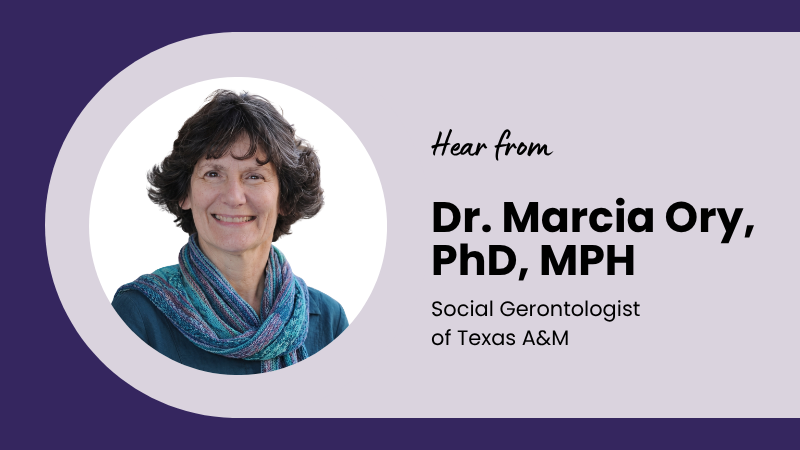
Dr. Marcia G. Ory, PhD, MPH, is a Regents and Distinguished Professor at the Texas A&M School of Public Health, founding director of the university’s Center for Population Health and Aging, and now Co-Director of the Smart Aging & Gerontechnology Lab at the Center for Community Health and Aging. Before joining Texas A&M, she spent two decades at the National Institute on Aging, where she served as chief of social science research on aging leading a major national falls and injury prevention effort. She has authored hundreds of publications on healthy aging, physical activity, and fall prevention. We spoke with her about what families get wrong about falls, the science of preventing them, and the single mindset shift she believes could change the most lives.
This conversation has been edited for length and clarity.
On why fall-prevention technology still needs people
You’ve said that while there’s excellent fall-prevention technology emerging, it still requires human engagement at every level. What does the human side look like when the technology works the way it should?
It’s not just an after-the-fact thing where you get a device in your home. You have to have the human side on the front end. What is it that older people at fall risk and their caregivers would find useful? What’s acceptable, what’s feasible, what’s affordable? So you need the human on the front side, before, and then during.
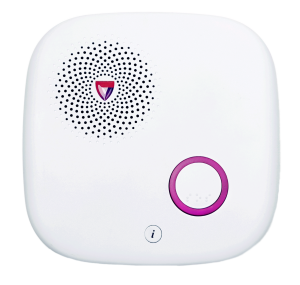
Fall technology isn’t just one thing. There are sensors you wear, there’s the smart home. So how do you decide what’s the best technology for a particular individual and caregiver in a particular setting? That takes human input. And once you have a technology, it can only tell you so much. The most popular one is the fall alert device, which detects whether people fall. But you need somebody to follow up on whatever the technology tells you. The technology is not going to get you into an exercise program. It’s not going to get needed personal home support, arrange follow-up doctor care, or change your home environment. That’s why the technology has to be seen as a piece of a more holistic care system, where technology, environment, and people all work together.
On what to consider when choosing a fall device
Beyond price, what should families consider when choosing a fall-detection device?
One is whether you want fall detection or fall prevention. Some devices can detect a fall, but others are designed around prevention. If you think about smart homes, they track people’s patterns over time. If they don’t see someone getting up in the morning when they usually do, going to the toilet, going to the refrigerator, those fall-prediction devices will tell you when a person might be at higher risk. So different devices do different things.
Some of them work only in the home. Some, particularly the ones with GPS-enabled monitoring, work outside. My mom, for example, had a fall device pendant, and she had no idea that when she went shopping, the device didn’t work. So people have to understand and have the right expectations about what the technology can do and how it meets their needs. Is it indoor? Is it outdoor? What will it do? That’s where the human decision-making comes in.
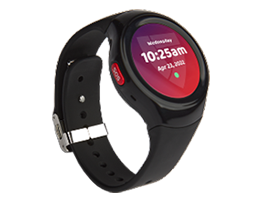
We’ve been working with a company, Clairvoyant Networks, that has a device that’s combined a fall alert device with a smart wristwatch that has voice connectivity like a walkie-talkie. So if you wander and you’re at fall risk, the caregiver can find out where you are and say, “Mom, I see that you’re down the block, just stay there and I’ll come get you.” So the technology isn’t just picking up whether a person falls. It’s about what happens before the fall, and how you might reduce the risk, particularly for an older person who might be wandering.
On privacy, and the trade-off people are willing to make
Smart-home fall prediction and GPS tracking are fascinating. Have you heard of people having privacy concerns about this kind of technology?
Absolutely. In our research with Clairvoyant Networks, Inc, we avoid intrusive video. This is the trade-off. We know there are common areas where people are likely to fall. The bathroom is one. On the other hand, nobody wants someone on a monitor watching them fall while they’re doing their toileting business. Those are the privacy issues. It’s often solved by having the device know when you’re on the ground, versus having a picture of you doing everything. Many places that do have video put it in common areas, not in more personal areas like bathrooms or bedrooms.
We’ve done some focus groups, and it’s really interesting what older adults will say. An older person who admits they’re concerned about falling will say, “Well, I don’t like that device.” But then they’ll say, “If it were a matter of staying in my living environment or going someplace else, I would give up the privacy.” So it depends on how severe the likelihood of falling is. You’ll get older people who say, “I don’t like that, but if it kept my adult daughter from wanting me to move, I’d give up a little bit of privacy for the independence of living in my own home.” Those are the trade-offs people think about, both from the older adult’s point of view and the caregiver’s. And that calls for a discussion of independence, privacy, alternatives, and options.
On the exercises that prevent falls
You mentioned exercise programs. Is balance training primarily for fall prevention, and what kinds of exercises help the most?
There are many organizations with guidelines. The National Institute on Aging, the American Geriatrics Society, the National Council on Aging. First of all, being physically active matters. Government guidelines emphasize that it’s important to walk a certain number of minutes per week. But for fall prevention, you need to do a little bit more. Balance is incredibly important, because as we get older, particularly people with dementia, there are going to be gait and stability issues.
Balance exercises are fairly easy to make part of your daily routine. It’s standing on one leg. It’s sit-to-stand. These organizations have consumer-friendly tip sheets for different exercise activities. The key is to do them safely, so you hold on to something while you’re doing the exercises. There’s also virtual reality now, where you can do the activities with somebody, either by video or experiencing it yourself. But the real fall prevention keys are working on your balance and gait, strength, and flexibility.
That’s why the recommendation is to build exercise into your everyday life. You don’t have to go to the gym. You can do balance exercises at home. You can do strengthening with bands. You can do yoga or stretching for flexibility. The important point is that it is never too late to adopt an exercise regimen. Pick one of the guidelines, whether it’s the National Institute on Aging or the American Geriatrics Society. You might want to talk to your healthcare provider about it. But if you can do it safely, start low and go slow. Don’t imagine that you can barely get out of bed one day and suddenly race around your apartment or do a mile walk. Physical activity is about understanding what you need to do, doing it safely, and building up.
On why it’s never too late to start
Are balance exercises less important for younger people?
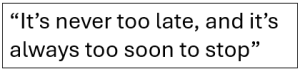
They’re important for everyone. I’m a gerontologist. What I would say is all of these practices should start young and continue through life. But if you’re not doing it young, or you played sports in school and then got busy with other things and stopped, it’s never too late to start a good physical activity regimen. It’s never too late, and it’s always too soon to stop it.
What we’ve seen, even in nursing homes, is that people who are frail and at fall risk do strength training that reduces their likelihood of falling, even at 80. So it’s important to start early. And if you quit, it’s never too late to start again, and always too soon to stop.
On what actually motivates people to keep moving
You’ve researched what motivates people to stick with an exercise program. What works?
The particular type of exercise has to be something people enjoy, and it has to fit into their daily routines. But it also has to be multi-component. It’s strength, it’s balance, it’s flexibility. One of the worst myths is that people feel being active will make them more likely to fall. It’s the opposite. If you don’t have muscle strength, you are more likely to fall. Fear of falling is actually associated with more fall risk, because you’re not being physically active.
The other thing is to figure out why somebody wants to do it, and to be really specific. Not “because my doctor told me,” but things like, do you want to dance at your granddaughter’s wedding? Do you want to be able to travel? Figure out what’s important to a person and help them associate it with being more physically active. That works a lot better than a clinician just saying, “You should be more active.” That message falls on deaf ears, because people don’t know what kind of activity to do, how much, when, how to do it safely, or why it even matters.
There’s a whole movement called Exercise is Medicine, where the doctor or sports medicine person understands how to communicate why physical activity matters and then gives people specific things to do, with a choice of what they do and when. That’s what sustains it. If somebody just tells me to be active, I might keep a routine for a week or two, then get tired, or overdo it and get injured, and then think it’s too dangerous to continue.
On padding, flooring, and a more forgiving home
Are there non-electronic ways to soften the impact of a fall, like protective clothing or changes to the home?
When I was at the National Institute on Aging, we had a huge national falls and injury prevention effort. One group worked on hip pads. Their concept was that if you have Parkinson’s or you’re likely to fall, you should be padded. These days you can probably get a prescription for hip pads or padded garments. But here’s what my husband and I did, and I’m in my 70s. We took the tile out of our house and put in cork. So if you do fall, you have an environment that’s more forgiving. There are things in the environment, or wearables that aren’t electronic, that add padding, or floors that can be more absorbent.
Think about it: football players wear pads, hockey players wear pads. It’s different if you might fall once a year, but if you’re a recurrent faller at high risk, with Parkinson’s or other conditions, you might want a different home environment, with the flooring as well as hip pads.
Several companies, e.g., Secure Safety Solutions and WILLQ, manufacture and sell specialized hip pads and padded garments designed to protect older adults from hip fractures during a fall. These products generally utilize impact-absorbing foam or visco-elastic pads sewn into comfortable, breathable briefs or shorts.
On the biggest misconception about fall prevention
Are there common misconceptions, or advice for fall prevention that may be overrated?
One is the concern that if you’re physically active, that’s going to be dangerous. That’s been shown not to be true if you exercise wisely. Another is recognizing that fear of falling is a risk factor in itself, so you have to combine talking to people about their fear with the positive aspects of changing their home environment, being more active, or reviewing their medications.
The biggest misconception is the siloed approach. Gerontologists and geriatricians know that falls are multifactorial. So the misconception is the person who says it’s only diet, or it’s only physical activity, or all you have to do is put grab bars up. That siloed thinking can get you in trouble, because there are many reasons people are at fall risk, and the solution has to address all of those different factors.
On the medications that quietly raise fall risk
Are there specific medications that increase the likelihood of falls, and do you think people are given fair warning about that risk?
I don’t think they’re given fair warning, but here’s what we know. There’s a list of medications that put you at higher risk of falling, so when you go back to your clinician, they should talk about those medications and the fall risk. What traditionally happened is you’d go to Dr. A, who gave you one medication, then Dr. B, then C and D, and you’d never drop the medications you didn’t need. The solution now is that primary care professionals, not just geriatricians, are looking through your medications and advising on which ones may increase fall risk.
So over-medication is a risk factor, but like privacy versus technology, it’s a trade-off. If you have heart disease, certain medications might increase your risk of falling, but they help your cardiovascular health. So you have to carefully weigh all of a person’s conditions and the benefits they get from each. One category I think is particularly dangerous is psychotropic drugs. Those put people at higher risk of falling. On the other hand, they’re often good for mental health. So the important thing is the minimal dosage of any drug that might have a risky side effect, and talking to the patient and the family about the pros and cons.
Are there any medications or supplements that decrease the chances of falling?
Good nutrition is one. A nutritionist would say you’re better off getting your nutrition through food rather than other things. But if someone has osteoporosis, they’ll recommend vitamin D and calcium, which strengthen bones. Things that strengthen bones may make you less likely to fall, or less likely to be injured if you do fall. But back to drugs, there’s no magic bullet. That’s the misconception, that some drug is going to make you less likely to fall. What makes you less likely to fall is addressing all the risk factors, staying as physically active as possible, having the best nutrition, and working on making your home environment safe.
And that’s also why balance matters so much. As you get older you might find yourself weight-shifting. Have you ever started to trip and caught yourself, steadying back and forth? That takes muscular strength, balance, and reactivity to catch yourself before you actually fall. I walk every morning, and I can catch myself on an uneven patch, even in my late 70s, because I have the strength to pull back. That’s why physical activity is so important.
On falls and dementia
You raised something important about dementia. Why is fall prevention so much harder when someone has cognitive impairment?
It’s very difficult to institute a falls prevention regimen if someone has dementia. For one, they’re at much higher risk of falling. The reasons are that their gait and balance have changed, their vision may not be what it used to be, and their spatial ability isn’t as good, because part of not falling is being able to anticipate where you’re going. With dementia, those spatial abilities have a deficit, and the person might be more impulsive. So if the phone rings and they’re on the other side of the room, they’ll run across to catch it, and they might trip on the cord or the dog.
My mom was about 90. You could tell her a million times to be careful, and it just didn’t work. She’d get up in the middle of the night and race from here to there. For someone at certain levels of dementia, the important thing is to have the fall detection device, and to monitor their everyday behaviors so you see when they might be at greater risk. Do they have a UTI? Are they changing their toileting? Are they getting dehydrated? Monitoring physical health, the dehydration, the UTIs, the things that increase risk, whether it’s an informal caregiver or an assisted living facility or a professional caregiver, keeps an older person with cognitive impairments in as good health as possible and helps decrease fall risk. Just telling someone with dementia not to do something won’t work. They’re not going to remember it, and even if they did, depending on the level of dementia, they may not have the executive function to think about risk in advance.
On the one thing every family should change
If you could get every family to do one thing differently, what would it be?
I think it would be to change the mindset. Falls are not an inevitable part of aging. Falls are preventable, but it takes understanding what causes them, whether it’s the physical environment, the physical functioning of a person, their mood, or their lifestyle behaviors, and working on all of those.
Fall prevention is possible. Reduction of falls and injuries is possible. But you can’t just assume it’s totally effortless. You have to have a comprehensive approach that involves the older person, the family, and, if they’re in a residential community, the people monitoring everyday life. It’s a common problem, but one that doesn’t have to carry such severe consequences if people address it, both when they’re young and then, once they’re older, by monitoring and reducing all those different risk factors.