

Quick Summary
Falls are the leading cause of injury and injury-related death among adults 65 and older in the United States. In 2020, roughly one in four seniors reported falling at least once. In 2021, nearly 39,000 older adults died from an unintentional fall. Understanding who falls, where, and at what rate, is the first step toward preventing it, and the data tell a striking story.
A fall can happen in seconds. The consequences, however, can last a lifetime, or even end one. For older adults in the United States, falls are a common and serious risk, one that claims lives, erodes independence, and costs the healthcare system tens of billions of dollars each year. And yet, as researchers and clinicians consistently emphasize, they are largely preventable.
This article examines national CDC data on the scope and distribution of falls among older adults, drawing primarily from the CDC’s 2023 MMWR report on nonfatal and fatal falls in 2020–2021.1 It covers who is most affected by sex, age, race, and geography, and what the broader economic burden looks like. For readers who want to explore the underlying data directly, the full CDC report and the CDC falls data page are both publicly available. Subsequent sections of this guide will address the specific risk factors, from medication use to home hazards, and the evidence-based interventions that can help seniors stay on their feet.
How Common Are Falls Among Older Adults?
Falls are not an occasional occurrence in the senior population. They are alarmingly routine. In 2020, approximately 14 million older adults in the United States, or 27.6% of all adults aged 65 and older, reported falling at least once during the previous year.1 To put that in perspective: more than one in four seniors falls every year.
Those numbers are drawn from the Behavioral Risk Factor Surveillance System (BRFSS), an annual telephone survey conducted across all 50 states and the District of Columbia. Because the data rely on self-report, the true prevalence of falls may be even higher. Many falls go unreported, whether out of embarrassment, fear of losing independence, or simple failure to recognize the event as medically significant.
Sex Differences in Fall Prevalence
Women fall more frequently than men. The 2023 CDC data show that 28.9% of women aged 65 and older reported one or more falls in 2020, compared with 26.1% of men, a gap of nearly three percentage points.1 This difference is consistent with decades of research and is thought to reflect a combination of factors: women have higher rates of osteoporosis, making them more susceptible to fracture from a fall; they tend to have lower lower-extremity muscle strength; and they are more likely to use certain psychoactive medications associated with increased fall risk.2,3
Interestingly, as the mortality data below show, this relationship reverses when it comes to deaths – men have a higher rate of dying from falls than women do. It is a paradox with important implications for how we think about fall severity by sex.
Age: The Oldest Seniors Face by Far the Greatest Risk
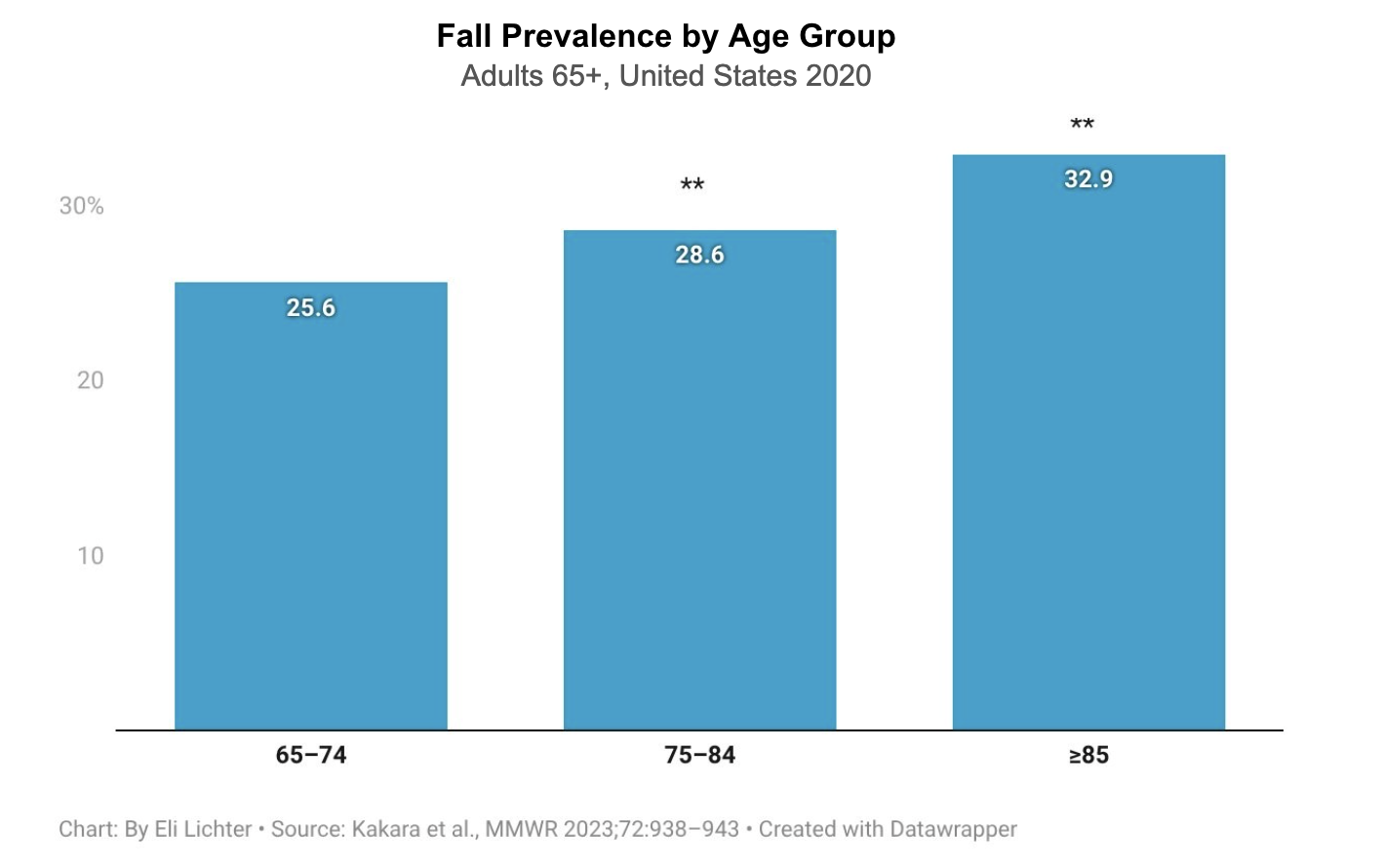
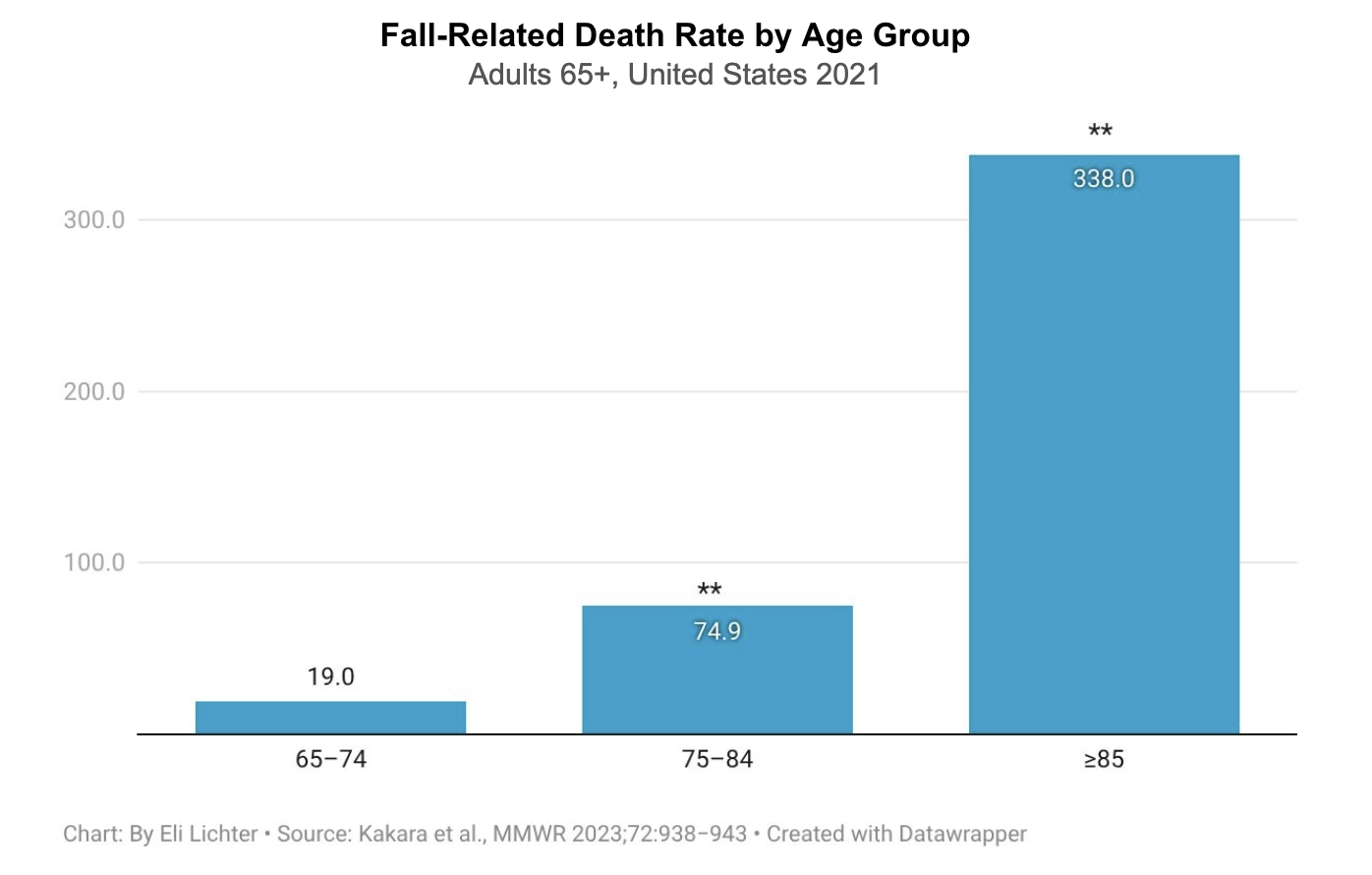
The MMWR data reveal a sharp escalation in fall risk with advancing age that is worth examining closely.1 Among adults aged 65–74, the fall prevalence was 25.6% and the fall-related death rate was 19.0 per 100,000. Among those aged 75–84, fall prevalence rose to 28.6% and the death rate to 74.9 per 100,000. But it is the oldest group — adults aged 85 and older — where the numbers become stark: a fall prevalence of 32.9% and a death rate of 338.0 per 100,000, more than 17 times higher than for adults aged 65–74.
Age Group (years)
Figure 1. Fall Prevalence by Age Group, Adults 65+, United States 2020. ** p<0.01 vs. 65–74 age group (75–84 and =85 bars)
“Adults 85 + do have markedly elevated rates of falls and fall-related deaths compared to younger adults,” says Dr. Elizabeth Eckstrom, MD, MPH, MACP, Professor and Chief of Geriatrics, Division of General Internal Medicine & Geriatrics, Oregon Health & Science University. “There are many contributors to this problem — sarcopenia, decreased vision, decreased hearing, peripheral neuropathy, risky medications, and a preference among many people over 85 not to use a walker or other gait aid when one is recommended.”
Racial and Ethnic Disparities
Fall rates are not uniform across racial and ethnic groups. Non-Hispanic White and non-Hispanic American Indian or Alaska Native older adults had significantly higher percentages of reported falls than adults from other racial and ethnic backgrounds.1 At the other end of the spectrum, Asian older adults had the lowest fall prevalence of any group at 14.5%, and their fall-related death rate (43.7 per 100,000) was among the lowest recorded. The reasons for these disparities are not fully understood.1 Researchers have pointed to a range of potential contributing factors, including differences in bone density, geographic distribution (rural versus urban residence), access to fall-prevention programs, and rates of comorbid conditions that elevate fall risk.4
Age Group (years)
Figure 2. Fall-Related Death Rate by Age Group, Adults 65+, United States 2021. ** p<0.01 vs. 65–74 age group (75–84 and =85 bars).
Fall-Related Deaths: A Paradox of Sex and Severity
Not every fall ends in death, but the ones that do reveal a striking inversion of the prevalence data. In 2021, a total of 38,742 older adults died from unintentional fall-related causes in the United States, at an age-adjusted rate of 78 per 100,000 older adults.1
Men, who fall less frequently than women, die from those falls at a substantially higher rate. The age-adjusted fall-related death rate for men was 91.4 per 100,000, compared with 68.3 per 100,000 for women, a difference of more than 30%.1
This apparent paradox (women fall more, men die more from falls) is thought to reflect several intersecting factors. Men are more likely to fall from heights or during higher-risk activities such as using ladders, and more likely to fall outdoors on ice or snow, circumstances that tend to produce more severe injuries.5,6 Fall-related traumatic brain injuries, which carry the highest mortality risk, also occur at higher rates in men than in women.7 Additionally, men are significantly less likely to seek medical care for a fall or to discuss fall prevention with their healthcare provider: data from a Medicare beneficiary study found that only 24% of men who fell discussed fall prevention with a provider, compared with 31% of women, meaning risk factors may go unaddressed for longer.8
The racial and ethnic patterns observed in fall prevalence also persist in mortality: death rates were significantly higher among non-Hispanic White and non-Hispanic American Indian or Alaska Native older adults than among other groups. The consistency of this pattern across both prevalence and mortality data underscores the importance of targeted prevention efforts in these communities.
Geography Matters: Fall Risk Varies Widely Across the U.S.
One of the most striking findings in the CDC data is how dramatically fall outcomes vary by state. Whether measured by the percentage of seniors who report falling or by the death rate when they do, the gap between the best and worst performing states is not marginal. It is enormous.
Variation in Fall Prevalence
In 2020, the percentage of older adults reporting a fall in the past year ranged from 19.9% in Illinois (the lowest in the nation) to 38.0% in Alaska, the highest.1 That means a senior living in Alaska was nearly twice as likely to report a fall as one living in Illinois. In 18 states, the fall percentage was significantly higher than the national average of 27.6%.
The geographic clustering of high-fall states is not random. The CDC data show elevated fall rates in roughly half of Western and Midwestern states, approximately one quarter of Northeastern and Southern states, and the District of Columbia.1 Researchers have proposed several explanations, though the CDC acknowledges that state-level differences are not fully understood.1 Contributing factors likely include variations in chronic disease burden, disability rates, alcohol consumption, access to healthcare and fall-prevention programs, and the social determinants of health.1 The cold-weather hypothesis, that icy surfaces increase falls, is supported in specific acute conditions: one study found a 20% increase in fall-related injuries among older adults on freezing rain alert days.1 However, it does not explain state-level variation overall: Illinois, for example, has harsh winters yet the lowest fall rate in the country, suggesting that climate is a situational hazard rather than a primary driver of chronic state differences.
Rural versus urban differences add another dimension. The MMWR data show that older adults in noncore (the most rural) counties reported falls at a rate of 31.4%, higher than any urban category. Rural seniors may face particular challenges: homes with uneven terrain, fewer paved surfaces, less access to fall-prevention programs, and greater distances to emergency care if a fall occurs.
Sex disparities within states add another layer. In five states, the percentage of women reporting a fall was significantly higher than that for men, a pattern that may reflect specific local risk factors worth further investigation.1
Variation in Fall-Related Death Rates
The state-by-state variation in fall-related mortality is even more dramatic than the variation in prevalence. In 2021, age-adjusted fall-related death rates ranged from 30.7 per 100,000 in Alabama to 176.5 per 100,000 in Wisconsin, a more than fivefold difference between the lowest and highest states.1
Twenty-six states had fall-related death rates significantly above the national estimate of 78.0 per 100,000. The pattern of elevated mortality was especially concentrated in Western, Midwestern, and Northeastern states, where approximately 60% of states in each region exceeded the national estimate, compared with about 30% of Southern states and DC.1
Men’s higher fall-related death rate was not just a national phenomenon: in 34 states, the death rate from unintentional falls was significantly higher in men than in women.1 This consistency across geographies strengthens the case that sex-specific biology and behavior, rather than location-specific factors alone, drive this disparity.
Researchers have proposed several hypotheses for why states like Wisconsin consistently rank highest in fall mortality. One frequently cited factor is racial composition: because fall-related death rates are substantially higher among non-Hispanic White older adults than among other groups nationally, states with a larger proportion of White older adults tend to have higher overall death rates.9 Social isolation among older White adults has also been identified as a potential contributor.1 Differences in medical examiner practices, death certificate coding, and access to trauma care may also contribute to variation that partly reflects differences in data collection rather than true differences in outcomes.9
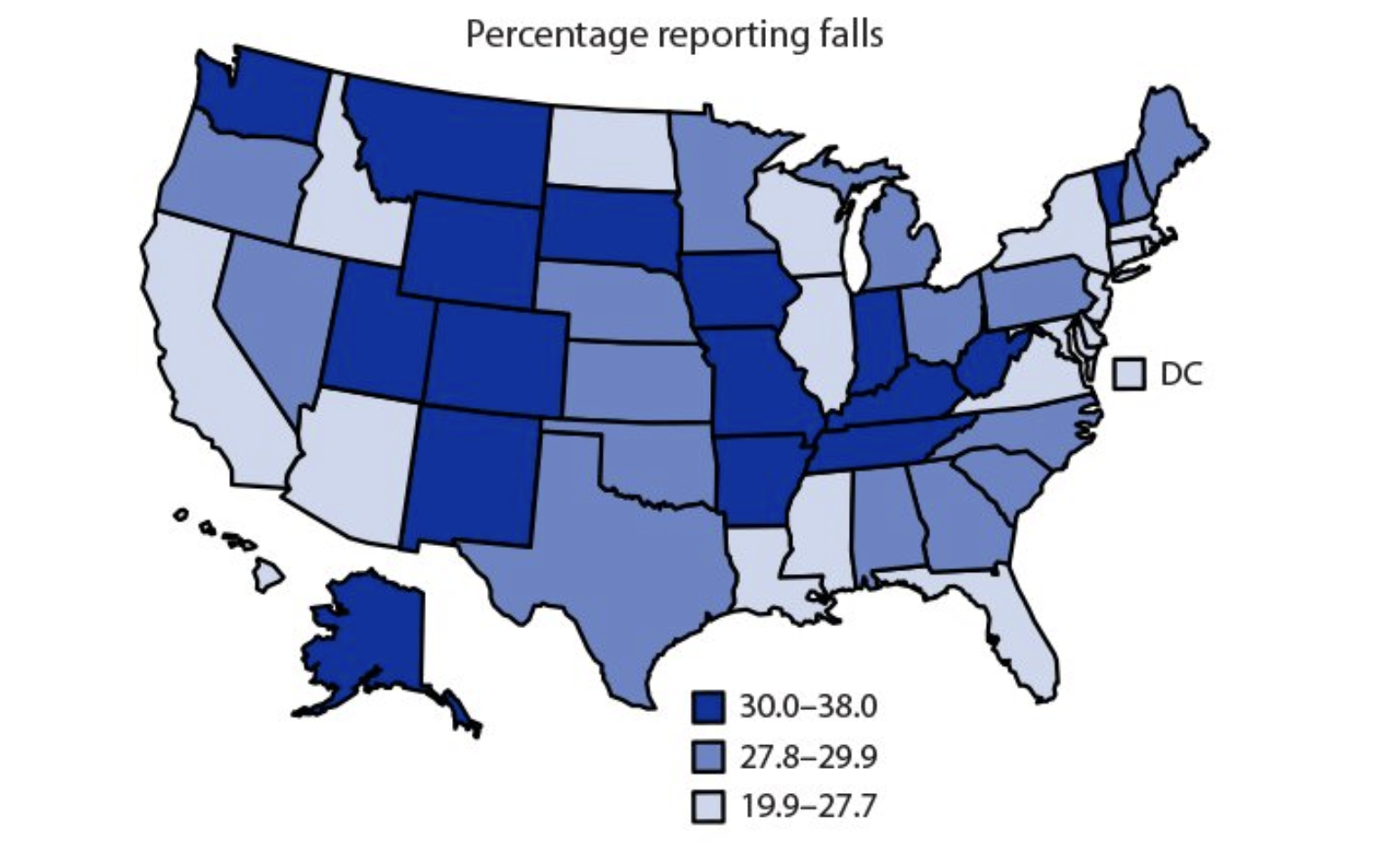
Figure 3. Age-adjusted percentage of adults aged =65 years reporting one or more unintentional falls during the past year, by state — United States, 2020. Source: CDC. Kakara et al., MMWR 2023;72:938–943. Materials developed by CDC. This use of CDC materials does not imply endorsement by CDC, HHS, or the U.S. Government. Available at no charge at https://www.cdc.gov/mmwr/volumes/72/wr/mm7235a1.htm
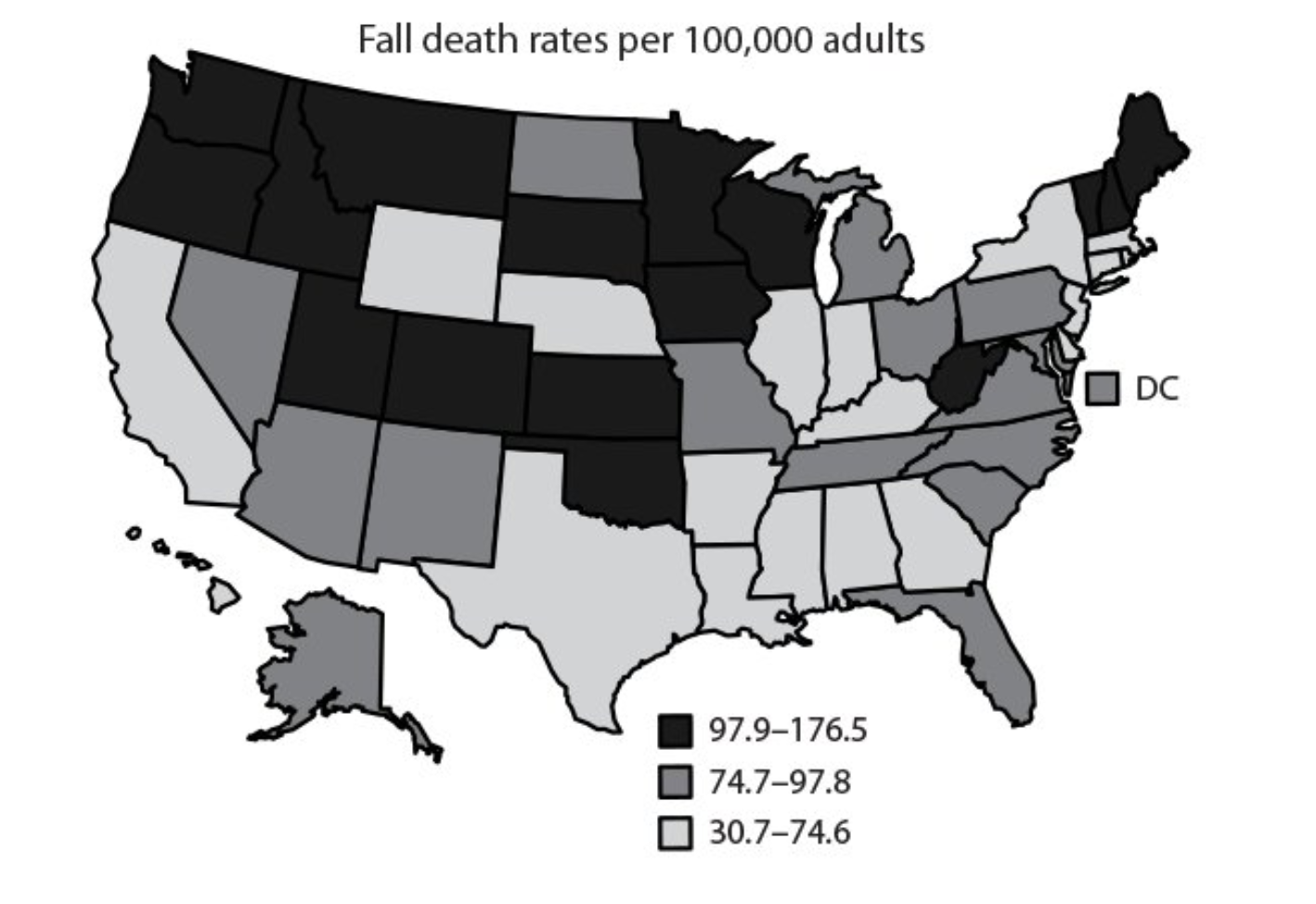
Figure 4. Age-adjusted unintentional fall-related death rate (per 100,000) among adults aged =65 years, by state — United States, 2021. Source: CDC. Kakara et al., MMWR 2023;72:938–943. Materials developed by CDC. This use of CDC materials does not imply endorsement by CDC, HHS, or the U.S. Government. Available at no charge at https://www.cdc.gov/mmwr/volumes/72/wr/mm7235a1.htm
The Economic Cost: Beyond the Physical Toll
The human consequences of falls are inseparable from their financial ones. For many years, the widely cited figure for annual U.S. medical costs attributable to older adult falls was approximately $50 billion, drawn from a 2015 analysis.11 A 2024 study published in Injury Prevention and supported by CDC significantly updated this estimate: in 2020, healthcare expenditure for nonfatal falls among older adults alone was $80 billion, with the majority paid by the taxpayer through Medicare.12
This figure does not include the costs of fatal falls, nor the downstream costs of long-term rehabilitation, skilled nursing facility care, caregiver time, or reduced productivity among family members who take on care responsibilities. The true economic burden is likely to be considerably higher.
The cost of a fall also varies by where it happens. States with sparser access to specialized trauma services, lower insurance coverage rates, or fewer fall-prevention programs tend to see higher per-incident costs. This reinforces a sobering conclusion: the geography of fall risk is also the geography of financial vulnerability for seniors and their families.
Key Statistics at a Glance
Statistic |
Value |
| Seniors who reported falling (2020) | 14 million (27.6%) |
| Women who reported falling | 28.9% |
| Men who reported falling | 26.1% |
| Unintentional fall-related deaths (2021) | 38,742 (78 per 100,000) |
| Men’s fall-death rate (2021) | 91.4 per 100,000 |
| Women’s fall-death rate (2021) | 68.3 per 100,000 |
| Fall prevalence, adults 65–74 (2020) | 25.6% |
| Fall-death rate, adults 65–74 (2021) | 19.0 per 100,000 |
| Fall prevalence, adults =85 (2020) | 32.9% |
| Fall-death rate, adults =85 (2021) | 338.0 per 100,000 |
| Fall prevalence, rural (noncore) counties | 31.4% |
| Lowest fall prevalence by state (Illinois, 2020) | 19.9% |
| Highest fall prevalence by state (Alaska, 2020) | 38.0% |
| Lowest fall-death rate by state (Alabama, 2021) | 30.7 per 100,000 |
| Highest fall-death rate by state (Wisconsin, 2021) | 176.5 per 100,000 |
| Annual healthcare costs of falls (2020) | $80 billion |
Falls Are Preventable
The data presented here can feel overwhelming. But the CDC, the U.S. Preventive Services Task Force, and the American Geriatrics Society all converge on a critical message: many falls can be prevented. They are not an inevitable consequence of aging. They are the outcome of identifiable, modifiable risk factors, which means they can be interrupted.
“Many patients and doctors assume falls are inevitable, and do not focus on the ways to reduce falls in this age group,” says Dr. Elizabeth Eckstrom, MD, MPH, MACP, Professor and Chief of Geriatrics, Division of General Internal Medicine & Geriatrics, Oregon Health & Science University. “There are many evidence-based strategies to reduce fall risk even in the oldest adults. Doctors, physical therapists, nurses, and all health professionals should provide the same attention to fall prevention as they do to other chronic illnesses such as diabetes in their older adults, and working together, falls could be greatly reduced in the oldest among us.”
Understanding the scope of the problem, including who is affected, where, and at what rate, is the essential foundation for that prevention work. It tells us where resources are most needed, which populations require targeted outreach, and how much is at stake when prevention fails.
The sections that follow in this series will explore the specific risk factors that make some seniors more vulnerable than others: from muscle weakness and polypharmacy to household hazards and chronic conditions. Each is a potential point of intervention. Each is an opportunity to keep someone steady on their feet.
If you or someone you care for is concerned about fall risk, a good first step is speaking with a primary care provider about a fall-risk screening. CDC’s STEADI (Stopping Elderly Accidents, Deaths and Injuries) initiative offers free resources for both patients and clinicians. For families who want an added layer of protection, medical alert devices with built-in fall detection can automatically detect some falls and connect the wearer with a 24/7 monitoring center, even if they are unable to press the help button. This is especially relevant for adults 85 and older living alone, where the data show fall-related death risk is highest and the window for intervention matters most. For those whose primary concern is safety at home, a home medical alert system provides 24/7 monitoring without disrupting daily life.
Frequently Asked Questions
How common are falls among seniors?
Falls are extremely common among older adults. In 2020, approximately 14 million Americans aged 65 and older – about 27.6% of that population – reported falling at least once during the previous year. That means more than one in four seniors falls every year. Because many falls go unreported, the true figure is likely higher still.
How many seniors die from falls each year?
In 2021, 38,742 older adults died from unintentional falls in the United States – an average of more than 100 deaths every day. The age-adjusted death rate was 78 per 100,000 older adults, and it has been rising steadily for over two decades. Fall-related death rates are higher among men than women, despite women falling more frequently.
At what age are seniors most at risk of dying from a fall?
The risk escalates sharply with age. Adults aged 85 and older face a fall-related death rate of 338 per 100,000 – more than 17 times higher than the rate for adults aged 65–74 (19 per 100,000). For the oldest-old, a fall is not just a risk of injury but a potentially life-threatening event, making prevention especially urgent for this group.
Why do men die more from falls than women, even though women fall more often?
Several factors appear to drive this paradox. Men are more likely to fall from heights or during high-risk activities like ladder use, producing more severe injuries. They also sustain fall-related traumatic brain injuries at higher rates. And they are less likely to seek medical care or discuss fall prevention with a provider – only 24% of men who fell discussed prevention with their doctor, compared with 31% of women – meaning risk factors often go unaddressed.
Which state has the highest senior fall prevalence?
Alaska had the highest percentage of older adults reporting a fall in 2020, at 38.0% — nearly double the rate of Illinois, which had the lowest at 19.9%. In 18 states, fall prevalence was significantly above the national average of 27.6%, with elevated rates concentrated in roughly half of Western and Midwestern states.
Which state has the highest senior fall-related death rate?
Wisconsin had the highest age-adjusted fall-related death rate in 2021, at 176.5 per 100,000 older adults. Alabama had the lowest, at 30.7 per 100,000 — a more than fivefold difference between the two states. Twenty-six states had death rates significantly above the national estimate of 78.0 per 100,000.
Are falls preventable in older adults?
Yes. The CDC, the American Geriatrics Society, and the U.S. Preventive Services Task Force all emphasize that falls are not an inevitable part of aging. They result from identifiable, modifiable risk factors – including muscle weakness, medication side effects, vision problems, and home hazards – that can be addressed through screening, exercise programs, medication review, and environmental modifications. Talking to a primary care provider about fall risk is a practical first step.
Where do most senior falls happen?
The majority of falls, approximately 60%, happen inside the home, with the bathroom, stairways, and hallways being the most common trouble spots. Around 30% occur in community settings such as sidewalks or parking lots, and roughly 10% happen in healthcare facilities. This means that home modifications like grab bars, better lighting, and removing tripping hazards have the greatest potential impact on fall prevention.
What is the most common cause of death from a fall in older adults?
The two leading causes are traumatic brain injury (TBI) and complications from hip fractures. Falls are the most common cause of fatal TBIs among older adults, and the risk is compounded for those taking blood thinners. Hip fractures are involved in a large share of fall-related deaths indirectly: while the fracture itself is rarely immediately fatal, the resulting immobility can lead to serious complications such as blood clots, pneumonia, and infections. Research shows that approximately 20–25% of older adults who sustain a hip fracture die within the first year.
How many falls are too many for a senior?
Clinically, even one fall warrants attention. Experiencing two or more falls within a 12-month period is classified as recurrent falling and requires prompt professional evaluation. This is because falling once doubles the likelihood of falling again, often triggering a cycle of reduced activity, muscle weakening, and increased fall risk. A fall should never be dismissed as a one-time accident – it is frequently a signal of an underlying, addressable issue such as a medication interaction, vision change, or home hazard.
At what age do seniors typically start to be at greater risk of falling?
Fall risk rises significantly starting at age 65, with more than one in four adults in that age group reporting a fall in any given year. But the risk escalates sharply with each decade: adults aged 75–84 fall at higher rates and face substantially higher mortality risk than the 65–74 group, and adults 85 and older face the steepest risk of all — with a fall-related death rate more than 17 times higher than those aged 65–74. Physical changes that accumulate with age, including muscle loss, balance decline, and polypharmacy, are the primary drivers of this escalation.
References
- Kakara R, Bergen G, Burns E, Stevens M. Nonfatal and Fatal Falls Among Adults Aged =65 Years—United States, 2020–2021. MMWR Morb Mortal Wkly Rep. 2023;72:938–943. DOI: 10.15585/mmwr.mm7235a1. Available at: https://www.cdc.gov/mmwr/volumes/72/wr/mm7235a1.htm
- Duckham RL, Procter-Gray E, Hannan MT, Leveille SG, Lipsitz LA, Li W. Sex differences in circumstances and consequences of outdoor and indoor falls in older adults in the MOBILIZE Boston cohort study. BMC Geriatr. 2013;13:133. DOI: 10.1186/1471-2318-13-133.
- Ek S, Rizzuto D, Fratiglioni L, et al. Risk factors for injurious falls in older adults: the role of sex and length of follow-up. J Am Geriatr Soc. 2019;67:246–253. DOI: 10.1111/jgs.15657.
- Wehner-Hewson N, Watts P, Buscombe R, Bourne N, Hewson D. Racial and ethnic differences in falls among older adults: a systematic review and meta-analysis. J Racial Ethn Health Disparities. 2021. DOI: 10.1007/s40615-021-01179-1.
- Timsina LR, Willetts JL, Brennan MJ, et al. Circumstances of fall-related injuries by age and gender among community-dwelling adults in the United States. PLoS One. 2017;12(5):e0176561. DOI: 10.1371/journal.pone.0176561.
- Sandlund M, Skelton DA, Pohl P, et al. Gender perspectives on views and preferences of older people on exercise to prevent falls: a systematic mixed studies review. BMC Geriatr. 2017;17:58. DOI: 10.1186/s12877-017-0451-2.
- Daugherty J, Waltzman D, Sarmiento K, Xu L. Traumatic Brain Injury-Related Deaths by Race/Ethnicity, Sex, Intent, and Mechanism of Injury — United States, 2000–2017. MMWR Morb Mortal Wkly Rep. 2020;69(9):250–255. DOI: 10.15585/mmwr.mm6909a2.
- Stevens JA, Ballesteros MF, Mack KA, Rudd RA, DeCaro E, Adler G. Gender differences in seeking care for falls in the aged Medicare population. Am J Prev Med. 2012;43(1):59–62. DOI: 10.1016/j.amepre.2012.03.008.
- Burns E, Kakara R. Deaths from falls among persons aged =65 years—United States, 2007–2016. MMWR Morb Mortal Wkly Rep. 2018;67:509–514. DOI: 10.15585/mmwr.mm6718a1.
- Mondor L, Charland K, Verma A, Buckeridge DL. Weather warnings predict fall-related injuries among older adults. Age and Ageing. 2015;44(3):403–408. DOI: 10.1093/ageing/afu199.
- Florence CS, Bergen G, Atherly A, Burns E, Stevens J, Drake C. Medical costs of fatal and nonfatal falls in older adults. J Am Geriatr Soc. 2018;66:693–698. DOI: 10.1111/jgs.15304.
- Haddad YK, Miller GF, Kakara R, Florence C, Bergen G, Burns ER, Atherly A. Healthcare spending for non-fatal falls among older adults, USA. Injury Prevention. July 2024;30:272–276. DOI: 10.1136/ip-2023-045023.
- Montero-Odasso M, van der Velde N, Martin FC, et al. World guidelines for falls prevention and management for older adults: a global initiative. Age and Ageing. 2022;51(9):afac205. DOI: 10.1093/ageing/afac205.
- Dimet-Wiley A, Golovko G, Watowich SJ. One-year postfracture mortality rate in older adults with hip fractures relative to other lower extremity fractures: retrospective cohort study. JMIR Aging. 2022;5(1):e32683. DOI: 10.2196/32683.

Dr. Eliezer (Eli) Lichter
Dr. Eliezer (Eli) Lichter brings a rare combination of hands-on clinical experience and rigorous scientific training to his work as a medical writer at Medical Guardian.
Before entering research, Eli served as an emergency medical technician in Yonkers, New York, one of the state’s busiest urban EMS systems, where he was recognized with multiple Lifesaving Citation Awards. That work put him on the front lines of exactly the crises Medical Guardian exists to prevent, including fall responses involving older adults. He later served in an administrative role at a large skilled nursing facility in upstate New York, where he managed the full operational complexity of senior care, including fall prevention protocols and incident response.
That direct, real-world exposure to what aging adults and their families face every day shapes everything he writes.
Eli earned his PhD in Biochemistry and Molecular Biology from the University of Nebraska Medical Center, where his research focused on the genetic mechanisms underlying neurodegenerative diseases, including Alzheimer’s and Parkinson’s disease. He then completed postdoctoral training at Boston University in computational biomedicine, including a research affiliation with the Broad Institute of MIT and Harvard, developing molecular and computational strategies for early detection of cancer, Alzheimer’s disease, and other serious conditions through advanced applications in genomics and epigenetics.
At Medical Guardian, Eli translates complex medical and scientific research into clear, trustworthy content that helps older adults and their families make informed decisions about their health, safety, and independence.