
The University of Kansas Medical Center researcher behind the FAlling Safely Training (FAST) trial explains why the next frontier in fall safety is not preventing every fall but teaching people how to land safely when they do fall.
Key Takeaways
- Falls cannot all be prevented, so the FAlling Safely Training (FAST) program teaches older adults at risk of injury how to land with less force. It is a shift from stopping falls to surviving them better.
- In the FAST trial, participants who learned safe-falling techniques were far less likely to strike their head during laboratory falls than those who did standard balance training.
- Protecting the head is the priority. A standing-height fall (a fall from standing, not from a height) carries enough energy to injure the brain, and a brain injury is much harder to recover from than a broken hip.
- Four principles anchor the method:
-
- Lower your center of mass.
- Tuck the chin.
- Keep the arms in (forearms rather than an outstretched hand).
- Rotate to land on padded areas and roll.
-
- The single worst instinct is to stiffen up. Relaxing and going with the fall lets the body absorb and spread the impact.
- The techniques are not new. They come from martial arts, especially judo, and other movement traditions like dance. What is new is teaching them to older adults who have never been exposed to them.
- Early signals suggest the skills carry over. Some trial participants reported using them during real falls, not just in the training, and Sosnoff’s team is now working to bring safe-falling into clinics, community programs, and higher-risk groups.
Disclaimer: This article is general information, not medical advice. Decisions about medical conditions should be made with a doctor or physical therapist. If a fall may have caused an injury, call 911.
Jacob Sosnoff, PhD, is a professor in the Department of Physical Therapy, Rehabilitation Science and Athletic Training, interim Dean and Associate Dean for Research of the School of Health Professions at the University of Kansas Medical Center School of Health Professions, where he leads the Mobility and Falls Lab. A movement scientist trained in motor control and gerontology, he has spent two decades studying how people move, how to keep them moving, and what happens when they fall. His team’s FAlling Safely Training (FAST) trial is among the first to test whether older adults at risk of injury can be taught to fall with less force. In this conversation, Dr. Sosnoff discusses why fall prevention alone falls short, how his lab teaches people to protect the head, and what it will take to bring safe-falling out of the laboratory and into everyday life.
This conversation has been edited for length and clarity.
On Why Preventing Falls Is Not Enough
Decades of research have gone into stopping older adults from falling. Sosnoff’s starting point is that, for all that effort, the numbers have barely moved, and that a different question is worth asking.
What is the premise behind the FAST trial?
The premise is that no matter how good we are at fall prevention, falls are still going to happen. When you look at the statistics, one in three, maybe one in four older adults is going to fall, with all the negative consequences that come with it. Those numbers have essentially held constant for the last 30, maybe 40 years. People will argue with me, but for the most part they have held relatively constant. We have spent a lot of time on fall prevention, and we have not made that big of an impact. What we have gotten good at is improving balance and leg strength, the fall risk factors. What we have not shown, for a long time, is that we can actually prevent injuries.
There was a large trial that shaped your thinking here. Can you describe it?
One thing that popped into my mind was the STRIDE trial.1 It was a large, pragmatic trial (a real-world study) of evidence-based fall prevention, funded by the Patient-Centered Outcomes Research Institute (PCORI) and the National Institutes of Health, with about 5,000 people in it. This was the best researchers in the country doing a fall prevention trial. Long story short, there were no differences between the evidence-based fall prevention group and a pamphlet. The CDC has a fall prevention pamphlet, and that is the control people use all the time. There was no difference in fall-related injuries between evidence-based practices and that pamphlet. To date I think it is the largest fall prevention trial, at least in the US, if not the world, and it was a null result. To spend that much money and not be able to beat a pamphlet was a little disheartening for the field.
Editor’s note: STRIDE’s primary outcome, adjudicated serious fall injuries, was not significantly reduced versus enhanced usual care, so the trial did not clearly beat standard advice on its main measure. A secondary, participant-reported measure did show a modest reduction of about 10 percent (hazard ratio 0.90), though the weight given to a self-reported secondary outcome is debated.
Why do you think the STRIDE study did not work?
A lot of it comes down to adherence, whether people actually stick with the plan. People were able to select what they wanted to do. Home or environmental modifications, exercises, footwear, medication review, all the things you would recommend for fall prevention were packaged, and people got to pick. But it was limited by adherence. People would say, yes, I want to do exercise, and then never show up to the exercise class. The things I know work to improve balance do not work if you do not do them. I see it in my own parents. If they do not do their exercises, their balance is not going to get better. The trial was also looking at people who had already suffered fractures, and that is perhaps starting too late in the game. It is really difficult to make a change at that point.
On Where the Idea for FAST Came From
If prevention has a ceiling as demonstrated by STRIDE, the next move is to plan for the fall itself. For Sosnoff, that idea has roots in both the martial arts and a graduate student’s family story.
So if falls are going to happen anyway, what did you decide to focus on?
I started focusing on the fact that only falls with injury are really important, because everybody falls. If you do not get hurt, it is not a big deal. People will argue with me, but I would argue that the falls that matter the most are the ones that cause an injury. And I have a background in martial arts, so I know we know how to fall. Look at athletes. Regardless of the sport, they fall all the time, and they are not getting hurt. They do a really good job of avoiding injury.
How did that turn into a research program?
I had a wonderful graduate student, Dr. Yaejin Moon, who is now an assistant professor in the Department of Exercise Science at Syracuse University’s Falk College of Sport. She had the idea that we could teach older adults how to fall. She had a family story: when her father was carrying her as a baby, he fell, and because he had a Taekwondo background, he was able to roll and protect her. That was in her mind, that we could teach people to do this. So, we set out to try. One of the first things we ran into was getting it approved by the ethical review board. To make it safe enough to approve, we ended up with an incredibly healthy older adult population, the newly retired people who go to the gym five days a week. That is not really who we are trying to target, because those active, gym-going retirees are at low risk of an injurious fall in the first place. The people who most need this are the ones already at risk. But at that point there had been no studies of standing-height falls in this group. Part of the reason there had been none is that making older adults fall on purpose raises real safety concerns, so ethics boards were understandably cautious about approving this kind of work, and I had to show it could be done safely. Most safe-falling studies had been done in young adults, a completely different population, and we are not too concerned about falls in young adults. We did that first study, and lo and behold, when they learned the technique, essentially a judo roll but a little more complicated, we reduced impact forces at the hip, which reduces the risk of hip fracture.2 We published that around 2019.
On Why the Head Became the Priority
The project began as a hip-fracture story. The data pushed it somewhere the team did not expect.
You started with the hip. How did the head become the focus?
We started the study really focusing on the hip, because of all the issues with hip fracture in older adults. But as we collected the data, we realized that older adults are much more likely to hit their head when they fall. That surprised us, and it changed the priority of our study. If you think about it, a standing-height fall has enough energy, just because of physics, for a head injury every time you fall, assuming you are landing on normal ground and not a mattress. That still amazes me.
Why does the head matter more than the hip?
I argue the head is the most important thing for us to protect. If you fracture your hip, you can get a hip replacement. A brain injury is much harder to recover from. A broken nose is better than a traumatic brain injury. So, when we think about what a fall can cost someone, the head is where the stakes are highest. People try to protect it on instinct, but almost no one does it consciously, with a practiced approach.
On the Head-Impact Mystery
One of the open questions in Sosnoff’s lab is why older adults strike their heads so much more often than younger people do. So far, the tidy explanations have not held up.
Why do older adults hit their heads more?
We still do not fully know. If you look at the literature, the research will say it is because they fall, which is a very circular argument. When we bring younger adults in, they avoid head impact. Older adults do not, as reliably. We think it is a combination of things: neck strength, body control, all of it mixed together. I really thought it was going to be neck strength, but that data did not work out overly well. We also just did a study looking at vestibular function, the inner ear, which helps keep your head upright, and that had no relationship with people hitting their head. So, it is complicated, and we are still trying to figure out what predisposes some older adults to hit their head when they fall and others not to.
Is there a difference between men and women?
There is a difference in neck strength. The epidemiological data (what we see across large populations) suggests men are more likely to have fall-related head impacts, though there are age components. After 80 it shifts more toward women, but that is probably because there are more women alive at that point, so it gets complicated. And men in the real world tend to do riskier things, which might be part of why they sustain more head impacts. We are still trying to piece it apart. Our motivation for all of this is simple: if we can understand what factors are related to fall-related head impact, we can ask which of them we can actually intervene on. We cannot intervene on age. But we might be able to intervene on how someone falls.
On What the FAST Trial Set Out to Test
The early work showed healthy retirees could learn to fall. The FAST trial, short for FAlling Safely Training, asked whether the people who actually need it could too.3
How was the FAST trial different from that first study?
When I got to Kansas (I was at the University of Illinois before that), we started looking at people who are at risk for falls. Everyone in the trial met criteria for fall-related injury. They either had a history of falling, were concerned about falling, or had actually had a fall-related injury. Based on the literature, all of those people are at greater risk.4 They were not frail, but they were at risk. Everybody also had a balance impairment. These were not our super-athletes who go to the gym. This was really average older adults. If you go to the grocery store and see people who are older, that is who these folks were. We did not recruit from any particular place.
How was the training set up?
We had 24 people in the trial, and we trained them eight times over a month, twice a week, about 30 to 45 minutes each session, with a progressive protocol. We started on the ground with just rotation, then moved up to a seated position, then kneeling, and then a squat. What we were trying to have people do, when they fall, is fall on areas that are less vulnerable, where there is more cushion. We put people into two groups: the FAST group, which got trained on how to fall, and a traditional, balance-focused exercise group. That control was a modified Otago program, a well-accepted exercise protocol that improves balance and reduces fall risk. Both groups got the same amount of training. And this is a unique part of the study: before and after, everybody did standing-height falls with motion capture so we could analyze their bodies, so everyone had the same exposure to the fall events. Then we brought people back three months later, because it is great if you learn it, but for it to matter you have to be able to retain it.
On Who Volunteers to Fall
A study that asks older adults to fall on purpose attracts a particular kind of volunteer. Sosnoff is candid that this shapes what the trial can and cannot say.
Who actually signs up for a study like this?
The people who volunteer for this are not typical, at least not in one way. It is not that they are unusual people. Most of them are exactly who you would picture, the folks you would see at the grocery store. What is unusual is the willingness. Most older adults are not excited to fall, or willing to fall. If you take an average 65-year-old and say, we are going to go to the trampoline park and do some falls in a safe environment, most of them are going to look at you like you are crazy. So, there is definitely a selection bias in who signs up. What our participants had in common is that they understood they were at risk. They were aware, and I think concerned, that they could fall and suffer an injury, and they were looking at how to minimize that. They were being proactive about their health. Beyond that, they were average.
Who did you have to leave out of the study, and why?
For the research study I have to be very specific about safety. Everybody who participated had a bone screen, so their bones were healthy and thick enough to limit the risk of a fracture during the study. We excluded people who were on blood thinners, because they are much more likely to bruise and have adverse effects even in the safe settings of the study. We had a fairly basic cognitive screen, not a full neuropsychological workup, just enough to make sure people could understand our safety directions. And we deliberately excluded people with a tumbling background, martial artists and gymnasts, because we want to study people who are naive to this. I should be clear that this is what I do for a research study, not necessarily what I would do in the community. There are groups out there teaching people to fall who do not do any bone screening and are not having issues. If you sign up for an exercise class at your local YMCA, you say you are healthy enough and you have talked to your doctor, and that is the kind of screening most people get for fall prevention. I do not know exactly where the right balance between risk and safety is for the community, but very few people are teaching anybody how to fall, and that is what we are trying to change.
On How You Make Someone Fall Safely in a Lab
Studying real falls means causing them on purpose, without anyone getting hurt. Convincing an ethics board that this could be done safely was its own hurdle.
What does the setup actually look like?
It is not a martial arts studio. When we trained, we used little gym mats, the kind you would have in a physical education class. For the standing-height falls in the study, we put people in a harness and tethered them to the ceiling. Then they leaned, like, remember the old V8 commercials, that forward tilt you have right after you slap your forehead, which is about 15 to 20 degrees, so they could not take a recovery step, which is what we were trying to avoid. Then we released the tether and they fell onto a crash pad. It was a thick, dense pad, maybe a foot thick, about the size of a mattress but firmer, the kind used in bouldering and gymnastics to catch people. Without that cushioning they probably would have been injured, which tells you the training is really addressing real life.
And how do you measure how hard they land?
How hard they hit is essentially our outcome. We used motion capture. We put reflective markers all over the body, head to toe, and a set of cameras tracked those markers through time. From basic physics, force equals mass times acceleration, and a person’s mass is not changing during the fall, so we used the acceleration of the hip and head as our proxy, or stand-in, for impact force.
On the Four Principles of Falling Safely
As Sosnoff boils it down, he lands on a short list. None of it is exotic. Most of it is about undoing the instincts that make a fall worse.
If you had to summarize the technique, what are the key principles?
There are three or four principles. First, you want to lower your center of mass. Based on physics, the lower you are to the ground, the less force you have when you hit it. So, as you start to lose your balance, we teach you to squat, to bend your knees and come down. Second, tuck your chin, and move your head away from where you are going to impact. Third, we do not want you to reach out with your hands. It is natural to brace yourself, but for an older adult, reaching out with one hand is how you get a wrist fracture or an elbow dislocation. We teach people to keep the arms in and, if they do catch themselves, to do it on the forearms, which have more surface area and more structural strength than an outstretched hand. Fourth, you rotate so you land on the cushiony parts. If you are falling to the side, you do not want to land on the bony part of your hip. You want to rotate toward your back, land on your buttocks, and roll onto your back. That spreads the force out instead of concentrating it at one point.
People describe this as tuck and roll. How do the pieces fit together?
The tuck and the roll are connected. As you go into the tuck, some people describe it as making yourself small, you are setting yourself up for the roll. From a physics standpoint, the energy is dissipated through that motion. You are also getting some protection for your spine as you tuck. So the main reason for the tuck is to enable the roll, and the roll is what spreads the impact. Even if you do collapse onto your arms, your forearm is better than cement. Depending on the fall you can still get hurt, but we are trying to have you impact the least vulnerable areas.
Does the advice change depending on which direction you fall?
It does, and that is part of what makes falls hard to study. If you are falling and you are going to catch yourself, we suggest bracing on your forearms rather than reaching out with an outstretched hand. A forearm gives you greater surface area, and mechanically you are stronger there than at the wrist, so you are spreading the load and giving yourself more structural strength. Depending on your upper body strength you may or may not be able to catch yourself, so the other thing we really suggest is to turn your head away from the impact. The honest truth is that each fall is accidental and a little bit random. It happens for different reasons, so it is really hard to say this is the one exact right way to fall. What we can do is teach you to land on, or impact, the less vulnerable areas, whichever way you go down.
On the Biggest Mistake People Make
For all the mechanics, Sosnoff’s most emphatic advice is about a single reflex.
What does almost everyone get wrong when they first try to fall more safely?
First of all, most people never consider how to fall safely at all. But for the ones who do, the worst thing you can do when you are falling is stiffen up. It is natural. You get scared, you are startled, and the reflex is to get rigid. A rigid body is not good at absorbing forces. What you want to do, and some people even teach this, is to relax as you are falling, to go with the fall. That is really what the tuck and roll is, going with it. So that is my biggest piece of advice. My second is to tuck your chin so you do not hit your head. Most people do not think about what their head is going to do, and the head is the thing I most want them to protect.
On What the Results Showed
The FAST trial was a pilot, built to establish whether the approach was safe, feasible, and worth a larger study. On its main question, the head, the signal was clear.
What did the trial find?
People who went through the protocol were much less likely to hit their head when they fell.3 In the FAST group, the odds of a head impact after training dropped sharply compared with the balance-training group. We also saw them putting their hands out less dangerously, so the overall risk of injury was reduced in the people who went through safe-falling training, while there were minimal changes in the balance-training group. You would not expect much there, because traditional fall prevention does not do anything for how you fall. It tries to stop you from falling, but once you are falling, it does not help you.
How confident are you that people keep the skill once they learn it?
This is not something you have to practice every day. Growing up in the Northeast, you know what happens with a bike. You ride it all summer as a kid, it goes away in the winter, and then you pull it out in the spring, and you can still ride it. That is the notion here. Once you get the skill, we think you can retain it. This is not a skill you have to drill constantly. And when we brought people back three months after training, we were able to show that they held onto it. How long it lasts beyond that, and how often someone might need to refresh it, we do not know yet from a science standpoint, so for now it is case by case.
You mentioned the hip improved too. Was that from the training?
Hip impact got better, but it got better in both groups (both the safe-falling group and the balance-training control group, which did the modified Otago program). People naturally figure out how not to land hard on their hips, because everyone is motivated to avoid discomfort. You fall, and you find ways to do it that hurt less. We do not stand around practicing falling, so just being exposed to it helps. That is why the head result matters so much: the head is where the training group pulled ahead of the group that only did balance work.
On Borrowing From Judo
Sosnoff is quick to say his team did not invent any of this. The novelty is the audience, not the moves.
How much of this is new?
I do not want you to think we came up with these safe-falling techniques. They are essentially martial arts, judo-inspired. This is the way dancers fall. There are all these groups of people who have been falling for years and do these movements safely. The really unique part is that we are taking it to a population that has not been exposed to it. We are not teaching a hugely new motor skill. Tucking your chin is a basic movement. Bending at the waist is a basic movement. Humans naturally do things to protect the head, you put your hands up, you tuck your chin, but for whatever reason those natural responses get dulled as we age. It is the old use-it-or-lose-it idea. We are helping people practice these things again, in a safe way.
Do you see evidence that this kind of learning lasts?
Anecdotally, yes. I have talked to veterans who learned to parachute and to fall when they were 19, and they are 70-plus now and still fall that way. I have a martial arts background myself, and I know when I fall I have gone into rolls and gotten less hurt. So, I know you can use these rolls in the real world. In the FAST study, one thing we deliberately exclude is people with a tumbling background, martial artists and gymnasts, because we want to study people who are naive to this, which is the majority of the population.
On Whether the FAST Training Holds Up in the Real World
A skill learned on a crash pad is only useful if it shows up during a real, unexpected fall at home. Here Sosnoff is careful, and deliberately so.
How close does a lab-trained skill come to a real, unexpected fall?
We have one study where we brought back the FAST participants we could reach and interviewed them, about eight of them, and two reported using the safe-falling techniques in the real world when they fell.5 They did not hit their head. They did what we had taught them. They had definitely fallen before and were at high risk for injury, so it seems the techniques helped. But I am a scientist, so I do not want to overstate it. We do not have a control, because we do not have access to a parallel universe. What I can say is that what we taught them definitely did not make them worse and most likely reduced the risk. So, there is preliminary evidence, a signal, that people can use these skills in the real world to prevent injury.
Is there other evidence that basic skills like this transfer?
There is. Take perturbation-based training, where you train someone to recover from a slip. It is a very basic movement, essentially taking a faster step, and there is data that people who learn it reduce their likelihood of falling out in the real world. So, there is a lot of evidence that these basic skills can be applied outside the lab. I cannot conclude from a science standpoint that safe-falling is definitely the answer, but I would say there is a good chance.
On the Skill Almost No One Practices
One theme kept surfacing in the conversation: the fall is only half the problem. What happens next matters just as much.
Is there a part of this that is overlooked?
Something we are not doing yet, but I think is incredibly important, is having people practice getting up off the ground. Falls are going to happen. You are going to hit the ground, and hopefully you do not have a catastrophic injury. But most people cannot necessarily get themselves up. There is a strength component, but it is also about knowing how to do it, and people do not practice it. Over time, older adults become incredibly afraid of the ground, so they do not get down there and figure it out. Think about kids: they are on the ground all the time. Getting down on the floor and practicing getting up, in a safe environment, so you know how you are going to do it, is worthwhile.
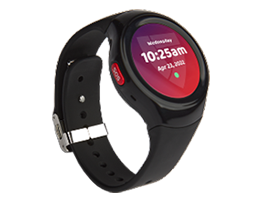
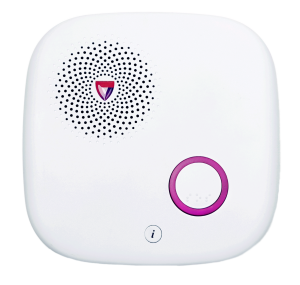
Practicing how to get up matters because the time spent on the floor after a fall can be as dangerous as the fall itself. For those moments, a way to summon help without reaching a phone, such as a medical alert system with fall detection, can shorten how long someone waits for assistance.
On Getting Safe-Falling Out of the Lab
Motion-capture research is precise and expensive. To reach the people who need it, Sosnoff’s team is trading some of that precision for something a clinic or community program can actually use.
What are you working on to make this scalable?
One limitation is that traditional motion capture takes a lot of money and time, so we have developed a way to judge how well people perform these protective movements without it. We call it the Fall Injury Avoidance Strategy Scale, and we validate it against the biomechanics, the sophisticated motion capture, to show it is a valid way to see how people are doing. In practice, a trained rater watches someone perform the protective movements and scores how well they do them, and that score tracks with the motion-capture impact measures, so it can stand in for the lab equipment. That objective piece is what lets us move this into clinical or community settings, without the expensive equipment.
Where else are you taking the approach?
Anyone at high risk for falls should go through something like this. I do a lot of work with people who have multiple sclerosis, who have balance and gait impairment and are at real risk, and we have a study underway applying this protocol in that group. I also work closely with Dr. Neil Alexander at the University of Michigan Medical School, a leading fall-injury researcher. We are looking at doing this in military veterans, which will be a more male population, and we are training his team on the protocol so we can branch out. There is also a group of community practitioners doing safe-falling in their own way: professional dancers, and a judo instructor down in Atlanta. Their approaches differ, but they are all built on the same idea, that there are safer ways to fall. That is what I am trying to change, to get people to actually do this in the clinic, if not the community.
On What He Wants Older Adults and Families to Take Away
Sosnoff does not frame safe-falling as a replacement for anything. He sees it as one more layer on top of the balance and strength work that already helps.
How should people think about safe-falling alongside everything else?
I view it as part of the fall prevention, or fall injury prevention, continuum. We should still do our balance and strength exercises. This is something you add. It is not something you have to do every day. The exercise recommendation is balance work two or three times a week, and I would fit some of these rolling-type skills in there. How often you need to refresh it, we honestly do not know yet from a science standpoint, so it is case by case. And balance work itself still matters enormously. Tai Chi, for example, has a huge role in fall prevention. You are practicing weight shifting, balance, and strength, and it also teaches you to go slow, and going slower is itself less risk for falls.
If there is one message for older adults and their families, what is it?
Move past the idea that fall prevention is the whole story. Keep doing the balance and strength work, because that reduces the chance you fall in the first place. But accept that some falls will still happen, and that there are better and worse ways to hit the ground. So, make an effort to learn how to fall safely. Protect the head above all. If you can relax instead of stiffening, tuck your chin, keep your arms in, and roll, you tip the odds toward a bruise instead of a brain injury. Those are skills, and skills can be learned, at almost any age.
References
1. Bhasin, S. et al. A Randomized Trial of a Multifactorial Strategy to Prevent Serious Fall Injuries. New England Journal of Medicine 383, 129–140 (2020).
2. Moon, Y., Bishnoi, A., Sun, R., Shin, J. C. & Sosnoff, J. J. Preliminary investigation of teaching older adults the tuck-and-roll strategy: Can older adults learn to fall with reduced impact severity. J. Biomech. 83, 291–297 (2019).
3. Zanotto, T. et al. Strategies to Minimize Fall-related Injuries in Older Adults at Risk of Falls: The Falling Safely Training Study. The Journals of Gerontology: Series A 80, glaf076 (2025).
4. Older Adult Falls Data | Older Adult Fall Prevention | CDC. https://www.cdc.gov/falls/data-research/index.html.
5. Zanotto, A., Zanotto, T., Alexander, N. B. & Sosnoff, J. J. Views and experiences of older people taking part in a safe-falling training program: Lessons learned from the FAlling Safely Training (FAST) trial. BMC Geriatrics 24, 818 (2024).
Dr. Eliezer (Eli) Lichter
Dr. Eliezer (Eli) Lichter brings a rare combination of hands-on clinical experience and rigorous scientific training to his work as a medical writer at Medical Guardian.
Before entering research, Eli served as an emergency medical technician in Yonkers, New York, one of the state’s busiest urban EMS systems, where he was recognized with multiple Lifesaving Citation Awards. That work put him on the front lines of exactly the crises Medical Guardian exists to prevent, including fall responses involving older adults. He later served in an administrative role at a large skilled nursing facility in upstate New York, where he managed the full operational complexity of senior care, including fall prevention protocols and incident response.
That direct, real-world exposure to what aging adults and their families face every day shapes everything he writes.
Eli earned his PhD in Biochemistry and Molecular Biology from the University of Nebraska Medical Center, where his research focused on the genetic mechanisms underlying neurodegenerative diseases, including Alzheimer’s and Parkinson’s disease. He then completed postdoctoral training at Boston University in computational biomedicine, including a research affiliation with the Broad Institute of MIT and Harvard, developing molecular and computational strategies for early detection of cancer, Alzheimer’s disease, and other serious conditions through advanced applications in genomics and epigenetics.
At Medical Guardian, Eli translates complex medical and scientific research into clear, trustworthy content that helps older adults and their families make informed decisions about their health, safety, and independence.