Quick Summary
A fall risk assessment is a short, structured check of how likely you are to fall, paired with a plan to lower that risk. The standard framework for this is the CDC’s STEADI Algorithm,1,2 which moves through three steps: a quick screen, a closer look at the factors that raise your risk, and a personalized plan to address them. It matters because falls are not an inevitable part of getting older. In large clinical trials, the kind of exercise that follows a high-risk result cut the rate of falls by about 23 percent,3 and assessment-guided care produced a similar drop.4 This guide explains what each step involves, what the numbers mean, and how to gauge your own risk at home so you can keep doing the things you love with confidence.
Medical Disclaimer: This article is for general education and is not medical advice. It does not replace an evaluation by a qualified clinician. The self-check described here is a starting point for a conversation with your doctor, not a diagnosis. If you have a medical concern or have already had a fall, talk with your healthcare provider.
On this page:
- Check your own risk at home
- What it is
- Why it matters
- The 12-question screen
- If you screen “not at risk”
- What a full assessment includes
- How risks are treated
- Where a medical alert fits
- FAQ
Can you check your own fall risk at home?
You can get a useful first read on your own risk using the same starting questions clinicians use. The self-check below is educational and is not a diagnosis, but it can tell you whether a conversation with your doctor is worth scheduling soon.
A simplified self-check
Step 1: Take the CDC’s 12-question checklist. Answer yes or no to each statement, then add up the points for every yes.
| Statement | Points | Why it matters |
|---|---|---|
| I have fallen in the past year. | Yes (2) No (0) | People who have fallen once are likely to fall again. |
| I use or have been advised to use a cane or walker to get around safely. | Yes (2) No (0) | People who have been advised to use a cane or walker may already be more likely to fall. |
| Sometimes I feel unsteady when I am walking. | Yes (1) No (0) | Unsteadiness or needing support while walking are signs of poor balance. |
| I steady myself by holding onto furniture when walking at home. | Yes (1) No (0) | This is also a sign of poor balance. |
| I am worried about falling. | Yes (1) No (0) | People who are worried about falling are more likely to fall. |
| I need to push with my hands to stand up from a chair. | Yes (1) No (0) | This is a sign of weak leg muscles, a major reason for falling. |
| I have some trouble stepping up onto a curb. | Yes (1) No (0) | This is also a sign of weak leg muscles. |
| I often have to rush to the toilet. | Yes (1) No (0) | Rushing to the bathroom, especially at night, increases your chance of falling. |
| I have lost some feeling in my feet. | Yes (1) No (0) | Numbness in your feet can cause stumbles and lead to falls. |
| I take medicine that sometimes makes me feel light-headed or more tired than usual. | Yes (1) No (0) | Side effects from medicines can sometimes increase your chance of falling. |
| I take medicine to help me sleep or improve my mood. | Yes (1) No (0) | These medicines can sometimes increase your chance of falling. |
| I often feel sad or depressed. | Yes (1) No (0) | Symptoms of depression, such as not feeling well or feeling slowed down, are linked to falls. |
This checklist was developed by the Greater Los Angeles VA Geriatric Research Education Clinical Center and affiliates and is a validated fall risk self-assessment tool (Rubenstein et al. J Safety Res; 2011: 42(6)493-499).
Step 2: Try one gentle movement test (only if it is safe). Sit in a sturdy, armless chair, then stand and sit as many times as you can in 30 seconds with your arms crossed, then compare your count with the CDC’s age- and sex-based norms (see the chart). A count below your age group’s range, or trouble completing several repetitions, suggests lower-body weakness, a common and very treatable fall risk factor. Stand near a counter, keep a steady chair within reach, and have an able-bodied person stay beside you to steady you if you lose your balance. Skip this if you feel dizzy, have had a recent injury, or are unsure.
What your result means. A total of 4 or more means you may be at risk. Even with a lower total, a fall in the past year puts you in the at-risk group. Either result, or trouble with Step 2, is worth raising with your clinician, who can run the full assessment described below. It is not a reason to slow down; it is a reason to act early so you can stay independent.
What is a fall risk assessment?
A fall risk assessment is a structured way to answer two questions: how likely are you to fall, and what can be done to make a fall less likely. Rather than waiting for an accident, it looks ahead at the specific factors that raise your risk and turns them into an action plan. In the United States, the standard framework for this is the CDC’s STEADI Algorithm (Stopping Elderly Accidents, Deaths, and Injuries), which translates the American and British Geriatrics Societies’ fall-prevention guideline into a practical, three-step routine.2,5
The reason this gets so much attention is that falls are common and consequential. About one in four adults aged 65 and older reports a fall each year, and these falls lead to roughly 3 million emergency department visits annually.2,6 Those emergency visits span a wide range of harm, from minor bruises and cuts to hip fractures and head injuries serious enough to require hospital care. Yet the central message of modern geriatrics is hopeful: falling is not a normal part of aging, and most of what drives risk can be measured and changed. A good assessment is the on-ramp to staying active on your own terms.
STEADI breaks the process into screen, assess, and intervene. Figure 1 shows how the three steps connect, from a quick set of questions to a personalized plan and a follow-up visit.
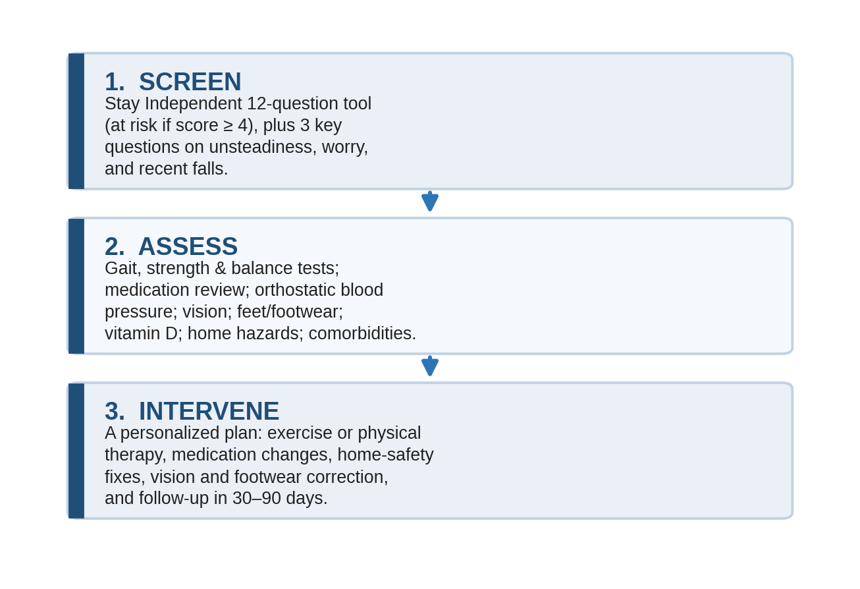 Figure 1. The three steps of the CDC STEADI approach to fall risk: screen, assess, and intervene. Adapted from the CDC STEADI algorithm.
Why does a fall risk assessment matter?
An assessment matters because it changes outcomes, not because the questions themselves are magic but because acting on what it finds measurably lowers risk, as a large body of clinical research shows and as the next few paragraphs lay out. When researchers pool the largest trials, the picture is consistent. A Cochrane review of 108 randomized trials with more than 23,000 community-dwelling participants found that exercise reduces the rate of falls by about 23 percent (rate ratio 0.77, 95% confidence interval 0.71 to 0.83), and the authors rated this as high-certainty evidence, the top rung on the standard scale (called GRADE) that researchers use to signal how much confidence a finding deserves.3,7 Exercise that challenges balance and adds strength training performs even better, with multiple-type programs lowering the fall rate by roughly a third. A 2020 update of that review, undertaken to inform the World Health Organization’s global physical activity guidelines, added more trials and reached the same conclusion: the programs that work best are the ones that safely challenge balance, ideally on most days of the week. Across these reviews, together spanning 116 trials and more than 25,000 participants, the same result keeps surfacing: regular exercise reliably reduces how often older adults fall, which is a large part of why researchers place such confidence in the finding.8
Exercise has the strongest evidence, but it is not the only intervention that works. Assessment-guided care shows a comparable benefit to exercise when it comes to preventing falls. A separate Cochrane review of multifactorial interventions, where the specific steps are chosen based on each person’s assessment, found the rate of falls fell by a similar margin (rate ratio 0.77, 95% confidence interval 0.67 to 0.87), though the certainty was lower and the effect on the number of people who fall at least once was small.4 In plain terms: the assessment points to the right mix of changes, and the changes are what bring the risk down. Figure 2 compares the size of the benefit across the most studied approaches. In practice the two are not an either/or choice: assessment-guided programs usually include exercise as one of their components, and a 2026 analysis pooling many trials suggests these pieces add up rather than cancel out.9 Because trials that cleanly separate exercise alone from exercise plus a full assessment-guided plan are hard to run, the exact size of the combined effect is not settled, but that is a reason to do both, not to skip either.
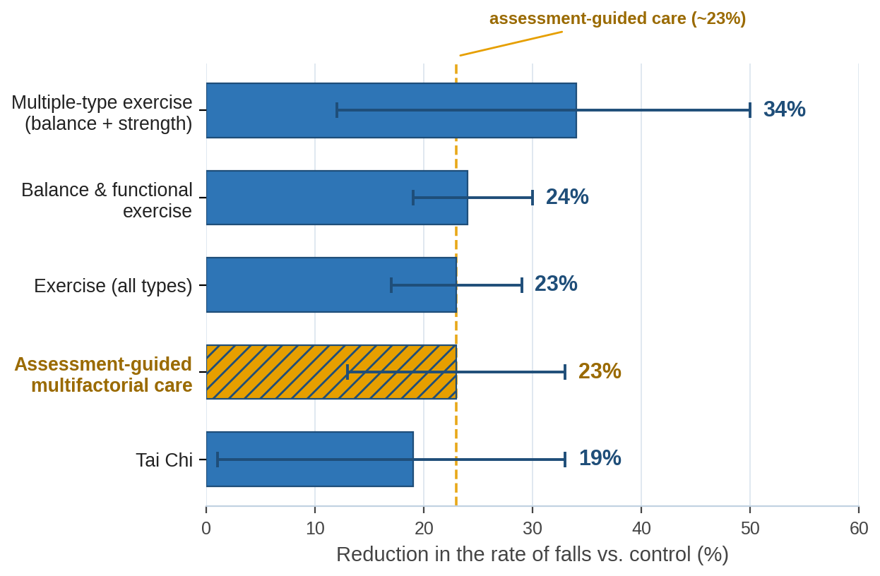
Figure 2. Reduction in the rate of falls versus control, by intervention type. Bars show the point estimate; whiskers show the 95% confidence interval. Data from Sherrington et al. (2019) and Hopewell et al. (2018). The assessment-guided care bar is highlighted to show how it lines up with the exercise approaches.
National guidance reflects this evidence. In 2024, the U.S. Preventive Services Task Force recommended exercise interventions (such as balance and functional training, strength work, and Tai Chi) to prevent falls in older adults at increased risk (a “B” recommendation) and advised that the decision to add a full multifactorial program be individualized (a “C” recommendation).10 A “C” grade reflects a smaller average benefit than the “B” the Task Force gives exercise. So rather than recommending a full multifactorial program for every single senior, it advises offering one based on each person’s assessment. The findings show whether your particular mix of risk factors, prior falls, and other conditions makes the fuller program worthwhile, which is what makes the decision an individual one. The takeaway for you is direct: a few minutes of screening can open the door to changes that measurably protect your independence.
How does the screening step work?
Screening is meant to be fast. The main tool is a 12-question checklist called Stay Independent, which asks about recent falls, unsteadiness, fear of falling, the use of walking aids, certain medications, and related concerns. Each answer carries a point value, and on the CDC’s scoring a total of 4 or higher flags increased risk. A high score is a reason for a closer look rather than a diagnosis.2 Importantly, even if your score is below 4, a fall in the past year still places you in the at-risk group, which is a reason to assess your situation more carefully rather than to worry, and it is the very case the U.S. Preventive Services Task Force has in mind when it advises weighing an individualized, multifactorial plan (its “C” recommendation).2,10
What are the three key screening questions?
When time is short, clinicians often rely on three questions drawn from the same tool. Answering “yes” to any one of them is enough to warrant a closer look:2
- Do you feel unsteady when standing or walking?
- Do you worry about falling?
- Have you fallen in the past year? If so, how many times, and were you injured?
That last question carries extra weight. A previous fall is one of the strongest predictors of a future fall, and the risk climbs further if you fell more than once or were hurt.2,5 Capturing these details early is what lets a clinician sort a quick screen into a clear next step, rather than a vague worry.
What happens if you screen “not at risk”?
A low-risk result is good news, and it is also an opportunity. STEADI recommends a short set of prevention habits for everyone who screens not at risk, so that a good result stays that way.2 These steps are light, evidence-aligned, and easy to fold into daily life:
- Learn the basics of fall prevention, including how vision, footwear, and home layout affect balance.
- Ask your clinician whether your vitamin D level should be checked. The CDC algorithm recommends a daily vitamin D supplement when intake is low or deficiency is likely, while the U.S. Preventive Services Task Force has found that vitamin D does not prevent falls in community-dwelling seniors who are not deficient, and recommends against taking supplements for that purpose.11 The practical move is to confirm your level with your provider rather than starting high doses on your own.
- Join a community exercise or fall-prevention class that builds balance and strength, the two abilities most tied to staying on your feet.
- Reassess once a year, or sooner if you have a fall or notice new unsteadiness.
Most of these habits also happen to be the same ones that keep you energetic, mobile, and ready for whatever you have planned next.
What does a full fall risk assessment include?
If you screen at risk, the next step is a closer look at the factors that can be changed. This is the core of the assessment. A clinician reviews your fall history and works through a panel of measurable risk factors, each of which has a matching way to intervene.2 The components below are the ones STEADI lists as the minimum to cover.
Gait, strength, and balance
Three quick, well-validated tests anchor this part of the visit. In the Timed Up and Go (TUG) test, you rise from a chair, walk about ten feet, turn, walk back, and sit; taking 12 seconds or longer to finish the whole sequence signals higher risk.12 The 30-Second Chair Stand counts how many times you can stand and sit in half a minute, compared against age and sex norms.13 The 4-Stage Balance Test asks you to hold progressively harder standing positions, and being unable to hold a full tandem stance (one foot directly in front of the other) for at least 10 seconds points to a balance deficit.12
Expert Perspective: Assessing Balance and Mobility
“Simple balance and mobility assessments can provide very useful information about falls risk. I would recommend including a basic balance assessment, such as the ability to maintain a tandem stance (heel-to-toe standing) for 10 seconds, or the Timed Up and Go (TUG) test, in which a person rises from a chair, walks 3 metres, turns around, returns to the chair, and sits down. Taking longer than 12 seconds to complete the TUG test is generally considered indicative of an increased risk of falls. Difficulty with these tasks is associated with an increased risk of future falls because they challenge the balance systems that are required for many everyday activities.”
— Scientia Professor Stephen Lord, PhD, DSc, Director, Falls, Balance and Injury Research Centre, Neuroscience Research Australia (NeuRA), UNSW Sydney
Medications that can increase fall risk
Certain medicines, and certain combinations, raise the odds of a fall by causing drowsiness, dizziness, or a drop in blood pressure. Clinicians often use the American Geriatrics Society Beers Criteria, a regularly updated list of drugs that deserve extra caution in older adults, to spot these and consider stopping, switching, or lowering a dose.14 Never stop a prescription on your own; this is a conversation to have with the provider who knows your full list.
Orthostatic (postural) blood pressure
A clinician may measure your blood pressure while lying down and again after you stand. A drop of at least 20 mmHg in systolic blood pressure (the top number) or 10 mmHg in diastolic blood pressure (the bottom number), or feeling lightheaded on standing, indicates orthostatic hypotension, a treatable contributor to falls.12
Vision
Vision quietly shapes balance. Acuity worse than 20/40, or no eye exam in over a year, is treated as a risk factor worth addressing.12 Updating glasses, treating cataracts, glaucoma, or other eye-related conditions, and being cautious with multifocal lenses on stairs can all help.
Expert Perspective: Vision and Falls
“Vision is also critically important. The standard visual acuity test (eye chart) is useful, but if available I would also recommend a test of contrast sensitivity, which assesses the ability to detect objects that do not stand out clearly from their background. Poor contrast sensitivity is often a stronger predictor of falls than visual acuity because it affects the ability to detect hazards such as steps, curbs and obstacles, particularly in low-light conditions.”
— Scientia Professor Stephen Lord, PhD, DSc, Director, Falls, Balance and Injury Research Centre, Neuroscience Research Australia (NeuRA), UNSW Sydney
Feet and footwear
Painful feet and poorly fitting or worn shoes change how you move. The assessment checks footwear fit, traction, and heel height, and may include a referral to a podiatrist when foot problems are part of the picture.2
Vitamin D and other medical conditions
The assessment also notes your vitamin D status. As mentioned earlier, supplements have not been shown to prevent falls in people who are not deficient; a genuinely low level, though, can itself add to muscle weakness and unsteadiness, which is exactly why it is worth checking with your physician rather than either ignoring it or self-treating. The assessment also weighs any conditions that affect stability, such as depression, osteoporosis, or a neurological problem.2 The aim is to manage these alongside the more obvious balance and strength factors, because risk usually comes from several small contributors at once.
Home hazards
Finally, the assessment asks about the spaces you move through every day. Loose throw rugs, a slippery tub floor, poor lighting, and cluttered walkways are common, fixable hazards.2 An occupational therapist can walk through your home and suggest changes that make each room safer without making it feel clinical.
How are fall risks treated?
The final step turns findings into a plan you help shape. STEADI calls for an individualized care plan built around your own goals, with the specific actions matched to whatever the assessment uncovered.2 Common pieces include:
- Exercise and physical therapy for poor gait, strength, or balance, including evidence-based programs such as Tai Chi. This is the intervention backed by the highest-certainty evidence (rated high on GRADE). A few exercise subtypes show a larger average reduction, but with less certainty, so exercise remains the best-established option.3,10
- Medication changes to reduce drugs that increase fall risk, decided with your prescriber.2,14
- Home-safety improvements, often guided by an occupational therapist.2
- Vision and footwear correction, from updated eyeglasses or contact lenses to better-fitting shoes.2
- Management of orthostatic hypotension, vitamin D status, and other conditions.2
A follow-up visit in roughly 30 to 90 days checks what is working and adjusts the plan.2 None of this is about doing less. It is about clearing the obstacles so you can keep moving independently with confidence.
If your self-check points to higher risk, treat it as a prompt to act, not a verdict. Book the full assessment, start a balance and strength routine, and consider a medical alert system as a safety net while you build that strength back. The next section explains where that piece fits.
How a medical alert system fits into a fall plan
Addressing balance, medications, and home hazards lowers the chance of a fall. A medical alert system addresses what happens if one occurs anyway, so a stumble does not turn into hours on the floor waiting for help. Viewed this way, it is one assistive-technology piece of the broader plan, not a sign that independence is slipping. Fast help is what lets many people keep living at home with confidence.
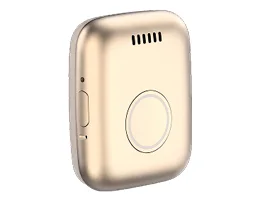
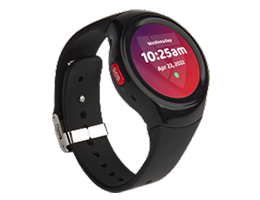
If you want to see how the pieces work together, our overview of how medical alert systems work is a good place to start. Active people who are often out and about tend to prefer an on-the-go GPS button with fall detection or a medical alert smartwatch, while those who spend more time at home may do well with an in-home system. You can also compare options and pricing or read more about the Medical Guardian experience. The goal is the same as the assessment itself: to keep you ready for whatever comes next.
Frequently asked questions
What is the difference between fall risk screening and a fall risk assessment?
Screening is a quick check, often as few as three questions or a 12-question form, that sorts you into “at risk” or “not at risk.” A full assessment is the deeper evaluation that follows a high-risk screen, looking at gait, strength, balance, medications, blood pressure, vision, feet, and home hazards so a tailored plan can be built.
What is a good fall risk score on the Stay Independent tool?
On the CDC’s 12-question Stay Independent checklist, a total of 4 or higher flags increased risk. A score below 4 is reassuring, but a fall in the past year still places you in the at-risk group regardless of your score.
How often should fall risk be assessed?
For most older adults, once a year is the standard, and any time after a new fall or a noticeable change in steadiness. If you have already been flagged as high risk, your clinician may check in more often, often with a follow-up about one to three months after starting a plan.
What are the main risk factors for falling?
The factors clinicians look for include a previous fall, unsteady gait or poor balance, lower-body weakness, certain medications, low blood pressure on standing, vision problems, foot or footwear issues, low vitamin D, and home hazards. Risk usually comes from several of these at once, which is why a full assessment is helpful.
Can exercise really lower my chance of falling?
Yes. In a Cochrane review of more than 23,000 people, exercise reduced the rate of falls by about 23 percent, with the strongest results from programs that challenge balance and add strength training. Tai Chi and physical therapy are common, well-supported choices.
Should I take vitamin D to prevent falls?
It depends on your level. The CDC algorithm recommends a daily supplement when vitamin D is low or deficiency is likely, while national prevention guidance does not recommend vitamin D specifically to prevent falls for everyone. Ask your clinician to check your level rather than starting high doses on your own.
What should I do right after someone has a fall?
Stay calm and check for injuries before helping the person up; if there is severe pain, a head injury, or they cannot move, call for emergency help and keep them still. Once they are safe, report the fall to their clinician, because a recent fall is a strong reason to schedule a full assessment. A medical alert system can summon help quickly when a fall happens with no one nearby.
Can a medical alert system prevent falls?
A medical alert device does not prevent a fall, but it shortens the time you spend waiting for help if one occurs, which can reduce the harm a fall causes. It works best alongside the balance, medication, and home-safety steps in a full plan. You can compare devices and pricing to find a fit for your routine.
Are falls a normal part of getting older?
No. Falls become more common with age, but they are not inevitable, and most of what drives risk can be measured and improved. That is the whole point of an assessment: to find the changeable factors and act on them so you can stay active.
Who performs a fall risk assessment?
Primary care providers, geriatricians, nurses, and physical therapists all use the STEADI approach. The screening can even start at home with the three key questions, and the full assessment is then completed by your clinician, sometimes with help from a physical or occupational therapist.
What are the 5 P’s of fall risk assessment?
The “5 P’s” are a hospital and care-facility checklist that nurses run through during regular room checks, a practice called intentional or hourly rounding, not a community screening tool like the ones described above. Four items are well established, and most fall-prevention versions add a fifth:
- Pain: is the person hurting, and is it being treated?
- Personal needs: help with the bathroom, hydration, or nutrition.
- Position: keeping the person comfortable and safely positioned.
- Placement: keeping the call button, glasses or contacts, water, and other essentials within reach.
- Prevent falls: a last safety check of the immediate area before leaving the room.
The first four, sometimes called the “4 P’s,” come from the Studer Group’s intentional-rounding protocol; the fifth is where wording varies, with some facilities using “Proximity” or “Patient education” in place of “Prevent falls.” Either way, the goal is the same: catch small problems before they lead to a fall. For a senior living at home, the closer match is the CDC’s STEADI screening covered earlier in this guide.
What is the single biggest risk factor for falling?
A previous fall. Older adults who have fallen in the past year are roughly two to three times more likely to fall again, which is why that one question carries so much weight in any screening. Other leading contributors include lower-body weakness, poor balance or an unsteady gait, certain medications, and vision problems. Because these tend to stack up together, catching a recent fall early is a strong reason to look at the rest.
At what age does fall risk start to increase?
Fall risk climbs steadily with age. From age 65 on, about one in four older adults falls each year, and the share rises further into the 80s as strength, balance, and eyesight change. That said, falling is not an unavoidable part of any age; most of what raises the risk can be measured and improved, which is the whole point of a fall risk assessment.
What is the biggest trip hazard at home for seniors?
Loose throw rugs and floor clutter top most lists. Rugs and mats that slide or curl at the edges, along with items left in walkways such as shoes, bags, or cords, account for a large share of home falls. Poor lighting, slippery bathtubs, and missing stair rails add to the risk. Securing or removing rugs, clearing paths, and brightening hallways are among the easiest changes with the biggest payoff, and an occupational therapist can spot hazards you may walk past every day.
References
- Stevens, J. A. & Phelan, E. A. Development of STEADI: a fall prevention resource for health care providers. Health Promot. Pract. 14, 706–714 (2013).
- Centers for Disease Control and Prevention. STEADI: Algorithm for Fall Risk Screening, Assessment, and Intervention. https://www.cdc.gov/steadi/media/pdfs/STEADI-Algorithm-508.pdf (2019).
- Sherrington, C. et al. Exercise for preventing falls in older people living in the community. Cochrane Database Syst. Rev. 1, CD012424 (2019).
- Hopewell, S. et al. Multifactorial and multiple component interventions for preventing falls in older people living in the community. Cochrane Database of Systematic Reviews 7, CD012221 (2018).
- Panel on Prevention of Falls in Older Persons American Geriatrics Society and British Geriatrics Society. Summary of the updated American Geriatrics Society/British Geriatrics Society clinical practice guideline for prevention of falls in older persons. J. Am. Geriatr. Soc. 59, 148–157 (2011).
- Older Adult Falls Data | Older Adult Fall Prevention | CDC. https://www.cdc.gov/falls/data-research/index.html.
- Guyatt, G. H. et al. GRADE: an emerging consensus on rating quality of evidence and strength of recommendations. BMJ 336, 924–926 (2008).
- Sherrington, C. et al. Evidence on physical activity and falls prevention for people aged 65+ years: systematic review to inform the WHO guidelines on physical activity and sedentary behaviour. Int. J. Behav. Nutr. Phys. Act. 17, 144 (2020).
- Luo, Y. et al. Effectiveness of Multifactorial and Exercise Programs in Preventing Falls Among Older Adults: A Systematic Review and Component Network Meta-Analysis. Worldviews Evid. Based. Nurs. 23, e70136 (2026).
- Nicholson, W. K. et al. Interventions to Prevent Falls in Community-Dwelling Older Adults: US Preventive Services Task Force Recommendation Statement. JAMA 332, 51–57 (2024).
- Grossman, D. C. et al. Interventions to Prevent Falls in Community-Dwelling Older Adults: US Preventive Services Task Force Recommendation Statement. JAMA 319, 1696–1704 (2018).
- Centers for Disease Control and Prevention. STEADI: Patient Fall Risk Factors Checklist. https://www.cdc.gov/steadi/media/pdfs/steadi-form-riskfactorsck-508.pdf (2017).
- Centers for Disease Control and Prevention. STEADI: 30-Second Chair Stand Assessment. https://www.cdc.gov/steadi/media/pdfs/STEADI-Assessment-30Sec-508.pdf (2017).
- American Geriatrics Society 2023 updated AGS Beers Criteria® for potentially inappropriate medication use in older adults. J. Am. Geriatr. Soc. 71, 2052–2081 (2023).