
Quick Answer: What is the best smartwatch with fall detection for seniors?
After researching independent review sites and medical alert evaluations, the Medical Guardian MGMove stands out as the strongest overall option for seniors seeking a smartwatch with fall detection.
The National Council on Aging (NCOA) ranks Medical Guardian highest overall, with a score of 9.9 out of 10. At the same time, ConsumerAdvocate gives the company an overall rating of 4.9 out of 5, citing its wide range of devices and caregiver-friendly services.
Smartwatches with fall detection have become increasingly popular in the medical alert market. These devices combine motion sensors, GPS tracking, and cellular connectivity to connect users with help after a fall or other emergency.
Our research shows that the biggest differences between providers are in monitoring quality, response speed, and battery life. In addition, the best results with this technology come from a device that’s worn consistently.
Types of Smartwatches With Fall Detection
When discussing smartwatches with fall detection, the focus is on devices connected to a 24/7 monitoring center and designed specifically to help users in emergencies. Consumer-grade units like the Apple Watch have available subscription apps for fall detection, but the watch itself is meant to do many tasks. In contrast, the main purpose of a medical alert smartwatch is to provide emergency support.
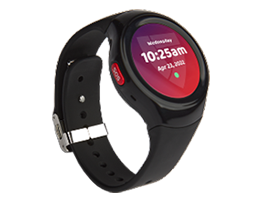
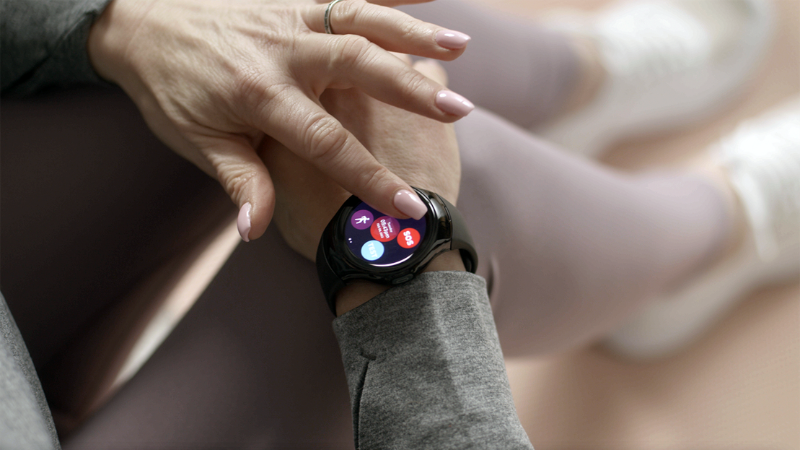
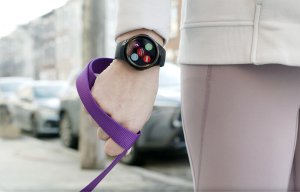
A medical alert smartwatch looks similar to a consumer smartwatch. It tells time and includes built-in features such as cellular connectivity, GPS location tracking, two-way voice communication, and a help button that connects users to a 24/7 monitoring center.
One example is the MGMove smartwatch from Medical Guardian, which earns top marks from SeniorLiving.org. These watches often include extra functions such as step counting and reminders, but their primary purpose remains emergency support.
What About GPS-Enabled Wrist Wearables?
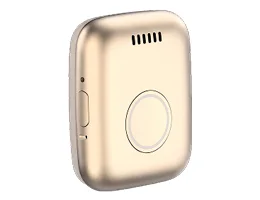
Another type of device is the GPS-enabled wrist wearable, which has a small case with a help button and is secured by a wristband. It’s not a smartwatch, but it’s worth mentioning. These units usually include the same emergency support capabilities but omit the touchscreen and lifestyle apps found in smartwatch-style models.
Medical Guardian’s MGMini Lite is a popular option. Some seniors prefer these simpler designs because these units focus strictly on emergency support rather than additional features.
Most medical alert companies that offer smartwatches or GPS-enabled wrist wearables make fall detection available as an optional upgrade. This provides service flexibility for users and family members who are less concerned about falls and more focused on round-the-clock access to emergency support.
Key Features of a Smartwatch With Fall Detection
A capable medical alert smartwatch is embedded with several core features that enable it to perform as a safety device rather than a lifestyle accessory.
Fall Detection Sensors
The fundamental technologies behind a smartwatch fall detection are accelerometers and gyroscopes that detect sudden changes in movement. The gathered data is assessed by algorithmic software to determine if the motion is consistent with a fall. If so, an alert is triggered.
Cellular Connectivity
Unlike consumer smartwatches that often rely on a paired smartphone, medical alert smartwatches usually include built-in cellular service. This allows the watch to connect with emergency operators anywhere cellular coverage is available.
GPS Location Tracking
GPS enables the monitoring center to locate the wearer during an emergency. This feature is particularly important for seniors who travel or spend time outdoors.
Two-Way Voice Communication
Most fall detection smartwatches include a speaker and microphone so the wearer can talk directly with monitoring center operators.
Battery Life
Battery life can vary significantly across devices. Some smartwatch models last only part of a day, while others last 24 hours or more between charges.
How Accurate Is Fall Detection?
Falls are a serious risk for adults 65 years and older, according to the CDC. Each year, these incidents lead to 3 million emergency room visits and 1 million hospitalizations. Falls are the most common cause of traumatic brain injury and account for 83% of hip fracture-related deaths.
Like most technologies, fall detection has improved over time. Today’s sensors and software algorithms detect motion patterns that resemble a fall.These patterns typically involve a sudden downward movement followed by minimal motion afterward. If the watch detects this pattern, a countdown begins, allowing the wearer to cancel the alert. If there’s no response, the watch automatically contacts the monitoring center.
Independent testing suggests that fall detection works best when the watch is worn snugly and positioned correctly on the wrist. Very slow falls or slides may not trigger detection as reliably as a sudden collapse.
As a result, fall detection technology cannot detect every fall. This feature is designed to supplement, not replace, getting emergency support by pressing the help button. Nonetheless, automatic fall detection can be crucial if the wearer is unable to reach the emergency button or is unconscious.
The Best Smartwatches With Fall Detection: Side By Side
Evaluations from the National Council on Aging (NCOA) and SeniorLiving.org highlight a small group of devices in this category. Let’s see how Medical Guardian’s MGMove, Bay Alarm Medical’s SOS Smartwatch, and the UnaliWear Kanega Watch compare.
At a Glance: Best Smartwatches with Fall Detection
| Provider: Device | NCOA Rating | TheSeniorList Rating | Avg. Response Time* |
Battery Life | Cost: Device+Service (month-to-month service) |
| Medical Guardian: MGMove | 9.9/10 | 4.7/5 | 10 sec | 24 hrs | $199.95 device + ~$42.95/mo |
| Bay Alarm Medical: SOS Smartwatch | 9.8/10 | 4.5/5 | 16 sec | 6-8 hrs | $199.00 device + $39.95/mo |
| UnaliWear: Kanega Watch | Not Rated | 3.8/5 | 30 sec | 24-36 hrs with battery swaps | $299.00 device + $84.95/mo |
*Testing by TheSeniorList.com
Medical Guardian MGMove
Medical Guardian’s MGMove has a track record of being a top performer in independent testing. SeniorLiving.org called this smartwatch “well-rounded” and a “great choice,” ranking it the best among six competing products.
Average Response Time
The National Council on Aging (NCOA) measured an average response time of about 29 seconds, among the fastest monitoring services evaluated. However, results from TheSeniorList were even better, with testers reaching a Medical Guardian operator in 10 seconds.
Battery Life
The MGMove typically lasts 24 hours on a single charge, so most users charge it overnight.
Fall Detection
Fall detection is available as an optional upgrade, which adds $10 to the monthly service fee.
Customer Reviews and Ratings
A common theme in Medical Guardian’s Google Reviews is praise for the company’s “quick response” and “courteous staff.”
Cost
The MGMove costs $199.95, with the monthly monitoring plan ranging from $38.95 to $42.95, depending on the subscription length.
Pros
- Highest overall rating in NCOA testing
- Smartwatch-style design with simple interface
- Fast monitoring response times
- Caregiver app
Cons
- Requires daily charging
- Fall detection costs extra
Bay Alarm Medical SOS Smartwatch
The SOS Smartwatch has similar underlying technology (GPS tracking, cellular connectivity, and two-way voice capability) to Medical Guardian’s smartwatch, but can’t send texts or schedule reminders like the MGMove.
Average Response Time
While Bay Alarm Medical did well in TheSeniorList’s testing (16 seconds), NCOA recorded an average response time of 51 seconds.
Battery Life
Battery life of 6 to 8 hours per charge puts the SOS Smartwatch well below its competitors. Users may have to charge their devices more than once per day.
Fall Detection
Fall detection costs an extra $10 per month.
Customer Reviews and Ratings
Google reviews for Bay Alarm Medical are mostly positive, but some users report problems with device wristbands.
Cost
The SOS Smartwatch has a device cost of $199.00. The monthly monitoring service is $39.95; Bay Alarm Medical doesn’t offer any discounts on extended-term subscriptions.
Pros
- Good customer service reviews
- Competitive monthly service pricing
Cons
- Shorter battery life than most wearable devices
- Limited smartwatch-style features
UnaliWear Kanega Watch
The UnaliWear Kanega Watch takes a slightly different approach from many smartwatch-style medical alert devices. While it resembles a smartwatch, the device focuses almost entirely on emergency monitoring rather than touchscreen apps or lifestyle tools.
Average Response Time
TheSeniorList reported an average response of 30 seconds in testing, putting the Kanega Watch behind the competition.
Battery Life
The Kanega Watch uses a swappable multi-battery system. Each battery must be removed from the device and placed in a separate charging unit. There’s no independent data on battery life, but UnaliWear reports that users can expect 24–36 hours of use from a charged set of batteries.
Fall Detection
Fall detection service is included in the monthly subscription charge.
Customer Reviews and Ratings
UnaliWear has mixed reviews on Google (3.9/5), with dissatisfaction focused on customer service.
Cost
Among the three medical alert smartwatches in the group, the Kanega Watch is the most expensive. The device is priced at $299, and the monthly monitoring costs $64.95 (annual subscription) or $84.95 (monthly subscription).
Pros
- Fall detection is included with monitoring
- Focus on emergency monitoring
Cons
- No touchscreen interface
- Significantly higher monthly cost than competitors
- No companion mobile app or caregiver tracking tools
- Battery packs may detach during use
Note: UnaliWear has faced reported financial difficulties, and availability of the Kanega Watch and continuity of its monitoring service have become uncertain in 2026. Confirm current availability and active monitoring directly with UnaliWear before purchasing.
Key Takeaways
- A medical alert smartwatch is an emergency call device worn like a watch. Built-in cellular service and GPS allow the wearer to reach a monitoring center and share their location without needing a smartphone.
- Reviews from organizations that test medical alert systems often mention Medical Guardian, Bay Alarm Medical, and UnaliWear when comparing smartwatch-style devices.
- Not every device in this category functions like a typical smartwatch. Some include simple features such as reminders or step tracking, while others focus almost entirely on emergency communication.
- Fall detection can help when someone cannot press the help button, but most providers still emphasize the importance of direct access to a monitoring center.
- Buyers often need to compare both upfront equipment costs and recurring subscription fees.
FAQs
What smartwatch does AARP recommend?
AARP does not officially recommend one specific smartwatch. It may offer discounts through partner companies, but shoppers still need to compare features, monitoring service, and cost.
What is the best fall detection device for seniors?
That depends on the user, but a strong option is a medical alert smartwatch tied to a 24/7 monitoring center, since it offers more direct emergency support than a standard consumer smartwatch. The best fall detection device is one that’s worn consistently, regardless of form.
Does Medicare pay for smart watches for seniors?
In most cases, Original Medicare (Part A and Part B) doesn’t cover smartwatches or medical alert watches, which are considered personal safety devices rather than durable medical equipment. Some Medicare Advantage (Part C) plans may cover medical alert devices.
What watches will call 911 if you fall?
Medical alert smartwatches usually contact a monitoring center first, and the operator can then call 911. Some consumer smartwatches can also place emergency calls after a detected fall.
What is the most medically accurate smartwatch?
For health tracking, consumer reviews often point to the Apple Watch for heart-rate accuracy, but that’s different from a medical alert watch designed for emergency response.

David Goldberg
David Goldberg brings a long career in senior living to his writing. His background includes communications and education roles with Sunrise Senior Living. He was also the co-founder of Senior Living University, a training company serving professional caregivers and industry executives. David holds a Bachelor of Arts in Journalism and a Master of Public Administration from The George Washington University.