Quick Summary
Most fall-prevention advice focuses on not falling. This guide covers the other half of the problem: what to do in the half-second you are already going down. Researchers have shown that the way you land changes how hard you hit the ground, and that older adults can learn to land with less force after even a single training session.1,2 The core ideas are simple to remember: protect your head by tucking your chin, stay relaxed instead of bracing on a stiff arm, bend your joints, and roll to spread the impact across your body rather than concentrating it on a hip or wrist. Below, you will find the techniques by fall direction, the evidence behind them, how to get up afterward, and the measures that lower injury risk even further. Falling safely is a skill that supports your independence, not a sign you are fragile.
Medical Disclaimer: This article is for general education and does not replace personalized medical advice. Safe-falling techniques are studied mainly in supervised settings, and they may not be right for everyone, particularly people with osteoporosis, recent fractures, joint replacements, or significant mobility limits. Talk with your physician or a physical therapist before practicing any falling technique, and learn it under qualified supervision rather than on your own.
On this page:
- Why landing matters
- Can you train it?
- Core principles
- By fall direction
- After a fall
- Lower your risk
- FAQ
Why “how you land” matters as much as “whether you fall”
More than one in four adults aged 65 and older fall each year, and fewer than half mention it to their doctor.3 About one in ten of those falls leads to an injury serious enough to limit activity or require medical care, and falls are the most common cause of traumatic brain injury in older adults.3 Across the United States, that adds up to roughly 14 million adults 65 years or older who reported falls a year.4 Because falls are this common in seniors, it is realistic to expect that one will happen eventually, even with good prevention in place. That makes a second question worth asking alongside “how do I avoid falling?”: if I do go down, how do I land with the least harm?
The answer lives in basic physics. An injury happens when the force of impact exceeds what a body part can tolerate. Two things drive the peak force at landing: how fast the body is moving when it hits (its momentum), and how abruptly that motion is stopped. The more suddenly the body is brought to rest, and the smaller the area over which it lands, the higher the force concentrated on any one spot. A rigid landing onto one small, bony area, such as the side of the hip or the back of the head, concentrates the entire impact into a single point in a fraction of a second. Spreading that same energy over more of the body and over a longer moment lowers the peak force any one spot has to absorb. This is why the hip and the head are the danger zones: not because they are small, but because they are bony and thinly padded, so impact concentrates there instead of being cushioned, and an injury to either, a broken hip or a head injury, carries far more serious consequences than a bruise to a fleshy area. The goal of a safer fall, then, is to keep load away from them and distribute it everywhere else.
Can you really train yourself to fall more safely?
The idea comes from martial arts, where students spend years learning to hit the mat without getting hurt. Researchers asked whether the same break-fall skills could help older adults. Early biomechanics studies found that martial-arts fall techniques sharply reduced the impact force at the hip during sideways falls,5 and that training could lower hip-fracture risk in principle.6 In that training study, older adults also reported a small but significant drop in fear of falling after learning the technique, a change that can itself help prevent future falls. A systematic review and meta-analysis of 13 studies examining seven different landing strategies pulled the evidence together and ranked the strategies by how much they cut impact load. Martial arts rolling and forward rotation showed the largest effects for sideways falls. The authors were careful to flag a limitation: most of the underlying studies tested young volunteers in self-initiated falls, so the findings still need confirmation in older adults during real, unexpected falls. The underlying impact mechanics are the same at any age, but older bodies are more fragile, which is exactly why the next wave of studies set out to test the approach in seniors.2
To address the harder question of whether seniors, not young athletes, could learn safe falling techniques, in one study, 14 older adults (average age 64) were randomly assigned either to learn a “tuck-and-roll” technique or to an active control group. The trained group reduced the force they hit the ground with by 33%, compared with 16% in the control group, and they kept that ability a week later1 (see Figure 1). Both groups practiced the same falls, so part of the control group’s gain came from familiarity with the task. The trained group cut the force about twice as much, and that difference is what the tuck-and-roll added beyond practice alone. A larger trial of 200 community-dwelling older adults found that a 12-week judo-inspired program improved their falling technique to the front and the side, with that competence still measurable at a 20-month follow-up.7 Most recently, the FAlling Safely Training (FAST) program, tested in a randomized trial of 24 older adults at risk of injurious falls, lowered the odds that one of those practice falls ended with the head striking the ground, about a tenfold reduction compared with an active control group that followed the Otago Exercise Programme, a standard balance-training routine, and it lowered the peak acceleration of the head at impact, a common measure of how hard a blow the head takes.8 What these studies point to is that prevention and safe landing work together. Even the best balance program cannot stop every fall, so learning to land well is what protects you in the falls that still happen.

Figure 1. Reduction in hip impact force after tuck-and-roll training: 33% in the trained group versus 16% in an active control group, retained at one week.
The evidence comes with two real limits, though. First, most of this research measures impact force and head movement during controlled, simulated falls in healthy, lower-risk volunteers; no large study has yet proven that training prevents real-world fractures and head injuries. Second, the techniques take practice to become automatic, because the body’s instinct in a real fall is hard to override. Treat falling safely as a promising complement to fall prevention, learned with professional guidance, not as a replacement for it.
Expert insight
“We have been initially conservative in recruitment for fear of injury during testing, so that certain comorbidities, such as significant osteoporosis, have been excluded… We will adapt the training to their impairments and will find out more about appropriate targeting.”
Neil B. Alexander, MD, University of Michigan Medical School (Michigan Medicine). Geriatrician and co-investigator on the FAST trial.
What are the core principles of a safer fall?
Across martial arts traditions and the research that has studied them, the techniques share a few common threads. You can remember them as four principles (see Figure 2).

Figure 2. The four principles of a safer fall: tuck the chin to protect the head, stay relaxed with bent joints, roll to spread the impact across the back and side, and land on fleshy areas with the arms bent.
Source: Original illustration (Medical Guardian).
Principle 1: Protect your head first
The single most important move is to keep your head from striking the ground. Tuck your chin toward your chest so your neck muscles hold your head forward, and if you are falling backward, round your upper back rather than letting your head snap back. This chin-tuck is a defining feature of trained falling and is why the FAST program focused so heavily on head protection.1,8
Principle 2: Stay relaxed, not rigid
Tensing up and bracing hard makes a landing worse, because a stiff limb transmits force straight into the joints and bones rather than absorbing it. Keeping your muscles relaxed and your knees, elbows, and wrists soft and slightly bent lets your body give a little on contact, like a spring.9 In the safe-landing review described earlier, a relaxed-muscle landing was among the strategies that reduced impact load.2 Relaxed does not mean limp and out of control; it means loose joints and no rigid bracing.
Expert insight
“I think the worst thing you can do when you’re falling is stiffen up. It’s natural. You get scared, you’re startled, the natural response is to get rigid. A rigid body is not good at absorbing forces. What you want to do, as you’re falling, is to relax. To go with the fall.”
Jacob Sosnoff, PhD, University of Kansas Medical Center. Principal investigator of the FAST (FAlling Safely Training) trial.
Principle 3: Roll and spread the impact
Rather than trying to stop yourself dead, let the momentum carry you into a roll. Rolling turns a single hard collision into a long, gradual smear of contact across the back, shoulder, and side, so no single body part takes the full force of the fall. This rolling motion is the reason martial arts techniques outperformed every other strategy for sideways falls in the research.2,6 It feels counterintuitive, because instinct says to stop as fast as possible, but spreading the impact is actually what protects you.
Principle 4: Steer toward fleshy areas, and use your arms wisely
Where you land matters. Aiming impact at well-padded, muscled areas such as the buttocks, the thigh, and the broad side of the body (the outer thigh and the fleshy side of the torso, away from the bony point of the hip) protects the bony hip and the head. The role of the hands deserves a careful note. Throwing out a stiff, straight arm to catch yourself, as one may instinctively do, is a common cause of wrist and forearm fractures,10 yet using the hands and arms can also reduce the load on the hip during a sideways fall.11 The practical guidance is not “never use your hands.” Rather, it is to avoid landing on a locked, straight arm. Let the elbows bend so the arms absorb energy gradually, and use them to help guide a roll rather than to break the fall in one rigid jolt.
How should you fall in each direction?
The best response depends on which way you are going, because each direction threatens a different part of the body. Figure 3 shows how much each of the different strategies reduced impact load in the research, organized by fall direction.

Figure 3. Effect sizes (Hedges’ g) for selected safe-landing strategies. Martial-arts rolling had the largest effect for sideways falls; squatting helped most for backward falls; elbow flexion helped for forward falls. Martial-arts slapping showed no significant effect.
Source: Moon & Sosnoff, Arch. Phys. Med. Rehabil. 2017 (meta-analysis: 13 studies, 217 participants).
Falling sideways
A fall straight onto the side carries the highest risk of hip fracture, because the impact lands directly on the hip bone.5,6 The most protective response is the tuck-and-roll: bend the knees, curl the trunk, tuck the chin, and let your body rotate so you roll across your back and side instead of slamming onto the hip. In the safe-landing review described earlier, martial arts rolling reduced impact load more than any other technique studied.2
Falling backward
Falling backward puts the back of the head and the tailbone at risk. The key move is to drop toward the ground quickly by bending your knees and squatting toward the ground, which shortens the distance you fall and slows your speed at impact.12 As you go down, round your back, tuck your chin firmly to keep your head from hitting, and try to roll slightly to one side so you land on the padded buttock and side rather than straight onto your spine or skull. Dropping into a controlled squat like this is a trained reaction, the kind the safe-falling training described earlier helps build.
Falling forward
A forward fall threatens the wrists, face, and knees. Here the arms do have a protective role, but only if they bend. Reach out and let your elbows flex so your forearms and the give in your arms absorb the impact gradually;13 landing on a rigid, straight arm is what breaks wrists.10 Turn your head to one side to protect your face, and let your body continue into a forward roll if you can, carrying the energy through rather than stopping it abruptly.2,5
What should you do right after a fall?
Knowing how to get up safely matters as much as the fall itself, and rushing to stand is a frequent cause of a second injury. The National Institute on Aging recommends a deliberate, step-by-step approach.14 First, stay still for a moment and take stock. Check whether you are hurt before trying to move; if you feel severe pain or cannot move a limb, it is safer to stay where you are and call for help.
If you believe you can get up, slowly roll onto your side and rest while your blood pressure settles, then push up onto your hands and knees and crawl to a sturdy chair or sofa. Place both hands on the seat, slide your stronger leg forward so that foot is flat on the floor while the other knee stays down, and rise from that kneeling-lunge position, turning slowly to sit.14 Once seated, rest for several minutes and re-check for injury before doing anything else.
Being unable to get up and lying on the floor for a long time is dangerous in its own right,15 which is why getting help quickly is part of falling safely. A wearable help button or a system with automatic fall detection can summon assistance even if you cannot reach a phone. If you want to understand how that response works step by step, see our overview of how medical alert systems work.
What else lowers your risk of a serious injury?
Falling safely works best as one layer inside a broader plan. The strongest evidence in this field is still for prevention: well-designed strength and balance exercise programs reduce both the rate of falls on an individual basis and the number of people who fall.16 Programs such as Otago and tai chi build the leg strength and steadiness that help you catch a stumble before it becomes a fall, and the same fitness makes a protective roll or squat physically possible.16,17
Expert insight
“Ultimately, the fall risk reduction is modest and does not absolutely prevent falls, meaning a fall injury reduction paradigm is important. Our present FAST training teaches principles for fall injury reduction that are far beyond what I used to counsel, even as a falls expert, such as tuck and roll. I see the need for both fall risk reduction, say during physical therapy, as well as fall injury reduction via FAST.”
Neil B. Alexander, MD, University of Michigan Medical School (Michigan Medicine). Geriatrician and co-investigator on the FAST trial.
A few other measures add protection. Hip protectors, padded shields worn in special underwear, are a case where the evidence carries real nuance: a Cochrane review found they probably reduce hip-fracture risk for people in nursing or residential care, without increasing the number of falls, although they may slightly raise the small risk of pelvic fracture. They help little for those living at home, and they work only when actually worn, which sounds obvious but is exactly the catch: a hip protector left in a drawer prevents nothing, and in practice many people offered them do not keep them on.18 Supportive, non-slip footwear, good lighting, removing loose rugs and clutter, and grab bars in the bathroom all lower the odds of a hard fall in the first place. Keeping bones strong through adequate vitamin D, calcium, and medical management of osteoporosis reduces the chance that a fall becomes a fracture.
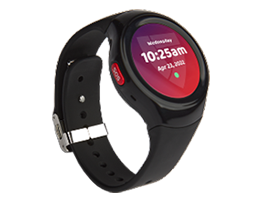
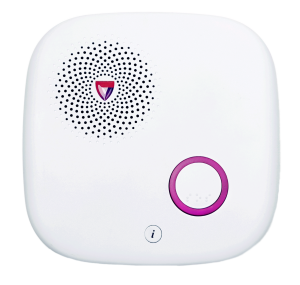
Technology rounds out the plan by shrinking the time between a fall and help arriving. For active seniors who spend time away from home, a mobile option such as our GPS button with fall detection or a smartwatch alert keeps help within reach anywhere. At home, a cellular home system covers the rooms where falls happen most. To see how the pieces fit together, explore the Medical Guardian experience, or compare options and costs in our guide to alert system pricing. Learning to land well and being able to call for help quickly work toward the same goal: staying active and in control, ready for whatever the day brings.
Frequently asked questions
Can older adults actually learn to fall more safely?
Yes, at least in the controlled studies done so far. Older adults have reduced their impact force after a single short session and retained the skill a week later, and longer programs have improved falling technique. Whether this prevents real-world injuries has not yet been proven in large trials, so learn it as a complement to prevention and under qualified supervision.
Should I throw my hands out to catch a fall?
Not onto a stiff, straight arm. A locked arm is a common way to break a wrist. Let your elbows bend so your arms absorb energy gradually and help guide a roll, rather than breaking the fall in one rigid jolt.
Which type of fall is most dangerous?
A direct sideways fall onto the hip carries the highest risk of hip fracture, and backward falls put the head at risk. Tucking the chin and rolling toward padded areas are the main defenses for both.
Do hip protectors work?
They probably lower hip-fracture risk for people in nursing or residential care, but help little for those living at home, and only when worn consistently. They are one option among several, not a stand-alone solution.
Is it safe to practice falling at home?
Practicing falls on your own is not recommended, especially if you have osteoporosis, fragile bones, or joint problems. These techniques are studied and taught in supervised settings on cushioned surfaces. Ask your physician or a physical therapist about safe, guided options.
What should you do in the first moments after a fall?
First, stay still for a moment and check yourself for pain before trying to move. If you are hurt, feel dizzy, or cannot get up, call for help or use a medical alert button rather than struggling to rise. If you feel steady and unhurt, roll onto your side, come up onto your hands and knees, and use a sturdy chair to stand slowly.
When should you go to the hospital after a fall?
Get medical help right away if you hit your head, blacked out even briefly, take blood thinners, cannot put weight on a limb, or have severe pain, confusion, or a visibly deformed joint. Head injuries and internal bleeding can surface hours later, so when in doubt, get checked. Even after a minor fall, it is worth telling your doctor, because a fall can point to a treatable cause.
Are you ever too old to learn to fall more safely?
No. In the research so far, adults in their 60s and beyond have learned safe-landing techniques, in some studies after a single session, and community programs have taught them to people in their 70s and older. What matters is learning under qualified supervision at a pace matched to your ability, not practicing hard falls on your own.
What is the single most effective thing for preventing falls?
Strength and balance exercise has the strongest evidence. Programs such as tai chi and structured strength-and-balance routines lower both how often people fall and how many of those falls cause injury. Learning to fall safely is a valuable second layer, but staying strong and steady is what keeps most falls from happening at all.
Can a medical alert system help if you fall?
Yes. A help button or a device with automatic fall detection can bring help quickly, which matters because spending a long time on the floor after a fall is dangerous in itself. It does not change how you land, but it shortens the wait for help. To see how that response works step by step, read our overview of how medical alert systems work.
References
- Moon, Y., Bishnoi, A., Sun, R., Shin, J. C. & Sosnoff, J. J. Preliminary investigation of teaching older adults the tuck-and-roll strategy: Can older adults learn to fall with reduced impact severity. J. Biomech. 83, 291–297 (2019).
- Moon, Y. & Sosnoff, J. J. Safe Landing Strategies During a Fall: Systematic Review and Meta-Analysis. Arch. Phys. Med. Rehabil. 98, 783–794 (2017).
- Facts About Falls | Older Adult Fall Prevention | CDC. https://www.cdc.gov/falls/data-research/facts-stats/index.html.
- Older Adult Falls Data | Older Adult Fall Prevention | CDC. https://www.cdc.gov/falls/data-research/index.html.
- Groen, B. E., Weerdesteyn, V. & Duysens, J. Martial arts fall techniques decrease the impact forces at the hip during sideways falling. J. Biomech. 40, 458–462 (2007).
- Groen, B. E., Smulders, E., De Kam, D., Duysens, J. & Weerdesteyn, V. Martial arts fall training to prevent hip fractures in the elderly. Osteoporosis International 21, 215–221 (2010).
- Arkkukangas, M., Strömqvist Bååthe, K. S., Ekholm, A. & Tonkonogi, M. High Challenge Exercise and Learning Safe Landing Strategies among Community-Dwelling Older Adults: A Randomized Controlled Trial. Int. J. Environ. Res. Public Health 19, 7370 (2022).
- Zanotto, T. et al. Strategies to Minimize Fall-related Injuries in Older Adults at Risk of Falls: The Falling Safely Training Study. J Gerontol A Biol Sci Med Sci 80, glaf076 (2025).
- Tamura, A., Akasaka, K. & Otsudo, T. Contribution of Lower Extremity Joints on Energy Absorption during Soft Landing. Int. J. Environ. Res. Public Health 18, 5130 (2021).
- Koo, K. O. T., Tan, D. M. K. & Chong, A. K. S. Distal radius fractures: an epidemiological review. Orthop. Surg. 5, 209–213 (2013).
- Feldman, F. & Robinovitch, S. N. Reducing hip fracture risk during sideways falls: Evidence in young adults of the protective effects of impact to the hands and stepping. J. Biomech. 40, 2612–2618 (2007).
- Robinovitch, S. N., Brumer, R. & Maurer, J. Effect of the “squat protective response” on impact velocity during backward falls. J. Biomech. 37, 1329–1337 (2004).
- Chou, P. H. et al. Effect of elbow flexion on upper extremity impact forces during a fall. Clinical Biomechanics 16, 888–894 (2001).
- Falls and Fractures in Older Adults: Causes and Prevention | National Institute on Aging. https://www.nia.nih.gov/health/falls-and-falls-prevention/falls-and-fractures-older-adults-causes-and-prevention.
- Kubitza, J., Schneider, I. T. & Reuschenbach, B. Concept of the term long lie: a scoping review. Eur. Rev. Aging Phys. Act. 20, 16 (2023).
- Sherrington, C. et al. Exercise for preventing falls in older people living in the community. Cochrane Database Syst. Rev. 1, CD012424 (2019).
- Thomas, S., Mackintosh, S. & Halbert, J. Does the ‘Otago exercise programme’ reduce mortality and falls in older adults?: a systematic review and meta-analysis. Age Ageing 39, 681–687 (2010).
- Santesso N; Carrasco-Labra A; Brignardello-Petersen R. Hip protectors for preventing hip fractures in older people. Cochrane Database of Systematic Reviews CD001255 (2014) doi:10.1002/14651858.CD001255.pub5.