
Quick Summary
Balance is a skill, and like any skill it responds to practice at any age. Strong clinical research shows that exercises which safely challenge balance lower how often older adults fall by roughly a quarter, and combining several types of exercise, most often balance with strength work, likely cuts the fall rate by about a third.1 This guide explains why balance changes with age, walks through the most effective balance exercises you can do at home with little or no equipment, and shows how often to practice for lasting results. Start with the moves that match your ability today, keep a steady surface within reach, and build from there.
Medical disclaimer
This article is for general education and is not medical advice. Talk with your doctor or a physical therapist before starting a new routine, especially if you have had a recent fall, feel dizzy, have a heart or joint condition, or use a cane or walker. A professional can tailor a program to your needs and confirm that each movement is safe for you.
On this page: Why balance matters · What controls balance · Do the exercises work · Best balance exercises · How often to practice · Staying safe · FAQ
Why does balance matter more as you age?
Falls are the most common threat to an older adult’s independence, and they are far from rare. In the United States, more than one in four adults aged 65 and older report a fall each year.2 Yet falls are not an inevitable part of getting older. They are largely preventable, and balance is one of the most trainable risk factors you can work on yourself in order to decrease your chances of falling.
Here is the part most people do not hear: balance tends to hold steady through midlife, then declines fairly quickly from the mid-50s onward.3 That decline is not a dead end. It is a signal to start practicing, because the same research that documents the decline also shows how strongly balance responds to training.1
How much does balance reflect overall health? In a study of 1,702 adults aged 51 to 75, researchers asked participants to stand on one leg for 10 seconds. Those who could not complete the simple test had a substantially higher risk of death over a median of about 7 years of follow-up, 17.5 percent compared with 4.6 percent for those who could, and the test added predictive information beyond age and other health measures.3 The takeaway is not fear. It is that balance is a window into how well your body is functioning, and it is something you can improve.
Expert insight: from the researcher behind the 10-second test
“Balance is one of the most important, yet often overlooked, components of physical fitness in older adults. Standing on one leg is a movement we perform many times each day—when dressing, climbing stairs, or simply changing direction—and preserving this ability is essential for maintaining independence and reducing the risk of falls.
Our 10-second One-Legged Stance (10sOLS) test is intended not as a cause for alarm, but as a simple check-in and a trigger for positive action. The encouraging message is that balance can be improved at virtually any age, even in people in their 80s and 90s, with regular and appropriate practice. For most people in their 60s or 70s, improving their balance is a realistic, worthwhile, and measurable goal.”
— Claudio Gil Araújo, MD, PhD, CLINIMEX Exercise Medicine Clinic, Rio de Janeiro, Brazil
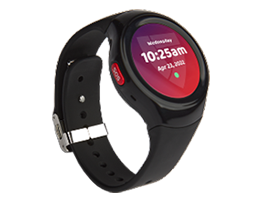
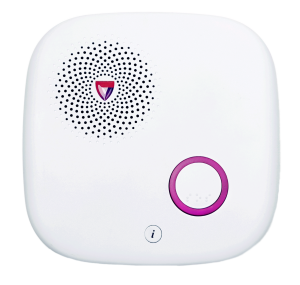
Better balance keeps you doing what you love, from gardening to spending quality time with grandchildren to travel. As you build that strength, knowing that help is one button away can keep you moving independently with confidence. You can read how that protection works in our overview of how medical alert systems work.
What actually controls your balance?
Balance is the ability to keep your body’s center of mass over its base of support, whether you are standing still or moving. Researchers describe it through three qualities: steadiness, the ability to hold a position with little sway; symmetry, sharing your weight evenly between both feet; and dynamic stability, staying in control while you move.4
Three body systems produce that result, working together in a constant loop. Your sensory system gathers information from your eyes, the vestibular organs of the inner ear, and proprioception, the position sense in your muscles and joints. Your central nervous system, the brain and spinal cord, integrates those signals. Your musculoskeletal system, the muscles and joints, carries out the response. Aging or illness in any one of these systems can reduce stability and raise the risk of a fall.4
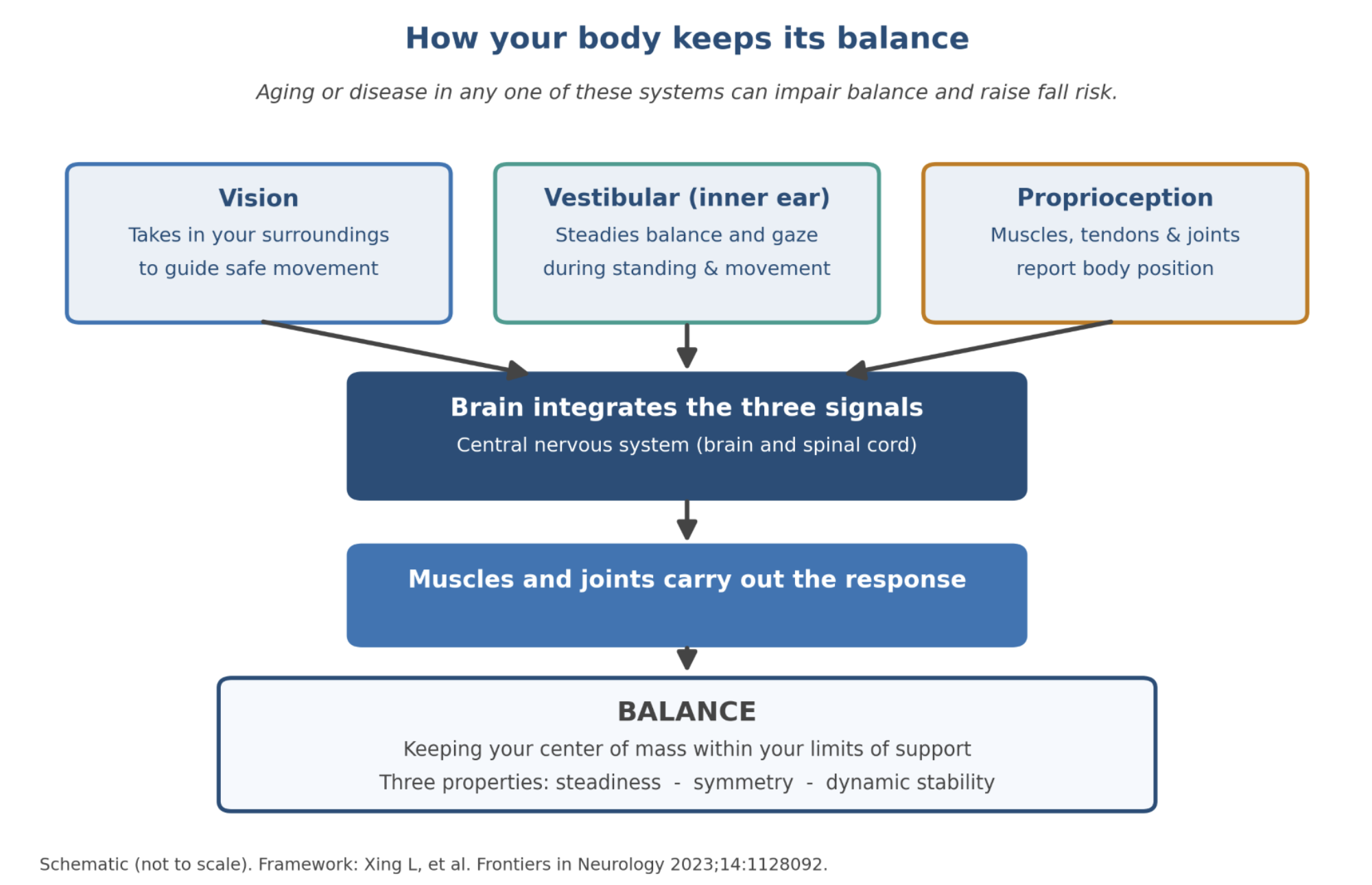
Figure 1. The three body systems that work together to keep you balanced (schematic).
This is why the most effective balance exercises challenge more than one system at once. Standing on a narrower base, closing your eyes near a counter, or moving while staying controlled, all push your sensory, nervous, and muscular systems to adapt together, which is exactly how balance improves.
Do balance exercises really prevent falls?
Yes, and the evidence is strong. A landmark Cochrane review pooled 81 trials of community-living older adults and found that exercise reduces the rate of falls by about 23 percent overall, an estimate drawn from the 59 of those trials that measured fall rates.1 When researchers looked at which type of exercise mattered most, balance and functional training stood out: it cut the rate of falls in individual seniors by 24 percent and the number of people who fall by about 13 percent, with high-certainty evidence. Programs that added strength work to balance training did even better, likely lowering the fall rate by roughly 28 to 34 percent, depending on the edition of the review: about 34 percent in the 2019 review1 and about 28 percent in a 2020 update with newer trials.5
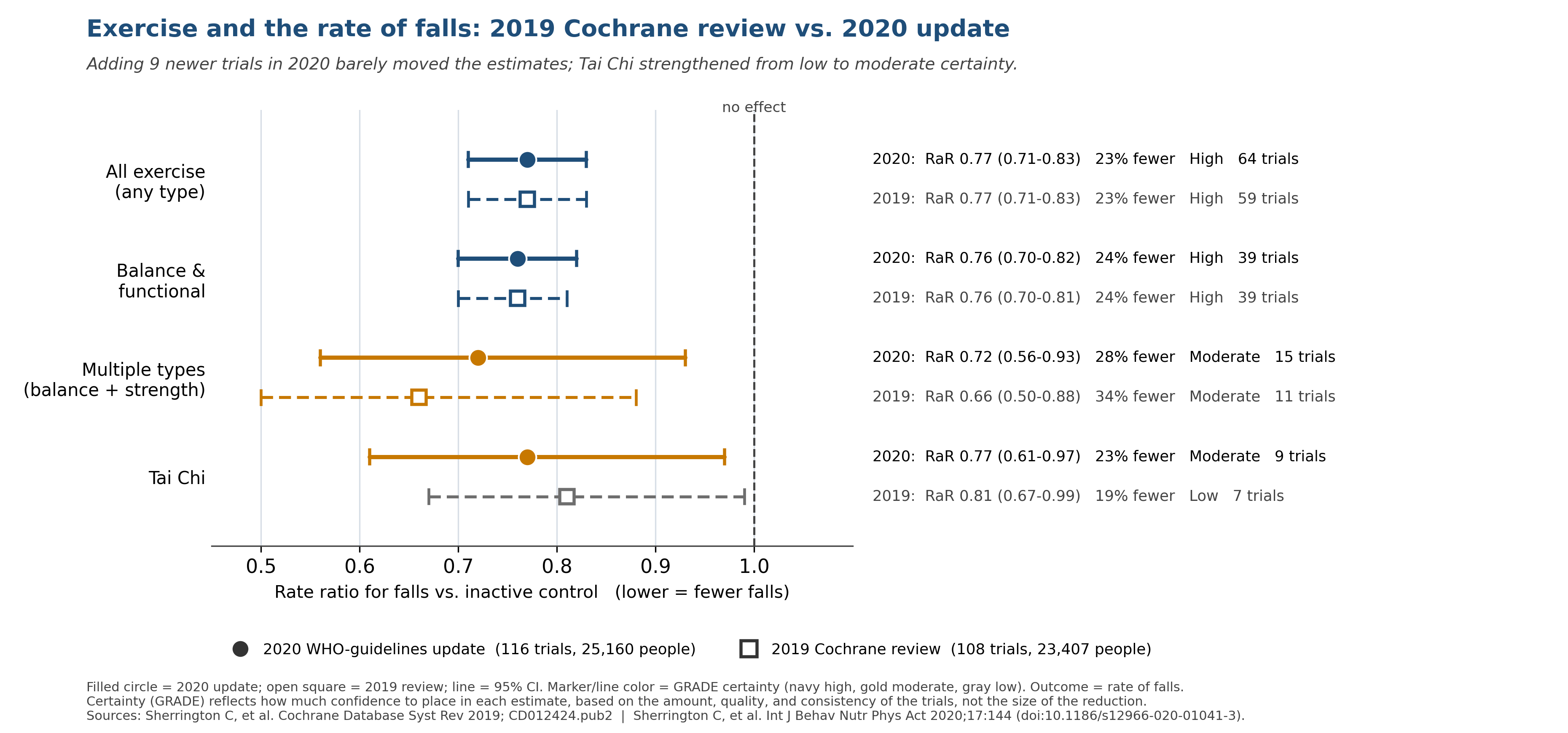
Figure 2. Rate of falls by exercise type: the 2019 Cochrane review compared with its 2020 update (Sherrington et al., 2019 and 2020).
Tai chi is a gentle, flowing option that trains all three balance systems at once. The same 2019 review found it may reduce the rate of falls by about 19 percent.1 In the 2020 update of that review, additional trials raised that estimate to about 23 percent and strengthened the evidence from low to moderate certainty.5 A randomized trial of 670 adults aged 70 and older who were already at high risk of falling went further: a fall-prevention tai chi program, Tai Ji Quan: Moving for Better Balance, developed at the Oregon Research Institute, cut falls by 58 percent compared with stretching and by 31 percent compared with a standard multi-part exercise program.6 These are relative reductions, the change in each group’s rate of falls compared with its comparison group, so the absolute number of falls a given person avoids depends on how high their starting risk was.
Expert insight: getting started with tai chi
“I would emphasize that tai chi is a gentle, low-impact activity suitable for beginners, requires no special equipment, and can be adapted to almost any fitness level. Beyond reducing fall risk, participants often report improvements in confidence, relaxation, and overall well-being—changes that contribute to a safer and more active lifestyle in later years.”
— Fuzhong Li, PhD, Senior Scientist, Oregon Research Institute
Home-based programs work too. The Otago Exercise Programme, a set of 17 leg-strengthening and balance-retraining moves plus a walking plan done about three times a week, reduced falls and fall-related injuries by roughly 35 percent across its trials, with the largest benefit for adults over 80 who had fallen before.7,8 It was originally prescribed by physical therapists, which points to a useful rule: if you are unsure where to start, a professional can build the right plan for you.
The common thread across every effective program is the same. Exercise that safely challenges your balance, done regularly, reliably lowers the odds of a fall.
What are the best balance exercises for seniors?
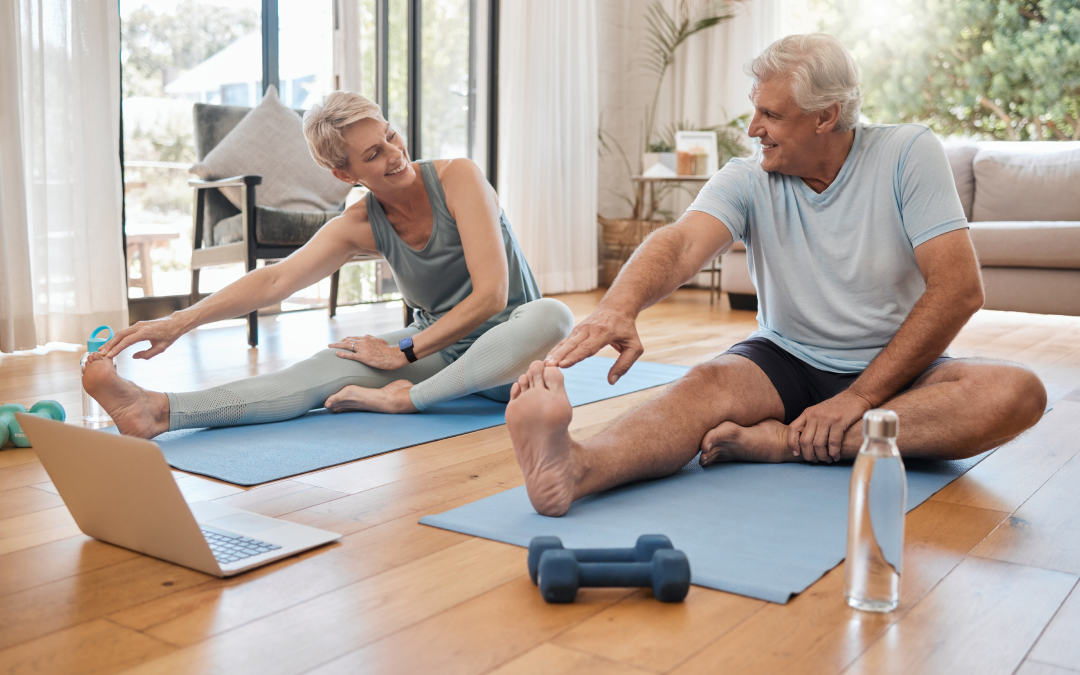
The exercises below are grouped from easiest to hardest, so the skill level of each move is clear as you read. Check with your doctor or a physical therapist before you begin, especially if you have had a recent fall or a heart, joint, or inner-ear condition. Begin at the level where you feel steady, and move up only when a movement feels controlled and comfortable. A few safety basics first: stand behind a sturdy chair, counter, or rail you can grab; wear flat, supportive shoes; clear the floor of rugs and cords; and keep a phone or alert device within reach. Aim for slow, deliberate movement rather than speed.
Beginner: build a base with support
- Weight shifts. Stand with feet hip-width apart, holding your support. Slowly shift your weight onto your right foot, hold for a few seconds, then onto your left. Then rock gently forward onto your toes and back onto your heels. This trains symmetry, the even sharing of weight.9
- Heel and toe raises. Holding the counter, rise onto your toes, hold, and lower. Then rock back onto your heels, lifting your toes. Repeat 10 to 15 times10 to strengthen the calves and shins that stabilize every step.
- Sit-to-stand. From a firm chair, stand up without using your hands, then sit back down with control. This builds the leg strength that underpins balance and mirrors the functional training shown to reduce falls.1
Intermediate: reduce your support
- Tandem stance. Place one foot directly in front of the other, heel touching toe, as if standing on a tightrope. Hold for at least 10 seconds, then switch which foot leads.11
- Single-leg stance. With a hand resting lightly on support, lift one foot a few inches off the floor and hold. Aim for 10 seconds, then build toward 30, and switch legs. This is the same balance challenge used in the 10-second test that tracks so closely with health, and it is one of the best moves to train at home.3
- Heel-to-toe walking. Walk in a straight line placing the heel of one foot directly in front of the toes of the other. Use a wall or counter alongside you for reassurance and look ahead rather than down.12
- Backward walking. Standing side-on to a counter or rail, walk backward about ten steps, keeping your back tall and your eyes ahead, using a toe-to-heel action. Repeat the other way, and as your steadiness improves, progress to walking without holding support. Moving in reverse trains the stepping reactions you rely on when you step back to steady yourself.13
Advanced: add real-world challenge
- Eyes-closed standing. Standing near your support, close your eyes for 10 to 20 seconds. Removing vision forces your inner ear and position sense to work harder, training the systems that keep you steady in the dark or on uneven ground.4
- Tandem walking with head turns. As you heel-to-toe walk, slowly turn your head side to side. This rehearses everyday situations like turning to talk while walking.14
- Tai chi. Joining a tai chi class or following a guided video, such as this Tai Chi Workout for Seniors, trains balance, strength, and coordination together, with the added benefit of being social and gentle on the joints.6
One principle ties these together. To improve balance, training has to push you a little beyond your everyday demands the same way lifting a heavier weight builds more strength.4 Progress by narrowing your stance, reducing your hand support, closing your eyes, or adding movement, one change at a time.
How often should seniors do balance exercises?
National guidance is clear that balance work belongs in your weekly routine. The Physical Activity Guidelines for Americans recommend that older adults do multi-part physical activity that includes balance training, alongside at least 150 minutes of weekly aerobic activity and muscle-strengthening on two or more days.15 The World Health Organization goes a step further, advising varied multi-part activity on three or more days a week to improve function and prevent falls.16
In practice, that means weaving short balance sessions into most days. Even 10 to 15 minutes counts,6 and the programs with the best track records, including Otago and the tai chi trials, run about three sessions a week and continue over the long term.7,8 Consistency matters more than intensity. The benefits build over weeks and fade if you stop, so the goal is a routine you can keep, not a sprint you abandon.16
How to train safely and make balance stick
A few habits keep balance training both safe and effective. Always have a stable surface within reach, work in a clear, well-lit space, and wear supportive footwear. Build up gradually, breathe normally rather than holding your breath, and stop if you feel dizzy or lightheaded. If a movement feels risky, drop back to an easier version. Steady progress beats a setback caused by overtraining. When a drill asks you to close your eyes, do that on purpose beside your support in the same clear, well-lit space; the goal is to remove vision as a challenge, not to practice in the dark.
Some signs call for professional input. See your doctor or a physical therapist if you have fallen recently, feel unsteady or dizzy, notice numbness in your feet, or live with a condition affecting your legs, eyes, or inner ear. A physical therapist can assess your balance, prescribe the right exercises, and progress them safely, which is how the most effective home programs are designed.7
Expert insight: when to see a doctor or physical therapist
“An older adult should seek care from a doctor or physical therapist if they have a fall, as a second fall is very likely within the next year. Health professionals can help to reduce risk for falling again by providing a personalized activity program including tai chi, discussing medication that might increase risk for falling, and many other important interventions. If an older adult hasn’t yet fallen, but feels unsteady when walking, needs to use their hands to help them stand up from a chair, feels dizzy or has low vision or hearing, they should also talk with a doctor or physical therapist to make sure they do not have a fall.”
— Elizabeth Eckstrom, MD, MPH, Professor and Chief of Geriatrics, Oregon Health & Science University
Building strength takes time, and confidence grows alongside it. While you train, a medical alert or fall-detection device means help is one press away, at home or out on a walk. That layer of protection is what lets many older adults keep moving boldly while they get stronger. You can explore what daily life with that support looks like through the Medical Guardian experience. Balance is a skill you can grow at any age, so pick two or three moves from this guide and start today.
Frequently asked questions
What are the best balance exercises for seniors to do at home?
A few moves give the most benefit for the least equipment: the single-leg stance, heel-to-toe walking, sit-to-stand from a chair, and gentle weight shifts. Tai chi is excellent if you prefer a guided class. Start each one beside a counter or sturdy chair, and progress as you feel steadier.
How can I improve my balance without any equipment?
You need nothing more than a wall or a kitchen counter. Practice standing on one leg, walking heel to toe in a straight line, rising from a chair without using your hands, and rocking onto your toes and heels. A few minutes most days adds up quickly.
How often should seniors do balance exercises?
Aim for balance training on most days of the week, even in short 10 to 15 minute sessions. National and global guidelines recommend multi-part activity that includes balance work on three or more days a week, combined with strength and aerobic activity.
Do balance exercises actually prevent falls?
Yes. Pooled clinical trials show that balance and functional exercises lower the rate of falls by about 24 percent, and adding strength training likely raises that to roughly a third. Tai chi may reduce falls by about 19 percent, rising to roughly 23 percent in the review’s 2020 update. The key is practicing regularly.
What is the single best exercise for balance?
If you had to pick one, the single-leg stance is hard to beat. It is the same challenge used in a well-known test of healthy aging, it needs no equipment, and you can do it while brushing your teeth or waiting for the kettle. Hold a counter at first and build toward 30 seconds per leg.
Why do older adults develop balance problems?
Balance relies on your eyes, inner ear, position sense, nervous system, and muscles all working together. With age, each can decline, and some medications and health conditions add to the effect. The encouraging news is that much of this is improvable with regular practice.
Are balance exercises safe if I have already fallen or feel unsteady?
They can be, with the right precautions, and they are one of the best ways to lower your risk of another fall. Work within arm’s reach of support and ideally have a physical therapist guide your start. Many people also feel more secure exercising when a fall-detection device is on, so help is one press away if they need it.
How long does it take to improve balance?
Many people notice steadier footing within a few weeks of regular practice, and measurable gains build over a couple of months. Balance is like any skill, it keeps improving with use and slips if you stop, so the aim is to make it a lasting habit.
Is tai chi good for balance in seniors?
Very. Tai chi trains balance, leg strength, and coordination together in slow, controlled movements that are gentle on the joints. In a randomized trial of older adults at high risk of falling, a tai chi program cut falls by more than half compared with stretching.
Can you improve your balance after 70 or 80?
Absolutely. One of the most effective home programs produced its largest fall reductions in adults over 80 who had fallen before. It is never too late to start, and beginning gently with support is perfectly fine.
How long should a 70-year-old be able to stand on one leg?
There is no single official cutoff, but research has linked being able to hold a one-leg stance for at least 10 seconds to better long-term health. Many people in their 70s can do more with practice. Use a counter or sturdy chair for support at first, and work toward holding steady for about 30 seconds on each leg.
What exercises should seniors avoid for balance?
There are no moves every senior must avoid, but skip anything that feels unsafe or beyond your current level. Be cautious with fast, jerky motions, high-impact jumping, and balancing on unstable surfaces without support or someone nearby. If a movement makes you dizzy or short of breath, stop and check with your doctor. Progress one small change at a time rather than rushing ahead.
What are the signs of poor balance?
Common signs include feeling unsteady when you stand or turn, reaching for furniture or walls to steady yourself, frequent stumbles or near-falls, dizziness, and trouble standing on one leg. Balance training helps with all of these. If you notice them, it is also worth seeing your doctor to rule out causes like inner-ear problems or a medication side effect.
References
1. Sherrington, C. et al. Exercise for preventing falls in older people living in the community. Cochrane Database Syst. Rev. 1, (2019).
2. Older Adult Falls Data | Older Adult Fall Prevention | CDC. https://www.cdc.gov/falls/data-research/index.html.
3. Araujo, C. G. et al. Successful 10-second one-legged stance performance predicts survival in middle-aged and older individuals. Br. J. Sports Med. 56, 975–980 (2022).
4. Xing, L. et al. Falls caused by balance disorders in the elderly with multiple systems involved: Pathogenic mechanisms and treatment strategies. Front. Neurol. 14, 1128092 (2023).
5. Sherrington, C. et al. Evidence on physical activity and falls prevention for people aged 65+ years: systematic review to inform the WHO guidelines on physical activity and sedentary behaviour. Int. J. Behav. Nutr. Phys. Act. 17, (2020).
6. Li, F. et al. Effectiveness of a Therapeutic Tai Ji Quan Intervention vs a Multimodal Exercise Intervention to Prevent Falls Among Older Adults at High Risk of Falling: A Randomized Clinical Trial. JAMA Intern. Med. 178, 1301–1310 (2018).
7. Campbell, A. J. et al. Randomised controlled trial of a general practice programme of home based exercise to prevent falls in elderly women. BMJ 315, 1065–1069 (1997).
8. Robertson, M. C., Campbell, A. J., Gardner, M. M. & Devlin, N. Preventing Injuries in Older People by Preventing Falls: A Meta-Analysis of Individual-Level Data. J. Am. Geriatr. Soc. 50, 905–911 (2002).
9. Three Types of Exercise Can Improve Your Health and Physical Ability | National Institute on Aging. https://www.nia.nih.gov/health/exercise-and-physical-activity/three-types-exercise-can-improve-your-health-and-physical.
10. American College of Sports Medicine. Progression models in resistance training for healthy adults. Med. Sci. Sports Exerc. 41, 687–708 (2009).
11. Centers for Disease Control and Prevention. STEADI: Stopping Elderly Accidents, Deaths & Injuries. https://www.cdc.gov/steadi/.
12. Older Adult Activity: An Overview | Physical Activity Basics | CDC. https://www.cdc.gov/physical-activity-basics/guidelines/older-adults.html.
13. Wang, J., Xu, J. & An, R. Effectiveness of backward walking training on balance performance: A systematic review and meta-analysis. Gait Posture 68, 466–475 (2019).
14. Hall, C. D. et al. Vestibular Rehabilitation for Peripheral Vestibular Hypofunction: An Updated Clinical Practice Guideline From the Academy of Neurologic Physical Therapy of the American Physical Therapy Association. Journal of Neurologic Physical Therapy 46, 118 (2021).
15. U.S. Department of Health and Human Services. Physical Activity Guidelines for Americans. 2nd ed. 2018. https://odphp.health.gov/sites/default/files/2019-09/Physical_Activity_Guidelines_2nd_edition.pdf
16. Bull, F. C. et al. World Health Organization 2020 guidelines on physical activity and sedentary behaviour. Br. J. Sports Med. 54, 1451–1462 (2020).

Dr. Eliezer (Eli) Lichter
Dr. Eliezer (Eli) Lichter brings a rare combination of hands-on clinical experience and rigorous scientific training to his work as a medical writer at Medical Guardian.
Before entering research, Eli served as an emergency medical technician in Yonkers, New York, one of the state’s busiest urban EMS systems, where he was recognized with multiple Lifesaving Citation Awards. That work put him on the front lines of exactly the crises Medical Guardian exists to prevent, including fall responses involving older adults. He later served in an administrative role at a large skilled nursing facility in upstate New York, where he managed the full operational complexity of senior care, including fall prevention protocols and incident response.
That direct, real-world exposure to what aging adults and their families face every day shapes everything he writes.
Eli earned his PhD in Biochemistry and Molecular Biology from the University of Nebraska Medical Center, where his research focused on the genetic mechanisms underlying neurodegenerative diseases, including Alzheimer’s and Parkinson’s disease. He then completed postdoctoral training at Boston University in computational biomedicine, including a research affiliation with the Broad Institute of MIT and Harvard, developing molecular and computational strategies for early detection of cancer, Alzheimer’s disease, and other serious conditions through advanced applications in genomics and epigenetics.
At Medical Guardian, Eli translates complex medical and scientific research into clear, trustworthy content that helps older adults and their families make informed decisions about their health, safety, and independence.