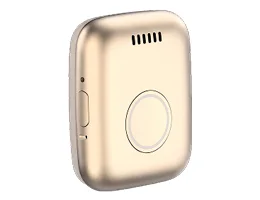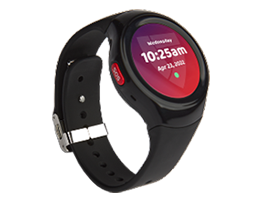

Quick Answer: Which medical alert bracelets offer the best everyday protection?
The best medical alert bracelets blend emergency monitoring with smartwatch-style usability. Leading devices, such as the MGMove from Medical Guardian, offer GPS tracking, fall detection capability, and reliable battery life, allowing users to summon help quickly while maintaining independence at home, outdoors, or during everyday activities.
What is a medical alert bracelet?
A medical alert bracelet looks like a watch while offering monitoring, GPS tracking, and optional fall detection. For many seniors, it’s a more discreet way of supporting safety than a pendant or bulky clip-on device. At the same time, the best medical alert bracelets also work with an active lifestyle. Yet, not every device manufacturer can pull this off.
Recent third-party evaluations assessed smartwatch-style medical alert devices across battery life, usability, fall-detection features, and overall performance. Five models rose to the top, offering a balance of functionality, durability, and connectivity both inside and outside the home. Comfort is also critical.
Matt Guerrieri, chief marketing officer at Medical Guardian, notes that wearability directly affects safety. “A medical alert device only works if it is worn consistently,” he says, adding that comfort, fit, and how a device integrates into daily routines all influence long-term use.


What Are the Best Medical Alert Bracelets for Everyday Wear?
There’s no shortage of medical alert bracelet options; the choices can be overwhelming. U.S. News and World Report recently reviewed several smartwatches designed for medical alert support and real-world use. In addition to reviewing third-party evaluations, we reviewed device features, usability, and reported performance to identify the strongest options. Here are the highlights of this research.
At-A-Glance: Best Medical Alert Bracelets
| NCOA Rating* | Standout Feature | Battery Life | |
| Medical Guardian MGMove | 9.9/10 | Messaging & reminders apps | Up to 24 hrs |
| Bay Alarm Medical SOS | 9.8/10 | Physical SOS button | 6–8 hrs |
| LifeFone Safe Watch Active | 9.4/10 | No device fee | Up to 24 hrs |
| Medical Alert Smartwatch | 9.2/10 | Fully waterproof | Up to 48 hrs |
| LifeStation Sidekick Smart | 8.9/10 | Text-based location access | Daily charging |
*Ratings from the National Council on Aging (NCOA). MGMove and Bay Alarm SOS are NCOA device ratings; LifeFone, Medical Alert, and LifeStation are NCOA company ratings.
The review examined devices suitable for use at home and on the go, assessing ease of use, features, and fall-detection capabilities.
Medical Guardian MGMove Medical Guardian MGMove
| Pros | Cons |
|
|
Medical Guardian’s MGMove is positioned as the best option for staying connected. The device blends emergency response capability with communication features typically found on consumer smartwatches.
Equipment Options, Features, & Technology
The MGMove includes step tracking and weather apps in its base configuration. An optional app package adds messaging (chat/text) and reminders with calendar tracking. The device supports fall detection as an add-on feature.
Ease of Installation/Use
The watch is designed for daily wear and offers multiple digital watchface options. Battery life is listed at up to 24 hours. The touchscreen interface mirrors a simplified smartphone layout, allowing users to navigate functions directly from the watch face.
Customer Service Reviews
Medical Guardian is rated “best overall” by NCOA and Everyday Health and has a 4.7 rating on Google with over 1,500 reviews. The MGMove bracelet/watch was rated “Best Watch Overall” by PCMag.
Bay Alarm Medical SOS Smartwatch
| Pros | Cons |
|
|
Bay Alarm Medical’s SOS Smartwatch is presented as a balanced option with a focus on usability under stress.
Equipment Options, Features, & Technology
The watch includes step-counting and weather apps. A physical SOS button is located on the side of the device, offering an alternative to pressing an on-screen icon. Fall detection is available as an optional add-on. A caregiver mobile app allows monitoring of battery status, device connection, and user location.
Ease of Installation/Use
The device provides audible low-battery alerts and typically charges in two to three hours. Battery life is shorter than that of other watches reviewed, lasting approximately six to eight hours per charge.
Customer Service Reviews
Customers on Consumer Affairs gave Bay Alarm Medical a 4.5 rating. Feedback includes comments like “the service was very prompt.”
LifeFone Safe Watch Active
| Pros | Cons |
|
|
LifeFone’s Safe Watch Active is positioned as a lower-cost smartwatch option with fewer built-in lifestyle apps.
Equipment Options, Features, & Technology
The watch includes a pedometer and heart rate monitor, but does not include a weather app. Location tracking is accessible through text message rather than a companion app. Fall detection is available as a low-cost add-on.
Ease of Installation/Use
Battery life is listed at up to 24 hours. The device does not include a caregiver app, which may limit remote management features.
Customer Service Reviews
ConsumerAffairs doesn’t provide a ratings score for LifeFone. Customer comments range from “my whole experience was excellent” to “a system from them that is unusable.”
Medical Alert Smartwatch
| Pros | Cons |
|
|
Medical Alert’s smartwatch is described as a good choice for active users due to its durability and battery performance.
Equipment Options, Features, & Technology
The device includes voice prompts and vibration alerts. It is fully waterproof, meaning it can be submerged, not just splashed. Fall detection is available as an add-on feature.
Ease of Installation/Use
Battery life is listed at up to 48 hours, which is the longest among these devices. A companion mobile app allows caregivers to manage accounts, receive alerts, and view location updates.
Customer Service Reviews
Medical Alert has a 1.5 rating, based on customer reviews from the past 24 months (as with all ConsumerAffairs rankings). There’s mixed feedback: praise for the professional staff but criticism of poor customer service.
LifeStation Sidekick Smart
| Pros | Cons |
|
|
LifeStation’s Sidekick Smart emphasizes caregiver location access without requiring a dedicated mobile app.
Equipment Options, Features, & Technology
The device includes pedometer, weather, and heart rate apps. Location tracking works by sending a text message to the device, which replies with a map link. The company states that the device combines GPS, Wi-Fi, and Bluetooth signals for indoor positioning. Fall detection is included in certain monitoring tiers.
Ease of Installation/Use
The device requires daily charging. Location checks are handled through text messaging rather than an app interface.
Customer Service Reviews
ConsumerAffairs gives LifeStation a 1.6 rating. Comments indicate that “the service team is always helpful,” but several complaints concern unit returns and refunds.
Does Fall Detection Work on Medical Alert Bracelets?
Many smartwatch-style medical alert bracelets offer fall detection as an add-on feature. The technology incorporates motion sensors and pattern-recognition algorithms to detect sudden changes in movement that may indicate a fall or collapse.
Upon detecting a potential fall, the device automatically connects to the monitoring center. The operator will attempt to communicate with the wearer through the integrated speaker. If contact can’t be established, emergency services can be dispatched. Importantly, the device must be worn correctly and kept charged to ensure optimal detection performance. Keep in mind that no system can detect every fall scenario.
What’s the Difference Between a Medical Alert Bracelet and a Medical ID Bracelet?
There are distinct contrasts between medical alert and medical ID bracelets. Medical alert bracelets are electronic devices that connect to a 24/7 monitoring center, while medical ID bracelets display engraved medical details.
The typical medical alert bracelet features cellular connectivity, GPS tracking, and a help button. When activated, these smartwatch-style devices link wearers to a trained operator who can dispatch emergency help or contact caregivers.
Medical ID bracelets take a different approach by being non-electronic. Engraved information provides details on medical conditions, medications, or allergies, enabling first responders to learn about these particulars in an emergency. However, a medical ID bracelet can’t summon help; it only communicates medical history.
What Are the Best Medical Alert Bracelets for Women?
There’s no escaping that women tend to live longer than men, by more than half a decade, according to the CDC. That often results in many female seniors living out their later years independently.
Research also shows that women use preventive screenings, such as blood pressure and cholesterol checks, at higher rates than men. A medical alert device can provide assurance in an emergency, but not all wearable systems are user-friendly for women.
When evaluating the best medical alert bracelets for women, design and comfort are critical alongside technology. Guerrieri explains, “Design matters not because of vanity, but because confidence and dignity matter.” He adds, “Devices that feel thoughtful, comfortable, and familiar are far more likely to be worn every day, which ultimately makes them more effective.”
Key Takeaways Regarding Medical Alert Bracelets
- The best medical alert bracelets combine 24/7 monitoring with smartwatch-style wearability.
- Battery life, fall-detection availability, and daily-use functionality vary by model.
- Some devices emphasize connectivity and apps, while others focus on durability or lower upfront cost.
- Fall detection is typically optional.
- Device comfort and good design promote sustained use, which enhances safety.

FAQs: Medical Alert Bracelets
How do medical alert bracelets work?
Medical alert bracelets rely on cellular technology to keep the wearer connected to a monitoring center. Most devices also support GPS for location tracking. If the help button is pressed or a fall is detected (if enabled), the device creates a two-way voice link with the operator. The operator assesses the situation, then dispatches emergency services or contacts caregivers as needed.
Does Medicare cover medical alert bracelets?
Original Medicare (Parts A and B) doesn’t generally cover medical alert bracelets because they are considered personal convenience devices. However, some Medicare Advantage (Part C) plans may have limited supplemental benefits. Coverage varies by plan and provider.
Are medical alert bracelets covered by insurance?
Medical alert bracelets are typically not covered by private health insurance. However, in limited cases, some long-term care insurance policies may provide partial reimbursement. Depending on eligibility, a flexible spending account (FSA) or a health savings account (HSA) may cover the cost.
Do EMTs look for medical alert bracelets?
Emergency medical technicians are trained to look for medical identification jewelry when assessing a patient. They may look for an engraved medical ID bracelet to provide information about health conditions. While an electronic medical alert bracelet might be visible, it serves another purpose: summoning help in an emergency.
Does an Apple Watch work as a medical alert bracelet?
An Apple Watch includes emergency SOS and fall detection features, but it does not provide 24/7 professional monitoring unless paired with a third-party service.

David Goldberg
David Goldberg brings a long career in senior living to his writing. His background includes communications and education roles with Sunrise Senior Living. He was also the co-founder of Senior Living University, a training company serving professional caregivers and industry executives. David holds a Bachelor of Arts in Journalism and a Master of Public Administration from The George Washington University.