
An interview about predictive analytics, the myth of the technophobic senior, and why the future of aging well depends on getting ahead of problems before they start.
Key Takeaways
Eliza Salerno has spent nine years at Medical Guardian, rising from an early role as assistant to CEO Geoff Gross to her current position as Chief Operating Officer. She oversees a company of 560 people that supports more than 600,000 members across the country. In this interview, she talks about what the aging industry consistently gets wrong, how predictive analytics are changing what care can look like, and why she believes broad stroke change is the only kind that matters anymore.
This conversation has been edited for length and clarity.
On the decisions that have shaped Medical Guardian
You’ve been at Medical Guardian for nine years now. What are the most pivotal decisions that have shaped the company’s trajectory during that time?
Our investment in the product organization is probably the largest one that comes to mind, along with bringing in different technical capabilities over the last three to four years. Both have been very intentional decisions.
When you look across businesses in our space, or even historically, there isn’t an aggressive pursuit of innovation in product and technology. Sometimes that’s a result of being too large, where any change creates a trickle-down effect that takes years. But I still hear people at larger companies talking about having a whole strategy kickoff just to figure out how to use CoPilot. That’s a more conservative approach to adopting new ways of working and innovating.
We decided to create a product team from scratch and give domain expertise to five leaders who have done this their entire careers, while also ensuring that the technology evolves at the same rate that we want our services to evolve. There’s often a pretty big mismatch between what companies want to offer in terms of innovative services and what they’re willing to invest in to do it the right way.
“‘I don’t know if I could get my mom to do that.’ Well, your mom’s talking to Gemini every day. Your mom has a smart TV. Your mom’s interacting with something digital every day. So the idea that seniors won’t adopt technology undervalues their sophistication. They’re far more sophisticated than they’re often given credit for.”
On why operational excellence matters more than perks
Your background before Medical Guardian was in healthcare operations. What do you think most organizations in this space get wrong about member experience?
People undervalue operational excellence and how it impacts member experience. If you look across healthcare organizations, from providers to independent facilities, they typically see member experience as giveaways or some sort of incentive program. Meanwhile, their operations are extremely fragmented. There’s not a lot of cohesion between the start of an experience and the middle and the end, as it relates to process, efficiency, and automation.
So organizations start at “I want to give people a free thing” or “I want to send them some experience,” rather than making their entire experience seamless through processes, thoughtful execution, and cohesion between different areas.
In every healthcare organization I worked in before Medical Guardian, that was the predominant experience. People wouldn’t understand why members were leaving, because they had brochures and giveaways and their doctors were great and their care was great. But they’d undervalued the full end-to-end experience. Whether that’s getting your bill right, having someone answer the phone quickly, getting your services delivered on time, or even small things like asking whether you’d prefer a text over a phone call. That level of service delivery and operational streamlining is very often undervalued.
What does that look like in practice at Medical Guardian?
I’ll give you an example. We had a new fulfillment leader come in a couple months ago, and it was a Friday. Our end-of-day report, which I look at every single day, showed three expedited orders that were out of our service-level agreement. I told them someone needed to come in on Saturday to get those out. They were surprised that I cared about three orders. But then they told me two other people had also already messaged them independently saying the same thing, that someone needed to come in Saturday to ship those out.
Nobody pays for expedited shipping on a whim. If someone is paying to get their device fast, there’s probably a serious situation. The urgency around that, and being really intentional and particular, is something that’s lost on a lot of organizations.
On what the industry gets wrong about seniors and technology
Are there narratives in the age-tech space that you think are fundamentally wrong?
Yes. The idea that, at least in age tech, there’s not going to be adoption or adherence to new technologies due to the age of the member is a pretty outdated thought process. Even if you have family members in their 70s, my mom was just talking to Gemini through her phone all day. She hasn’t typed anything. The 70- and 80-year-olds are going to become increasingly more acclimated to technology.
People will say, “I don’t know if I could get my mom to do that.” Well, your mom’s talking to Gemini every day. Your mom has a smart TV. Your mom’s interacting with something digital every day. So the idea that seniors won’t adopt technology undervalues their sophistication. They’re far more sophisticated than they’re often given credit for.
How does that extend to how the industry frames the aging experience itself?
A desire for independence is a predominant attribute of this market, and it’s often framed as needing support, needing to be checked on, needing that sort of big-brother presence from a loved one. We all do that with our parents because it’s a jarring experience as they get older. But if you take it from the other perspective, seniors are far more focused on aging independently and having pride in their own aging experience and autonomy than is often discussed.
The family ecosystem that exists as people age is also spoken about incorrectly. It always seems like there’s one person and one older person. But someone’s independent aging process typically operates in more of an ecosystem framework than a care or direct caregiver framework. That’s not usually framed well in the age-tech or healthcare space.
On building predictive risk models for falls, social isolation, and cognitive decline
Medical Guardian has talked about the role of predictive data analytics in changing the aging experience. What does that look like in practice?
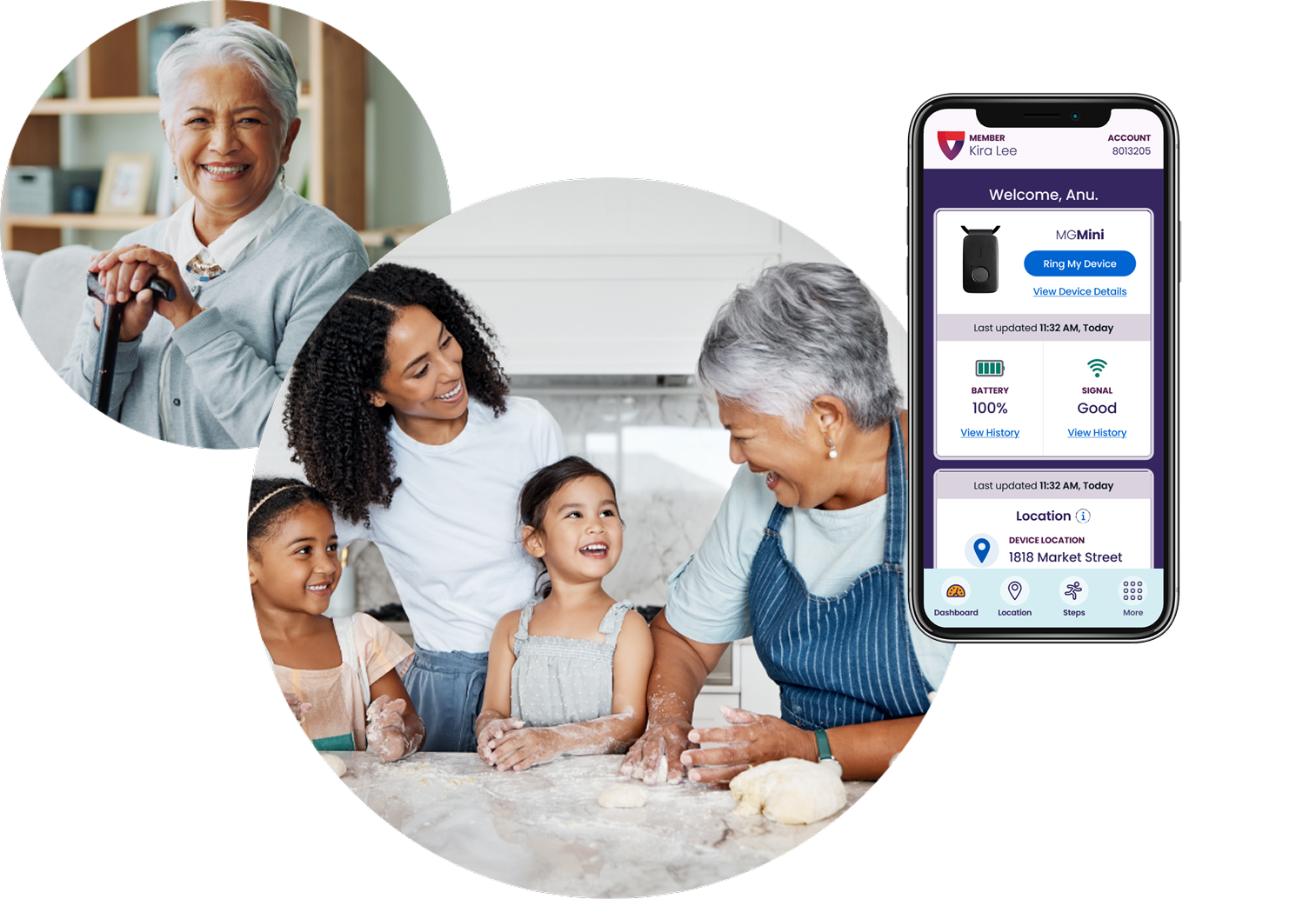
What we’re working on is an independence profile where we collect relevant data points around a whole-health wellness and lifestyle profile, pair that with demographics, and pair that with device-level data. Then we push those data points into three models.
If you look at our hiring over the last six months, you’ll see a pattern in technology, data science, machine learning, and AI. That’s in support of creating these three risk profiles.
The first is fall risk, but in support of fall risk deterrence or predictive falls.
The second is social isolation. There are huge health impacts from social isolation. You live with your spouse for 40 years. Your spouse passes away. How quickly does your health start deteriorating as a result of now being isolated? Your kids move away. They have kids. They live far away. All of a sudden you go from a really robust social circle and social life to much less. There are a lot of adjacent health issues that can come from that.
In my prior career, we worked with type 2 diabetes prevention programs. We viewed type 2 diabetes as a functional health disorder that you could get off medications for, or prevent entirely, by making changes in your life. How do we have these models predict and prevent outcomes that we know are a slippery slope for this population, where someone goes from seemingly okay to not being able to bounce back from something?
The third model is cognitive decline. We can all think about the first time a loved one who was older forgot how to get to your house, and you thought it happened out of nowhere. But it didn’t happen out of nowhere. There were just no predictive indicators.
What we’re building detects subtle changes. If we used to call a member at 7 a.m. every day because they were an early riser, and now they don’t answer until 9 and they had just gotten up. Or their sentiment on check-in calls has changed. Or they’re not answering regularly. We can push that data to loved ones, care partners, and care systems to say something is changing, before it changes to the point where it’s already become a spiral.
On rural healthcare and why technology-enabled care is no longer optional
You’ve mentioned health equity as a personal passion. Where do you see the biggest gaps right now?
I’m very passionate about health equity. Rural healthcare systems are crumbling. If you look at the data around investment in rural healthcare systems, they’re shutting down every day. Often there’s one primary care provider for a huge geographical area. People are simply not able to access regular or even emergency care in those parts of the country due to lack of investment or struggling healthcare systems.
What frustrates me is that a lot of articles talk about this, but they provide no solutions. There’s never one line that says, “And here’s what we’re going to do about it.”
To be fair, it’s not just a rural problem. I live in Philadelphia, which is at the epicenter of some of the best healthcare in the country, and it’s almost impossible to get a doctor to see you urgently here, or get into an urgent care, or get into a hospital. So imagine how much worse it gets as you move into less saturated areas.
We serve members all over the country, including a significant Medicaid population in rural communities. When I think about the role of technology products like ours, it’s not like should, could, or would. It’s have to. Because these populations are no longer able to access infrastructure that used to exist 20 years ago.
On why incremental product changes aren’t enough
What’s the story you most want the industry to understand about where Medical Guardian is headed?
I want to articulate the evolution of our products and services from how they’ve traditionally been looked at. We believe there is integrity in wearing a medical alert device. It just hasn’t been served up correctly.
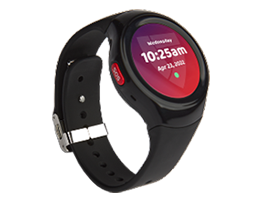
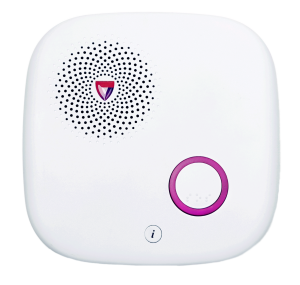
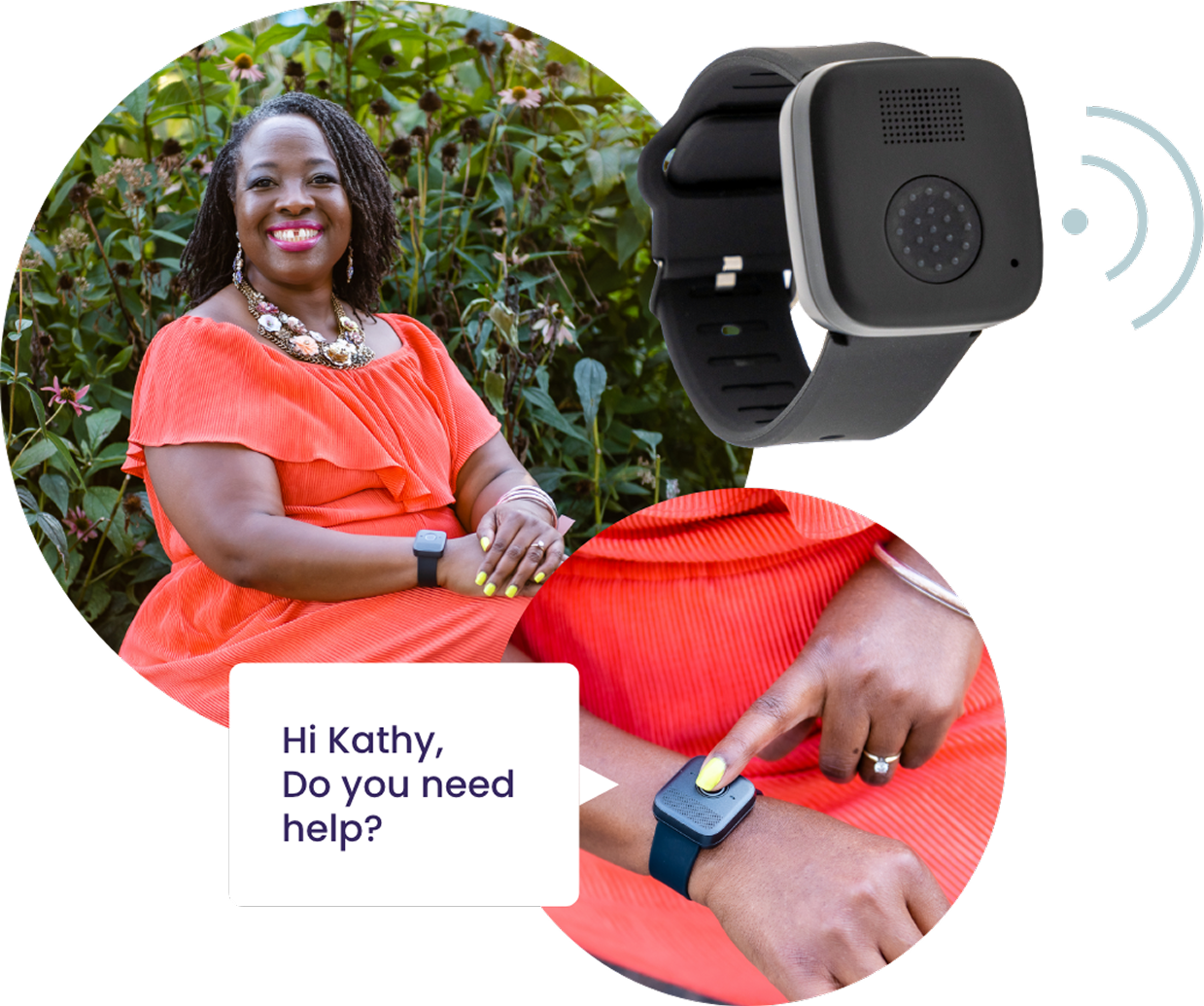
That’s why you’ll see things getting a lot smaller, better looking, more of an Apple sort of vibe. A paradigm shift from these devices toward smaller, more attractive health and wellness trackers with safety built in that have a trickle effect across someone’s entire aging process through peripheral services.
When I see product launches from competitors, it’s the same thing. An extra day of battery life. A different color. They spent a year coming up with a small feature change. That’s just not enough for how large this population is, how much expectations are changing, how the need is changing. It’s not a large enough change to support a growing population, a caregiver crisis, a crumbling healthcare system, and technology evolving at a rate it never has before.
Our responsibility is to deliver a holistic product portfolio that improves the health and wellness of our members and still provides them safety and security. That requires investment in all of those things at the same time. Our backend. Our technology. Our infrastructure. Our people. Our hardware. Our services. Our delivery. Our digital experience. That’s why we have the heaviest delivery of net new products and services we’ve ever had as a company this year.
You can’t really sequence one thing at a time anymore. Things are changing too rapidly for small movements. You have to make broad stroke changes. And I want to find a good way to articulate that what’s going to be delivered is far more robust than one feature set would communicate. It’s in support of a robust change in how we view what we offer as a company.
On the organizational structure behind the speed
How is Medical Guardian organized to deliver on that level of ambition?
We created a pod structure. It’s common in traditional Scrum and agile methodologies and is in support of continuous product delivery. You put people over competencies.
For example, we have an AI pod. In that pod there are about three technical people, engineers and data scientists, creating pipelines and running AI models, plus a product manager and a project manager. They operate in a Scrum methodology. Then we’ll have another pod for our senior living business, another for infrastructure and platform.
It’s not based on title or org structure. It’s based on what function you work on. If you look up traditional product operating models, they have org structure for management but not for delivery. The org structure for delivery is driven by the work and the pod, not where you live in the org chart.
Think of it like Comcast. You could be a developer at Comcast, but you’re not really a Comcast developer. You’re a developer of Comcast Business, and you just work on that line. Same with AWS. You’re not an Amazon developer. You’re an AWS developer. It’s in support of product delivery speed, methodology, and alignment.
It also helps with knowledge sharing, which gets hard as teams get larger. People aren’t structured in siloed teams. They’re structured around product delivery and work product. When they come back to their functional team, they’re sharing what they’re working on. It’s not that everyone in engineering only talks to people in engineering. They actually work on product delivery systems as a cross-functional team and then come back.
On an unconventional path to leadership and women in healthcare tech
Your own career path at Medical Guardian is unusual. You started as an assistant and are now COO. How has that shaped how you lead?
How many CEOs would make their assistant a COO long-term? Probably one out of ten. How many would have better operations if they did?
I operate unconventionally. I don’t care where things should be or where people traditionally fit. If I know someone could do something and they’re competent, loyal, and bought into the mission, I would give that person the opportunity over a thousand new hires. I would make a customer care agent any role they fit into if they had the competency for it. I just don’t subscribe to traditional ways of operating.
I think of the organization like a chess board. I move this person over here to do this, or I give a layer here, and I’m constantly looking around the organization for hidden gems. I keep a really open line of communication. Chat me, call me, text me anytime. I want to know if you care. I want to know if you’re bothered. I want to know if you’re particular. And then I’ll figure out if you can go somewhere.
I believe in core ways of operating and intrinsic ways of being over where you went to school, whether you’ve done it before, what your resume looks like, or what your LinkedIn looks like. I don’t care about any of that. One of our team members went to Yale. I found out well after we hired him. He asked if I’d looked at his resume. I just never scroll down to the bottom.
You’ve also been vocal about the lack of women in healthcare and technical leadership.
On most calls I have across every vendor or partnership or implementation, I’m typically the only woman on the call. Close to zero women in technical leadership. I think that’s very odd, and I’m very passionate about it.
Women are disproportionately not given those opportunities. And I think about my own path. Who knows if I would have been able to do it if I’d had a kid and gotten married? I never did. So if I had needed to take a six-month maternity leave, would I have been able to do the same thing? It speaks to a lot of the disadvantages that exist for women in the workplace.
More broadly, I’m passionate about creating opportunities for people who don’t traditionally look like the person you think should be in a role. People from different backgrounds. People from underserved groups. People who can absolutely thrive if someone just removes the bureaucratic red tape that keeps them from getting the opportunity in the first place.
On building culture without forcing it
With 560 employees and an expanding product portfolio, how do you keep everyone aligned?
I like unintentional culture. I think it’s much more authentic and much more sustainable and actually easier. If you have to talk about it all the time, you’re probably not doing a good job, because your work product and your leadership should make that natural.
The work is a reflection of the strategy. I can’t have a predictive data product without an engagement product. I can’t have either of those without a digital experience. I can’t have any of those three things if our member services team doesn’t know how to support them. And we can’t sell any of it unless our product and marketing teams know how to sell it. So one thing can’t exist without the other.
A lot of it comes down to hiring. I think naturally, who likes to work here and who wants to work here is a mission-based person. I interviewed someone recently from a data company. He said the work was cool, the technology was modern, the people were cool. But every day he went home thinking, I spent 50 hours this week and what did I really work on? There’s a segment of the population who wants to attach what they do every day to something larger than themselves. That’s who we hire. And if you’re not like that, you should go work at a company where you just want to push buttons all day, because that’s a better fit.
When you hire a bunch of people like that, they think about how what they do every day supports something that matters for a really important population. You replicate that across your management layers, your director levels, and then the front line is getting led by those people. We don’t have to shove a lot of messaging at people, because they’re living it every day.
On measuring what actually matters
How are you thinking about measuring success across all of these different product areas?
I’m working on a shared product delivery scorecard. If you take the silos out of each product area, what would be the overall impact of all of those products delivering something well?
One metric is daily engagement for valuable interactions, weighted to include everything from outbound member services, to regular device testing, to app interactions, to responses to predictive AI calls. Another is what I call responsiveness to change, which measures whether our touchpoints are actually driving platform adoption and everyday value. Without everyday value, you’ll drive adoption down, and then you really can’t change an outcome.
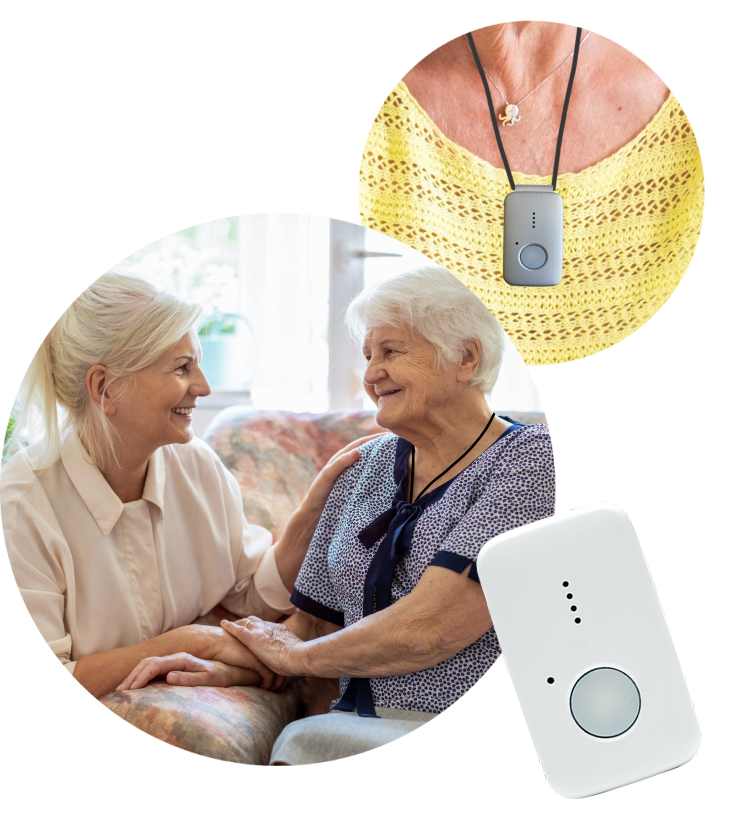
We’re also focused on preventative intervention rates. What percentage of alerts could lead to proactive engagement rather than reactive emergency response? That reframes the whole narrative. Going to the ER is the worst type of care you can get, if you think about it. So what other models of care exist if you’re not in an emergency situation but you do need some sort of help?
And then there’s retention and age of acquisition. If we’re getting members younger because they don’t feel the stigma but they definitely feel the value, that’s a major indicator that we’re doing things right. I’m trying to build overall metrics that are product-agnostic, that good product delivery supports, that change the way the company’s viewed, and that put us into different industries than we’re currently in.