
An interview about how watching a grandmother age alone led to a 600,000-member company, why the $92 billion fall crisis demands a different kind of solution, and what it means to build a healthcare disruptor the slow way.
Key Takeaways
- Geoff Gross founded Medical Guardian 20 years ago after watching his grandmother age alone. Today his father-in-law uses the same company’s devices, bringing the mission full circle.
- Fall-related injuries cost the U.S. $92 billion a year and cause roughly 40,000 to 50,000 deaths annually, comparable to gun-related deaths, yet the issue receives far less attention.
- Only about one in ten seniors who qualify for a medical alert device actually have one. Most are relying on an overwhelmed 911 system that wasn’t designed for their needs.
- Medical Guardian is shifting from a device-and-subscription model to a membership-based, tech-enabled care platform that addresses health and wellness alongside safety.
- Putting on a medical alert device shouldn’t feel like a sign of decline. It should feel like empowerment. The industry’s fear-based marketing has created a ceiling that only a new narrative can break through.
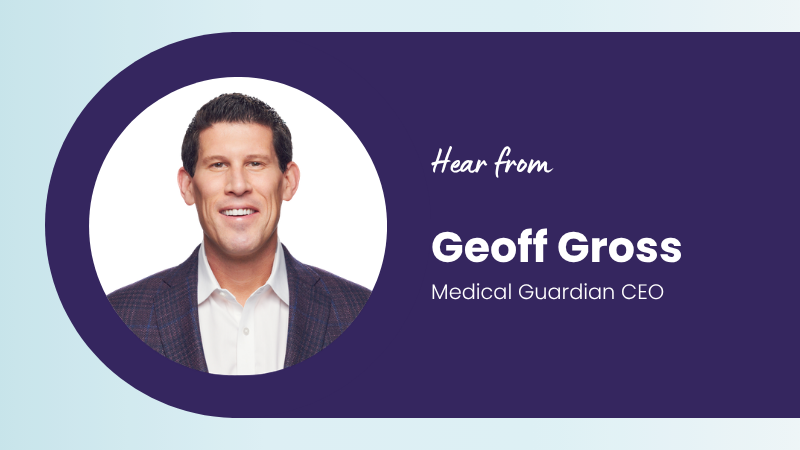
Geoff Gross founded Medical Guardian in 2005 after watching his grandmother struggle to live independently. Twenty-one years later, the company he started from that experience now serves more than 600,000 members across the country with a team of 600 people. As CEO, Gross has steered the company through organic growth, a private equity partnership, transformational acquisitions, and a strategic shift from safety devices to a broader health and wellness platform. In this interview, he talks about what has and hasn’t changed over two decades, why the industry’s biggest problem is the story it tells about itself, and where he thinks the business goes next.
This conversation has been edited for length.
On the personal experience that started it all
You started Medical Guardian in 2005, inspired by your grandmother. How has that personal origin shaped the company’s mission and culture over 20 years?
I’ll treat the mission and the culture separately. On the mission side, it’s given a personal appeal because of my hands-on experience and really understanding what people go through. When you’re in this business, especially if you’re younger, you’re not always in a life position to really understand what’s happening. But I was early with my grandmother because we were so close. She refused to move out of her home, had multiple knee replacements, wasn’t very mobile.
Twenty-one years later, I’m going through the same thing with my father-in-law. It’s funny how it skips over generations. Everybody that was calling me back then was my friends’ parents calling for their parents. Now it’s my friends calling me for their parents, which is making me feel a little old. But I got a call today, actually.
My father-in-law is 89. He’s had our devices for several years and had several falls, but now he was having some issues, potentially had a mini stroke, just had brain surgery about 10 days ago, and is recovering. So it’s come full circle for me and my family. It makes me even more committed to solving problems and really understanding personally the impact we could have, not only on the end user by keeping them safer and healthier, but also the burden on the caregivers.
I saw my mom go through it with her mom, the grandmother I’m speaking of, and just how much she had to be there taking care of her while she was still taking care of my sister, who was younger than me. So many people are going through that in this caregiving crisis. Nobody is absent of that experience. Whether you’re going through it now or later, if you’re lucky to live long enough, you’re going through it with a loved one or yourself.
“‘She sat there literally all day long watching TV by herself. Wouldn’t it be nice for her to have some level of engagement?”
On what culture actually means
How does that personal connection show up in the day-to-day culture of the company?
I think it does give people at Medical Guardian a greater sense of purpose. Some people expect that when they come here. They’re aware of it, that’s why they come. Some people don’t expect it and they’re surprised by it. I definitely hear about it.
I think people for many years, pre-COVID, defined culture as what’s the coolest office you can have. You’ve got a beer machine and that’s culture. That’s not culture. We’re more substantive than that. People believe in the mission, they like who they work for in the sense that we have leaders rather than managers. We do a lot around recognition. We’d like people to have a voice, and we’d like to create opportunity for people if they do a great job.
My former assistant is now our COO, helping run the place. So clearly we have a culture that allows for that kind of thing.
New employees always say, “I’ve never worked at a place like this. I’ve never come to a place where everybody’s so helpful and so nice and so willing to step in.” And that makes me feel good along with the mission that we’re on.
On the decisions that mattered most over 20 years
Looking back over the growth arc of the company, what were the key decisions that changed the trajectory the most?
The most important single thing is the people you surround yourself with. My decisions on people are the number one thing. I get one to two picks a year. If I make good picks, I can take the business in all kinds of directions. If I make bad picks, it can really stall. And as you expand, you have to improve your standards and recognize which people can and can’t change along with the company. That’s really critical.
I think our decision to stay true to who we are and stay in our lane has been a challenging but important decision. I can’t tell you how many people over the years have suggested we get into the kids market or the broader market or home security because we have the infrastructure for it. Guys like me always want to do that kind of stuff. But what has served us well is heads-down focus on serving a senior population, originally with safety and now with safety and health solutions, and being the best at that. That has led to incredible growth and quality.
On disrupting the industry narrative
Are there narratives about aging or medical alert devices that you want to disrupt?
The main thing I always want to disrupt is people defining our category in antiquated ways. We can’t get away from that soon enough. I’m tired of it.
It’s really about bringing recognition to the depth of services and solutions that a company like us offers and how we’re redefining the market in terms of the impact we can have on the life of an aging American.
That’s one of the reasons I rebranded the industry association. I’m president of it. We rebranded it from the Medical Alert Monitoring Association to the Connected Health and Safety Association. The reason I did that is because it’s more reflective of how our industry and certainly how our company is operating. Personal emergency response being one piece of it, remote patient monitoring, chronic care management, engagement solutions all being part of it too.
We don’t want putting on a device or getting on a service to be a symbol of getting old. It should be a symbol of empowerment. And I don’t think it’s been that to this point. I think it’s been like taking away the car keys. It makes people feel like that’s the next step towards the end, when it’s really the opposite. It’s really designed to keep you living independently longer because you’re avoiding some of those catastrophic events.
Fear-based marketing sells. It makes people scared, makes people act. But only a small portion of the population. To reach the broader audience, we have to connect with them on a deeper level. We want people to be able to associate their own goals and ambition for the rest of their life with the brand we’re building and the solutions we’re offering.
On the solutions that didn’t exist 20 years ago
When you think about what you’re designing now versus what your grandmother had, what stands out?
I think about my grandmother and I say, how cool would it be for her to have biometric devices that are cellularly connected, that my sister and my mom and I and my cousins could all get information from, and her doctors could get information from.
She sat there literally all day long watching TV by herself. Wouldn’t it be nice for her to have some level of engagement? A conversational AI that could call her every day and check in on her, see how she slept, see how she’s feeling.
Medication management. I still remember going to her kitchen. She must have had 20 pills she’d take every day. It was complex. How could we play a better role in that? All these things are possible in our current solution. They weren’t possible in 2005. So that’s really exciting, how far it’s come and the opportunity to touch people earlier and offer them a lot more.
On the scale of the crisis most people don’t see
You’ve talked about a caregiving crisis. How big is the problem?
Not only do we not have enough caregivers, personal or professional, to support the aging population in quantity, they also don’t have the time or the money or the energy to do it. We don’t have enough hospital beds. We don’t have enough long-term care facilities and beds. The inevitable outcome is that people are going to have to be taken care of at home, and technology is going to have to step in and do that.
Fall-related injuries cost $92 billion a year. Fall-related deaths are happening to the tune of 40,000 to 50,000 a year. That’s about the same as gun-related deaths in this country, but it doesn’t get quite as much attention. One out of four seniors fall a year. The average hospital stay related to a fall is $24,000.
On top of that, the 911 system is overwhelmed. There are holds on 911. They don’t have enough people to take the calls. And only about one in ten seniors aged 70 and over who qualify for a medical alert device and live alone actually have one. Most of those people are going through the 911 system. They’re getting transported by an expensive ambulance and admitted to the hospital, and most of them don’t need to be there. More than half.
We can intervene. We have non-emergency help. We can alleviate an emergency transport and an admission. And through our engagement tools, if someone has been in the hospital, we know when they’re getting discharged. Re-admission is a major problem. If we have medication management adherence, if they’re taking their blood pressure and getting on the scale and the doctor has that information, all of that helps people stay at home.
Which is at odds with the fact that Medicare does not cover our service. For $300 a year, the government could cover this, and back-of-the-envelope math will tell you it’s going to save them a lot of money at $92 billion a year in fall-related injuries.

On the shift from selling devices to offering membership
How are health plans and providers reacting to what Medical Guardian is building now?
On the health plan side, I think what people are really eyes-open to is the fact that our device has been transformed from a reactive care device to a proactive preventative tool that can serve up a lot more. Three or five years ago, they were amazed by the form factor and the smallness of the device and features like fall detection. Now it’s basically a conduit to services. Instead of having three pieces of hardware in your home, you just need one.
A lot of what we’re focused on with our health plan partners is our engagement product, Engage 360. It’s designed to address gap closures. All these plans are focused on star measures. Fall risk is one of those, among others. We’ve done campaigns in the last two years focused on everything from flu vaccination on down the list. There’s so much we can do across so many use cases.
The transition we’re making into membership, rather than a device for a subscription, is a huge differentiation. A membership-based service provider for tech-enabled care. We’ve never been the low-cost guy on the block. If you want to pay $10 less, there are a lot of things you’re not going to be getting.
On why simplicity is the hardest thing to get right
With all of these expanding capabilities, how do you avoid making it too complex for the people you’re serving?
We try to be very selective to make sure we’re addressing the foundation of people’s needs rather than a lot of peripheral needs. Keeping it simple is really key. There’s enough complexity with everything now.
I see it in my own life. I started with Netflix and cable. That was great. Then streaming came, and Netflix was great. Now I’ve got eight shows. I don’t know where to go. I don’t remember the passwords. It’s very complex. I think it’s a good example for what’s happening in healthcare. Keeping it simple seems so simple, but it’s not.
We see every type of product you can imagine. Everybody that gets some VC dollars builds a passive monitoring solution, or a robot in the home, or a care companion, or a belt that can prevent hip breaks. It’s all day long. It can be a little overwhelming because we have the opportunity to expand into so many areas. But we want to do it in a way that keeps it simple for the person we’re serving.
On where Medical Guardian goes from here
What’s the long-term vision for where the company can go?
I see a continuum of care and an exciting opportunity to bridge the gap between the private home and long-term care. Right now, we serve both markets separately, not only with our solutions but our relationships. Once we have a critical mass of relationships in long-term care, across assisted living and independent living, I’d love to have such a relationship with a member that we can take them from the home into long-term care with our referral, our solution, and our relationship.
Where I feel very good about us now is where we sit in the food chain. We get people the earliest in terms of tech-enabled care, at this general worry stage. If we can carry them further through that journey and offer them a lot more that they need and maybe are getting from other places, that positions us very well.
None of them want home care in the house like my father-in-law has to have now. They don’t want to go into long-term care. And the financial piece is overlooked. It doesn’t take more than a couple of years in long-term care to deplete your entire life savings for the average American. That affects both the senior and their kids. Those solutions are a hundred times more expensive than ours. That’s not an exaggeration.