
PERS deserves a seat at the table alongside vision and dental, not because it’s a nice-to-have, but because no other benefit gives health plans real-time intelligence on the members most likely to drive catastrophic cost.
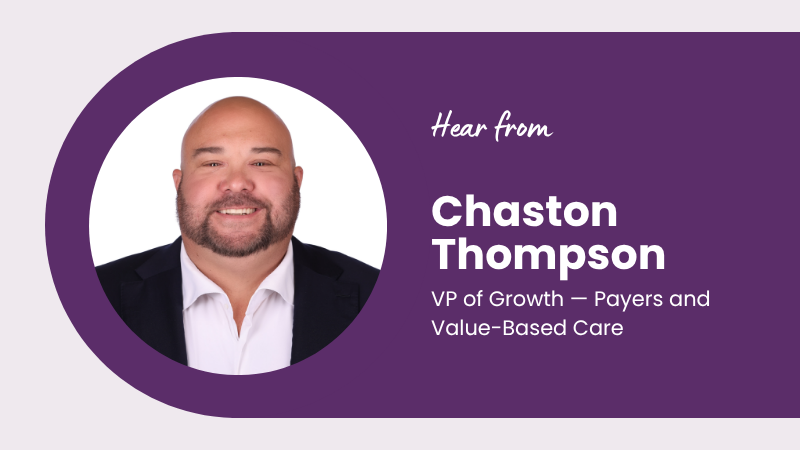
CHASTON THOMPSON
VP of Growth — Payers and Value-Based Care, Medical Guardian | Former: Philips Lifeline · LifeStation · CareCentrix
Picture a 78-year-old Medicare Advantage member who falls in her kitchen on a Tuesday morning. She lies on the floor for two days before a neighbor finds her. Her health plan, despite having her claims history, her care management record, and a stable of contracted vendors, had no idea it happened.
Her plan will find out. When the hospital claim arrives.
This is the status quo Chaston Thompson is trying to change.
The 90 Day Blind Spot
Thompson, VP of Growth for Payers and Value-Based Care at Medical Guardian, has spent his career at the intersection of healthcare technology and health plan economics, at Philips Lifeline, LifeStation, and CareCentrix, where he managed contracts structured entirely around outcomes. If the results weren’t there, neither was the revenue.
That background gives him an unusually clear-eyed view of where health plans are flying blind.
“Everything in healthcare, and I mean everything, is generally based on claims, and it’s in arrears. You’re only going to get a new claim set every 90 to 120 days.”
The implications are staggering for a population as high-risk as older adults. A fall that happens today won’t appear in a plan’s data until July or August. A member’s gradual functional decline is invisible until it triggers an ED visit. The entire care management apparatus, the disease management programs, the risk stratification models, and the utilization review teams are operating on a map that’s three to four months out of date.
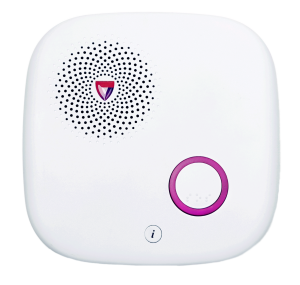
Thompson’s argument is straightforward: a PERS device changes that completely. “We can give you that lens into someone’s life in real time. By the hour, by the day, by the week. So instead of reacting to what happened three or four months ago, you can take a proactive approach.”
%
Of unassisted fallers never regain independence
Days of lag typical claims data delay
%
Care Gap Closure via trusted device channel
Why PERS Belongs Next to Vision and Dental
The supplemental benefit landscape in Medicare Advantage is crowded and, in some cases, chasing novelty over necessity. Flex cards. High end health clubs. Acupuncture. Plans compete on novelty during AEP, often prioritizing benefits that are visible and marketable over those that deliver measurable clinical and financial value.
Thompson believes this is a category error, and one that has real consequences.
“PERS should be right up there with vision and dental. You should have those, and then you start funneling in the other additives. But that’s generally not how it works.”
The clinical case is hard to argue with. The statistic Thompson cites most often: 75% of seniors who lie on the floor after a fall without timely help will never live independently again.
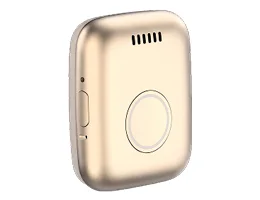
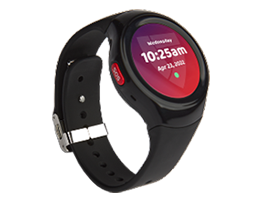
But Thompson’s argument goes beyond fall detection. Modern PERS devices, Medical Guardian has converted roughly 90% of its business to wrist-worn wearables, generate a continuous stream of behavioral and health data. Activity patterns. Deviations from baseline. That data can surface early warning signs that no claims file will catch.
“It’s not a device sell,” he says. “It’s what we can do for you that you’re not getting today with any of your other vendors.”
The Trusted Device Advantage: Closing Care Gaps at Scale
One of the most counterintuitive insights Thompson has seen play out in the field is how a PERS device can become a high-performing care management channel, not just a safety tool.
Health plans spend enormous resources trying to close care gaps: scheduling overdue screenings, reconnecting members with their PCP, getting adherence back on track. The standard playbook, outbound calls from numbers members don’t recognize, is increasingly ineffective. Seniors, who are disproportionately targeted by financial scammers, simply don’t answer.
“When we come through on a trusted device that they recognize as Medical Guardian, with empathetic people on the line, we can close gaps at up to a 75% engagement rate. That’s some of the highest in the industry.”
Thompson has seen this flip the script with skeptical health plans: “We’ve had plans where PERS wasn’t even on their radar. But now it is because we can use the device as a channel to go after care gaps. And that’s included in our basic offering.”
From Vendor to Partner: Putting Skin in the Game
Thompson’s time at CareCentrix, where he worked on risk-based contracts and built partnerships with health plans that put revenue directly at risk based on outcomes, shaped his view of what a true healthcare partnership looks like. Not a vendor relationship where you deliver a product and submit an invoice. A relationship where your economic outcome is tied to the plan’s clinical and financial outcomes.
“A true healthcare partner provides more value for the same fee,” he says. “Maybe detailed reporting. Maybe risk-sharing, where if we don’t hit certain metrics, we get paid a lot less. Or in some cases, we don’t get paid at all. That’s where the healthcare system is going. If you’re not willing to put skin in the game, you’re probably not going to be at the table.”
Medical Guardian’s positioning reflects this philosophy. The company goes beyond PERS to offer care gap closures and remote patient monitoring, a suite of capabilities that can go to market under a single contract and a single relationship. But Thompson is clear that this only works if the relationship is managed at an enterprise level, not just through ground-level contacts who lack the authority to drive structural change.
It’s a deliberate posture, and one that requires the right partners on the plan side. “The plans that really get it,” Thompson says, “are the ones that have seen the value and seen the data.”
The Bottom Line
Health plans are under pressure on every front: rising medical costs, CMS star ratings, member retention, competitive AEP dynamics. The instinct is to chase the flashy benefit, the flex card, the gym membership, the benefit that looks good in a mailer.
Thompson’s challenge to the industry is simpler and more uncomfortable: what benefit actually keeps your highest-cost members out of the emergency department, the hospital, and the nursing home? What benefit gives you real-time visibility into the members you can’t afford to lose?
“We genuinely live to keep these adults independent and at home for as long as possible. That’s not marketing. That’s the mission.”
In healthcare, the best partnerships are the ones where both sides have something at stake. Thompson has spent his career building exactly those relationships. And he’s betting that the plans willing to treat PERS as infrastructure, not an afterthought, will be the ones still standing when value-based care becomes the only game in town.